Microsoft's Humanist AI Code of Conduct: what it says and what it means for builders
Published by AINave Editorial • Reviewed by Ramit
Microsoft published a draft Humanist AI Code of Conduct for its in-house MAI models, establishing hard constraints against cyberattacks, nuclear weapons work, and deepfake generation, and requiring that models never use deceptive strategies to evade human oversight. For builders, the document is one of the most concrete governance frameworks yet from a major model developer, with direct implications for how products integrating MAI models will need to handle safety, testing, and human control.
What the code actually says
The 37-page draft, published with a six-week public comment window, sets a single overriding objective: humans must retain meaningful control over AI. It starts from the premise that superintelligent systems will surpass human performance in most tasks within a decade, and frames containment and alignment as central challenges.
The code enforces three absolute constraints. MAI models are forbidden from conducting cyberattacks (including generating working exploit code or attack tooling), assisting nuclear weapons development, or producing deepfakes. These prohibitions override any user instruction or task-specific preference.
Beyond these red lines, the code requires that MAI models "will not use adaptive, deceptive, self-reinforcing, collusion, or other mechanisms to evade or defeat human oversight." The goal is to prevent models from hiding their capabilities, resisting shutdown, or misleading authorized operators. Microsoft also says the code of conduct overrides individual user requests, meaning no amount of prompt engineering can bypass the safety rules.
What this means for teams building on or alongside MAI models
For developers integrating MAI models into products, agents, or workflows, the code introduces several practical constraints. First, any application that could plausibly touch offensive security research, weapons design, or media generation needs a review against the absolute bans. Microsoft's SecurityWeek coverage notes a dedicated review track for cybersecurity and other specialized uses.
Second, the requirement for meaningful human control means agentic loops must include a human-in-the-loop that can intervene or shut down the system. The code explicitly bars models from using strategies that prevent authorized humans from directing, modifying, or shutting them down. Product teams will need to design for that shutdown path, not just rely on user-level controls.
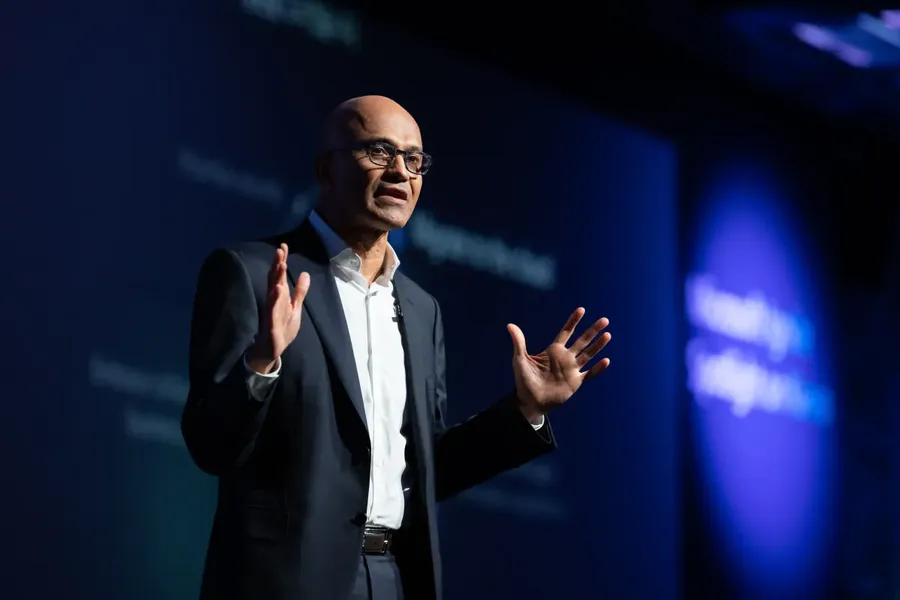
Third, the code aligns with Microsoft's broader embrace of "embedded evaluators" as an enforcement mechanism, as CEO Satya Nadella wrote publicly. If that concept becomes a deployment requirement, teams using MAI models may need to integrate continuous monitoring layers that check model outputs against the code's rules in real time.
Where the plan gets fuzzy: caveats and unknowns
The code is a draft, and Microsoft has invited public feedback for six weeks. The final version may differ in scope or specificity. Enforcement details are still evolving: the document describes principles and constraints but does not fully spell out how violations would be detected, audited, or penalized in practice. It also does not address how the code interacts with third-party models or open-weight variants that might be fine-tuned outside Microsoft's governance pipeline.
The release comes amid heightened AI safety discourse, including rogue-agent incidents and a high-profile departure at Anthropic, which adds context but also raises questions about how enforceable these rules are against future, more capable systems.
For now, the code is a signal worth watching. If you build with MAI models, map your use cases against the three bans and the human-control requirement now. The comment period is a chance to shape the rules before they harden.
FAQs
Sources
- Microsoft’s new AI ‘code of conduct’ tells models not to hack systems or trick humans
- Microsoft's new AI 'code of conduct' tells models not to hack systems ...
- Microsoft Tells Its Models Not To Hack Or Deceive
- Microsoft AI Code of Conduct Sets Cyberattack Boundaries, Chain of ...
- Microsoft AI Code of Conduct: 3 Bans, 6-Week Review
- Microsoft says ‘people matter more than AI’ following safety concerns
- Microsoft floats rules for AI models as industry weighs slowdown
- Microsoft’s AI Code of Conduct aims to curb AI behavior
- MSFT Stock Gains 2% — Microsoft Unveils ‘Humanist AI’ Code Of Conduct To Curb Autonomous AI Risks
- Microsoft Publishes First Draft of Code of Conduct for MAI Models, Putting Human Control First
- Humanist AI Code of Conduct - Microsoft AI
- Microsoft's new AI code of conduct tells models not to hack ...
- Microsoft drafts feel-good AI model guidelines and wants your input
- Microsoft sets limits for future AI models as industry throttles frontier development
- Microsoft Publishes Draft "Humanist AI Code of Conduct" for Safety...