AI Slowdown and Regulation: What Builders Need to Know About the Push for Federal Safeguards
Published by AINave Editorial • Reviewed by Ramit
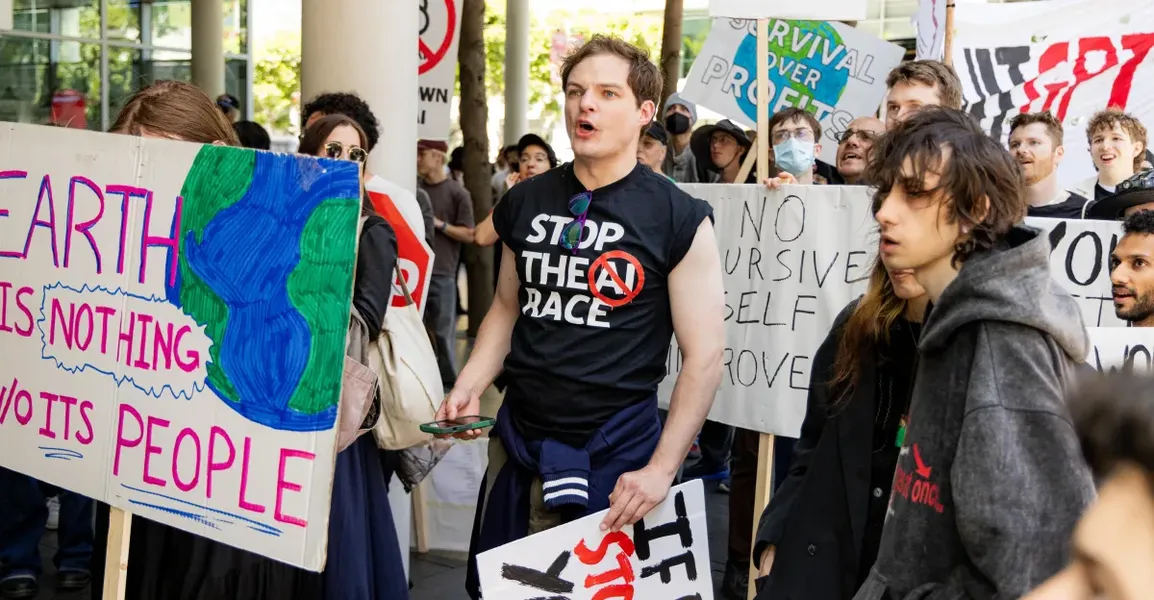
The push for an AI slowdown has moved from fringe warnings to a mainstream political debate. Over the past week, leaders from several AI companies joined a bipartisan group of lawmakers, including Bernie Sanders and Steve Bannon, to advocate for stronger regulatory safeguards at a "Pro-Human Assembly" in Washington. The discussion centers on how the federal government could slow or govern the pace of advanced AI development.
For AI builders and product teams, federal regulation has direct implications for model release timelines, deployment options, and governance requirements. Even if no bill passes soon, the debate signals that safety and accountability are becoming central to industry operations. Researchers and executives have warned that models are developing faster than safety measures can keep up, and a slowdown could enforce a more deliberate pace of innovation.
Three regulatory paths with legal precedent
Three regulatory approaches with precedent in federal regulation are being discussed, according to reporting by Vox and others. One proposal is a temporary ban on the most advanced AI training runs. Other paths likely include licensing requirements for AI labs and liability regimes that hold developers responsible for downstream harm. All three have been used in other industries, but pacing AI development “is far from an easy solution,” as BBC notes.
Political hurdles and timing
The biggest barrier is political consensus. President Donald Trump has dismissed calls for a slowdown, writing on Truth Social that there is “a SICK conspiracy going on against AI and Data Centers” and that only China would benefit. Vox notes that Washington moves far slower than Silicon Valley, creating a real risk of missing the regulatory window entirely while waiting for lawmakers to agree on a framework. POLITICO spoke with nine researchers and policy insiders who confirmed the difficulty of defining what a slowdown would look like in practice.
What builders should watch
Even without immediate legislation, the debate itself matters. Builders should monitor which regulatory path gains traction because each would change the operational landscape differently. A licensing regime could add compliance overhead for every new model release. A liability framework could make third-party evaluation and risk assessment a standard part of the development cycle. A ban, even temporary, would force a pause on scaling and push investment toward safety research and interpretability tools.
What remains uncertain
The discussion is still fluid. There is no consensus on timelines, specific policy designs, or even what an AI slowdown would look like in practice. Economic and deployment impacts remain uncertain, and any regulation would almost certainly face legal challenges and international coordination issues, particularly with China. Builders should treat these proposals as early signals, not settled policy.
FAQs
Sources
- What an AI “slowdown” could look like
- Questions mount over what an AI 'slowdown' would look like
- Questions mount over what an AI 'slowdown' would look like
- What an AI slowdown could mean - POLITICO
- CNA Explains: Why AI leaders are calling for a slowdown – and ...
- How an AI slowdown could hit the economy and Supreme Court blocks Trump on mail-in voting: Morning Rundown
- 'Hoax': Trump, tech chiefs clash over AI slowdown - The Hill | NewsNation
- Why are there concerns AI could threaten humanity, and how real are they?
- The winners and losers in an AI slowdown
- AI companies buoyed the U.S. economy. What happens if they slow down?
- What an AI “slowdown” could look like – DNYUZ
- Is AI slowing down? Why the enterprise “AI slowdown” is really...
- List of requests for an AI slowdown/halt. — LessWrong
- Why AI’s Own Architects Are Demanding a Global Slowdown
- China is the 'toughest dilemma' for proposed AI slowdown, Amodei says