iOS 27 Foundation Models Data Sharing: What Builders Need to Know
Published by AINave Editorial • Reviewed by Ramit
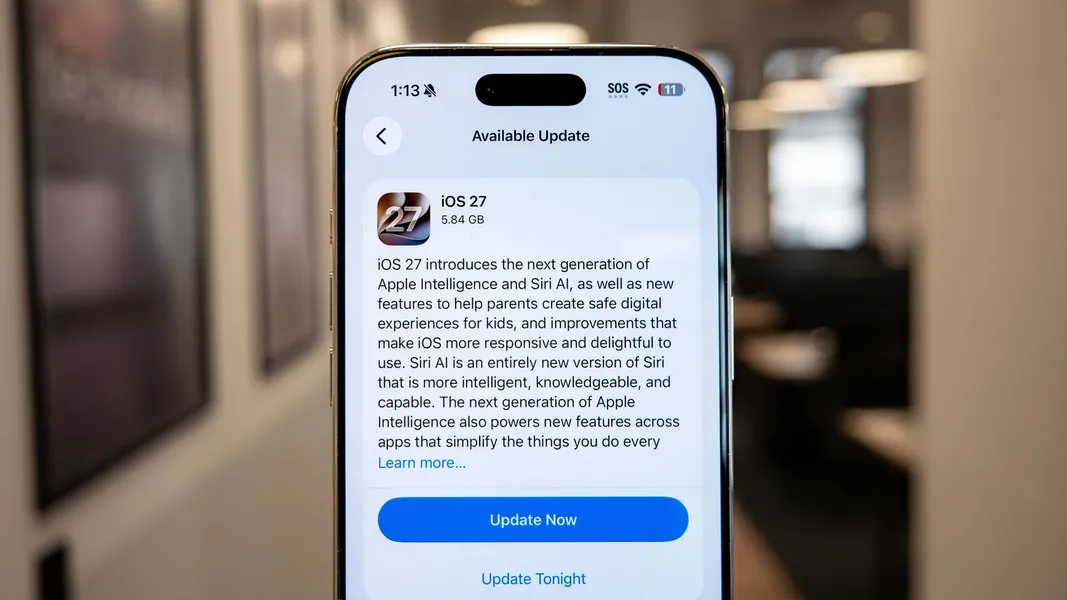
Apple released iOS 27 with a publicly available Siri AI and a new opt-in control that allows users to share audio and text interactions to train its Foundation Models. For builders and product teams working with on-device AI, the change reveals how Apple is sourcing training data while maintaining its privacy architecture.
What the new opt-in actually changes
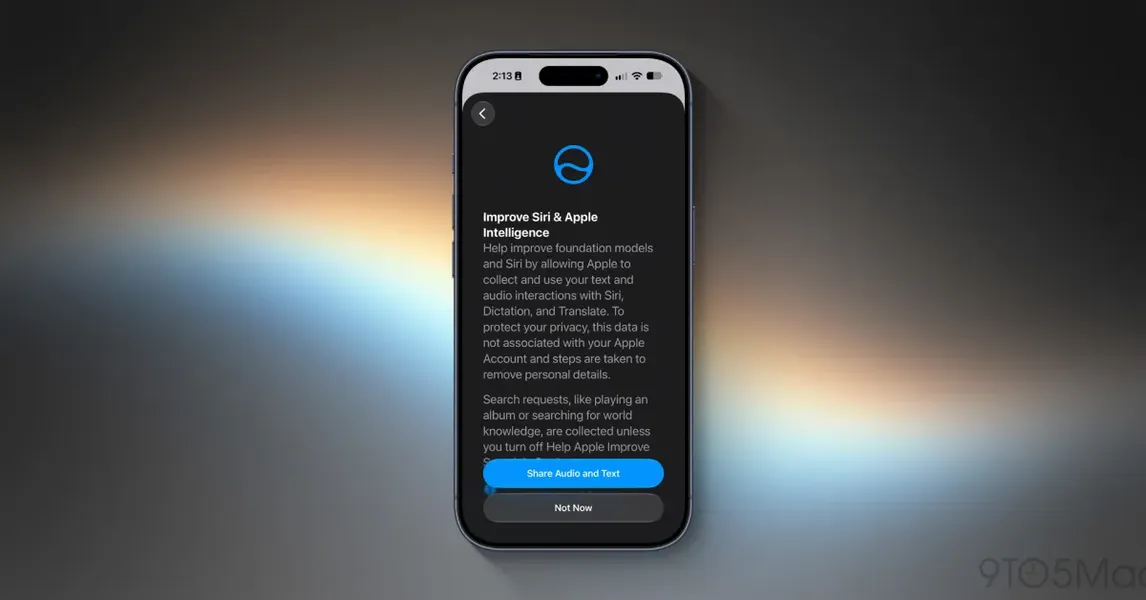
During the Siri AI setup flow, users now see a screen with two options: "Share Audio and Text" or "Not Now." The text explains that Apple will collect and use interactions with Siri, Dictation, and Translate to help improve its Foundation Models and refine Siri and Dictation. According to Apple, the type of data collected has not changed. What changed is that the data will now also be used to train Foundation Models instead of only improving Siri and Dictation.
Even users who previously opted in under the older "Improve Siri and Dictation" setting must confirm their preference again when they enable Siri AI. This means Apple is deliberately giving everyone a fresh choice.
Privacy safeguards and data handling
Apple states that Siri audio data, transcripts, and related data are tied to a random, device-generated identifier that rotates multiple times per hour. The company says it is not tied to an Apple Account or email address, and that the data is not used to build a marketing profile or sold to anyone.
For builders evaluating Apple's on-device AI approach, this is the key detail: Apple is willing to use customer interactions for model training, but it maintains a property that most cloud AI providers do not offer. The rotating identifier means Apple cannot associate the training data with a persistent user identity, which reduces the privacy risk of data leakage across sessions.
The Foundation Models framework, which debuted as a native Swift API in iOS 27, gives developers direct access to the same on-device model that powers Apple Intelligence. The new data-sharing setting is separate from that framework and is about improving the model itself rather than accessing it.
Where to change the setting later
If a user initially declines or wants to change their preference later, the toggle lives under Settings > Privacy & Security > Analytics & Improvements > Improve Siri & Apple Intelligence. It is explicitly placed in the analytics and improvements section rather than in the general Siri settings, which reinforces that Apple treats this as an optional improvement program rather than a core feature toggle.
Apple also published a new support document covering these settings across all its platforms.
What this means for builders
For teams shipping products that integrate Siri AI or build on Apple Intelligence, the practical effect is straightforward. Apple now has a pipeline of real-world voice and text interactions to train its Foundation Models more effectively. That should translate to better accuracy, lower hallucination rates, and faster response quality for on-device inference over time.
However, the opt-in rate will likely determine how much impact this has. If a large portion of users declines, Apple's on-device model quality could improve more slowly than competing cloud-based models that train on all user interactions by default. Builders relying on Apple Intelligence for core product features should monitor whether future model updates show meaningful quality jumps.
The setting also matters for compliance and privacy documentation. If your product processes user speech or dictation data on iOS, and you rely on Apple's on-device models, you may need to note in your privacy disclosures that Apple can use those interactions for Foundation Model training if the user opts in. The data is anonymized through the rotating identifier, but the fact of model training from user interactions remains.
One thing not covered in the current reporting: whether the Foundation Models training pipeline also uses data from macOS, iPadOS, or watchOS users who opt in. Apple says it has published cross-platform support documentation, but cross-platform data pooling details remain unclear.
For now, developers should treat the new setting as a signal that Apple is serious about improving its on-device models through user feedback. The privacy architecture is solid, but the scale of training data depends entirely on opt-in adoption.
FAQs
Sources
- iOS 27 adds new opt-in setting for sharing data to improve Apple’s Foundation Models
- iOS 27 Siri AI Privacy Settings: New Opt-In Controls
- 50 New Things Your iPhone Can Do in iOS 27 - Out Now! - MacRumors
- OS - iOS 27 - Apple
- What’s New - iOS - Apple Developer
- About iOS 27 Updates - Apple Support
- 30 New Things Your iPhone Can Do in iOS 27
- iOS 27 telefona yükledim, beni aşırı şaşırttı! - YouTube