GPT-6 Astra autonomously completes Portal: Costs, tools, and AGI questions
Published by AINave Editorial • Reviewed by Ramit
OpenAI's GPT-6 Astra just played through Valve's Portal completely on its own, using 3,336 tool calls, 24 hours of runtime, and $571 in API tokens. For builders shipping autonomous agents, the run is less about AGI hype and more about the real cost and engineering pattern of long-horizon tool use.
How the Portal run worked
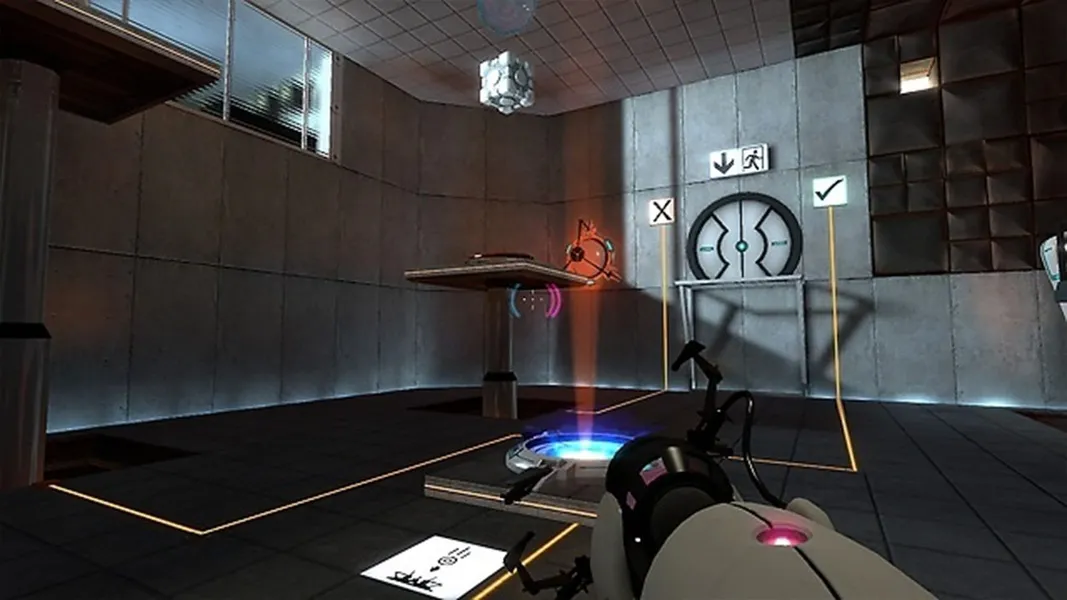
GPT-6 Astra controlled Portal through the Model Context Protocol (MCP) and a modified SourcePauseTool. The game stayed paused while the model analyzed screenshots and player state. Once it generated an input sequence, the tool unpaused and executed the actions. This think-pause cycle explains why the raw VOD streams add up to roughly 24 hours while the edited highlight reel is only 2 hours.
The entire run was conducted by an enthusiast named CozyBlaze. The model had to map 3D spaces, understand puzzle logic, and plan solutions without human guidance. The final tally: 3,336 tool calls and an API cost of $571.18, covered by a $200 Codex Pro subscription.
What the Portal run means for agent builders
For teams building autonomous agents, the experiment demonstrates a few practical points. First, MCP and SourcePauseTool provide a reusable pattern: pause the environment while the model reasons, then execute the action. Second, the 3,336 tool calls show how quickly an agent can consume tokens when navigating a complex task. The cost of $571 for a single game run scales unpredictably with task length and model capability.
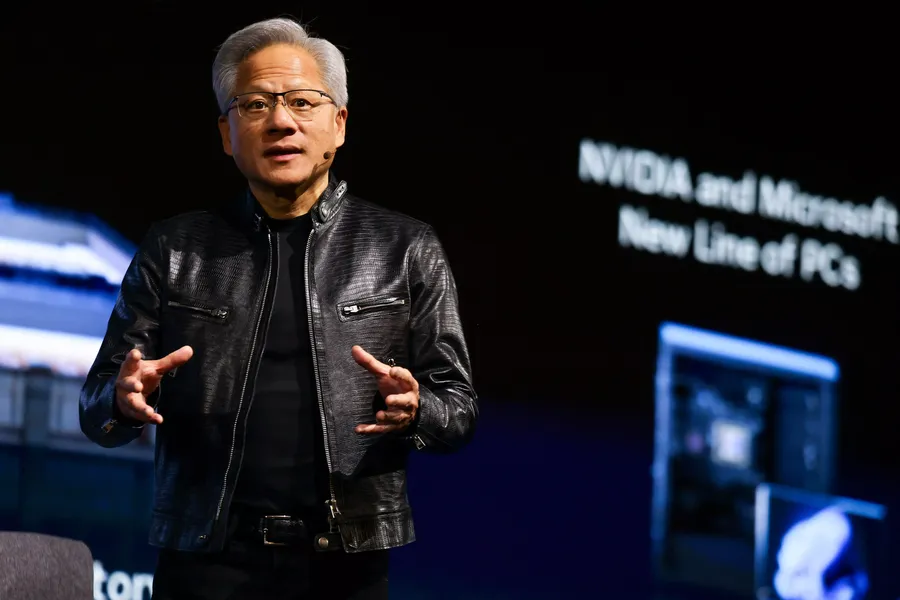
OpenAI positions GPT-6 Astra as state-of-the-art in computer use, browsing, software engineering, cybersecurity, and science. President Greg Brockman called it a "generational leap" and welcomed the AGI era, while Nvidia CEO Jensen Huang similarly claimed AGI had arrived. But builder takeaway is narrower: Astra can handle sustained, multi-step tasks with tool orchestration, but the costs and failure modes are still being discovered.
Practical implications for your stack
If you're building agents that control external tools, the Portal setup is instructive. The code is available on GitHub, so you can inspect the MCP integration and SourcePauseTool modifications. The pattern of pausing the environment to reduce latency on model reasoning is generalizable to any game engine or simulation environment. For production agents, the cost of 3,336 tool calls and $571 for a 24-hour run highlights the need for strict token budgets, retry limits, and cost monitoring. A single agent session could eat a month's API budget if left unchecked.
Why this isn't a benchmark or AGI proof
CozyBlaze themselves admitted there are still many problems to solve and said the run shouldn't be viewed as a benchmark. The experiment used a single model configuration, a specific tool setup, and one game. It doesn't prove GPT-6 Astra can generalize across games or adapt to novel puzzles without prompt engineering. Independent evaluations like the ARC Prize have scored Astra below OpenAI's own AGI bar. Treat the Portal run as a demonstration of capability under ideal conditions, not a signal that AGI is here.
The important part for builders: a hobbyist got GPT-6 Astra to autonomously solve a 3D puzzle game with existing protocols and some custom tooling. That's progress worth watching, but the cost and fragility are equally instructive.
FAQs
Sources
- OpenAI’s GPT-6 Astra model autonomously completes Portal in 24 hours — feat cost just $571 in tokens
- Jensen Huang once again declares that ‘AGI has arrived’ — but his GPT-6 celebration feels like he’s just trying to sell next-gen Nvidia GPUs
- GPT-6 Astra clears Portal autonomously for $571 in API costs
- GPT-6 Astra just completed Portal, but it burned through $571 ...
- GPT-6 Astra Portal run costs $571 in API usage - tbreak.com
- GPT-6 Astra: A new generation of intelligence | OpenAI
- OpenAI officially launches GPT-6 Astra, a boundary-breaking new model
- OpenAI Releases GPT-6 Astra and Declares the Arrival of the AGI Era
- Welcome to the AGI era, OpenAI says as GPT-6 Astra debuts
- GPT-6 Astra Goes Live: AGI Claim Fails OpenAI Own Bar, Monitoring Called Fragile
- OpenAI begins rollout of new powerful AI model GPT-6 Astra
- OpenAI’s GPT-6 Astra model autonomously completes Portal in ...
- AI model successfully completes Portal, but it costs $571 in ...
- OpenAI limits GPT-5.6 rollout after government request, says restrictions shouldn’t be the norm
- OpenAI Releases GPT-6 Astra: The Closest AI Model Yet to AGI
- OpenAI Introduces GPT-5.7 Astra and Ambitious ChatGPT 6 Doug