AI Data Center Water Use: Can Closed-Loop Cooling Keep Compute Growing Without Draining Resources?
Published by AINave Editorial • Reviewed by Ramit
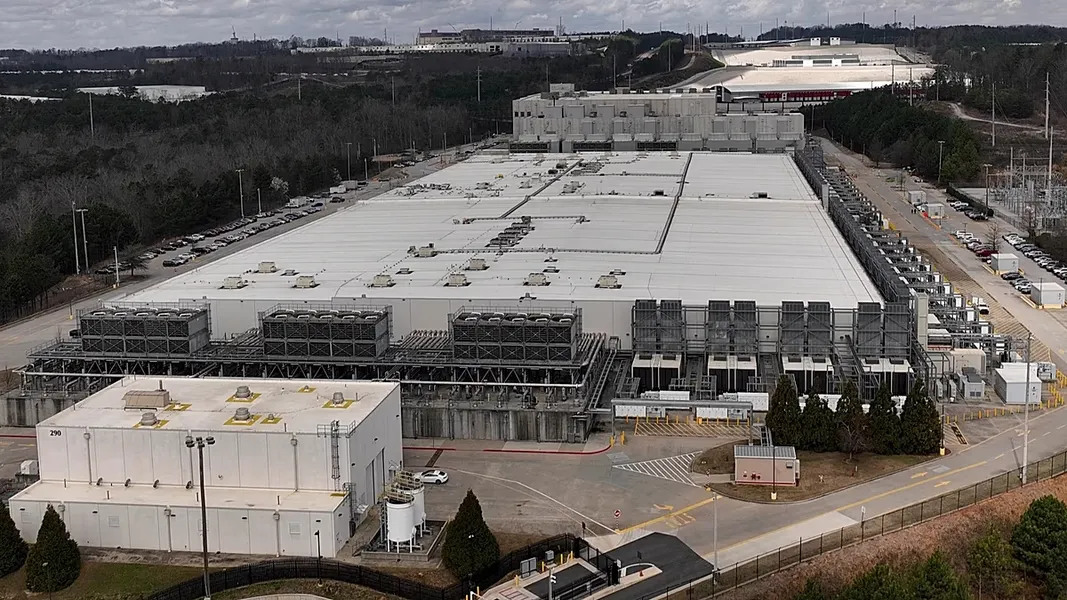
AI data centers consumed an estimated 222 billion litres of water for cooling in 2025, and that number could nearly triple to 644 billion litres by 2030 if no measures are taken Rystad Energy via parent article. Nvidia claims its DSX closed-loop cooling system can almost eliminate water consumption at some facilities by circulating liquid directly through servers and allowing inlet water temperatures as high as 45°C parent article. But the water-energy trade-off is real: using less water often requires more electricity to cool the circulating liquid, and the optimal mix depends heavily on climate and facility design.
Most closed-loop systems in 2024 operated with inlet temperatures around 32°C, according to the Uptime Institute parent article. Nvidia's higher 45°C inlet temperature reduces the need for chilled air year-round, but in extremely hot climates or during heatwaves, evaporative cooling or chilled air may still be required parent article. Microsoft, AWS, and Meta all reported increases in total water use from 2022 to 2025 as they expanded data center operations, but their water-use efficiency improved by about 25% for Microsoft and 37% for AWS parent article. These efficiency gains come from closed-loop systems that do not result in net water loss, according to the companies.
For AI builders, the practical implications are straightforward. Cooling method choice directly affects both capital expenditure and operational cost for new data center builds. If you are planning infrastructure for training or inference workloads, the climate of your deployment site matters. A facility in a cool, dry region may benefit from closed-loop cooling with minimal energy penalty, while a site in a hot, humid area may still need evaporative cooling, which consumes water. The indirect water footprint from electricity generation and chip manufacturing can be twice as high as direct cooling water use in the United States parent article, so total water impact is larger than what cooling alone suggests.
There is no industry-wide standard for reporting environmental metrics, making direct comparisons across companies difficult parent article. Nvidia's DSX claims are based on company statements, and real-world results will vary by climate and facility design. Because water is generally cheaper than electricity, companies have less financial incentive to cut water use on cost grounds alone, though public relations pressure is growing as opposition to data centers increases in the US parent article.
The bottom line: closed-loop cooling with higher inlet temperatures can reduce direct water use, but the energy trade-off and climate dependency mean there is no one-size-fits-all solution. AI builders should evaluate cooling strategies based on local climate, energy costs, and total water footprint, not just vendor claims.
FAQs
Sources
- Can tech giants curb AI data centres’ growing thirst for water?
- Tech companies look to Argentina’s windswept Patagonia to build massive data centers
- Can tech giants curb AI data centres’ growing thirst for water?
- Can tech giants curb AI data centres’ growing thirst for ...
- Tech Giants Claim AI Data Centers Can Slash Water Use Amid ...
- AI boom pushes tech giants to cut data centres’ thirst for water
- AI Data Center Water Consumption: Challenges and Solutions in ...
- Can tech giants curb AI data centres’ growing thirst for water?
- AI data centers are less thirsty now, tech giants say
- When it comes to total water use, AI data centers are a drop in the bucket
- Google Bets Water Stewardship Can Ease AI Data Center Concerns
- Can tech giants curb AI data centres’ growing thirst for ...
- AI data centres are less thirsty now, say tech giants
- AI data centers use far more water than most tech giants report
- AI data centers are less thirsty now, tech giants say
- Europe's thirst for AI runs into local water worries | Euractiv
- AI's Hidden Water Crisis: Data Centers' Growing Thirst | LinkedIn