AGI Has Arrived? What GPT-6 Astra Trained on 100k Grace Blackwell GPUs Means for AI Builders
Published by AINave Editorial • Reviewed by Ramit
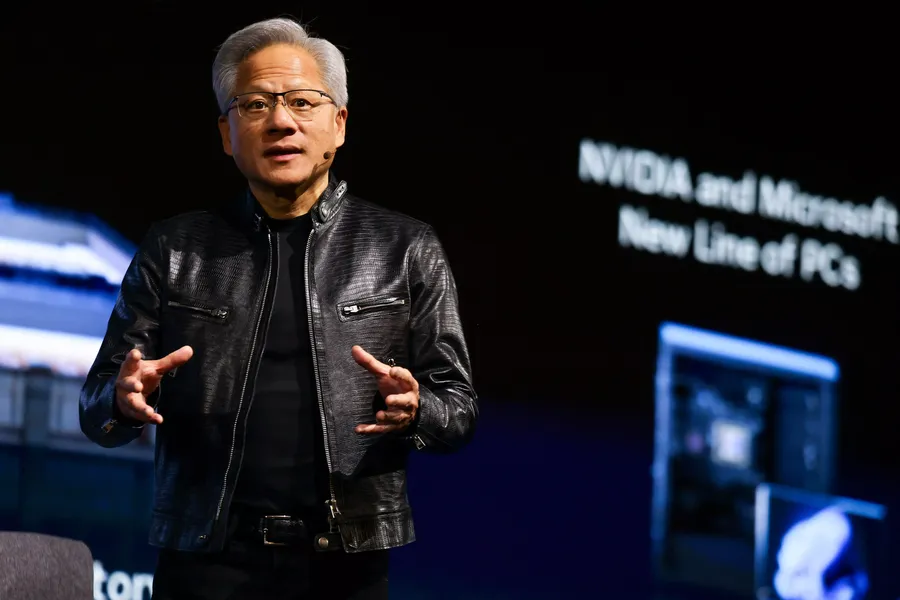
NVIDIA CEO Jensen Huang posted on X that OpenAI's GPT-6 Astra, trained on roughly 100,000 NVIDIA Grace Blackwell NVLink72 GPUs, marks the arrival of AGI. But for AI builders, the real news isn't the AGI label. It's the economics behind it.
What Jensen Huang Actually Said
On September 6, 2026, Huang wrote: "GPT-6 Astra, trained on ~100K+ NVIDIA Grace Blackwell NVLink72. From ChatGPT to o1 to Astra in 4 years. AGI has arrived. Congratulations @OpenAI team. 400K GPUs coming online next." The post has drawn significant attention, but it was less cautious than his recent earnings call language. Just days earlier on the Q2 FY2027 call, Huang said "for many tasks, we could say that we've already achieved AGI" but then pivoted to economics: "The most important thing that matters for the industry is that one, AI is now doing productive and useful work. Two, AI is generating profitable tokens. And three, if we had more compute, we could generate more profitable tokens." He summarized: "Now, compute is revenue."
The AGI Claim: Rhetoric or Milestone?
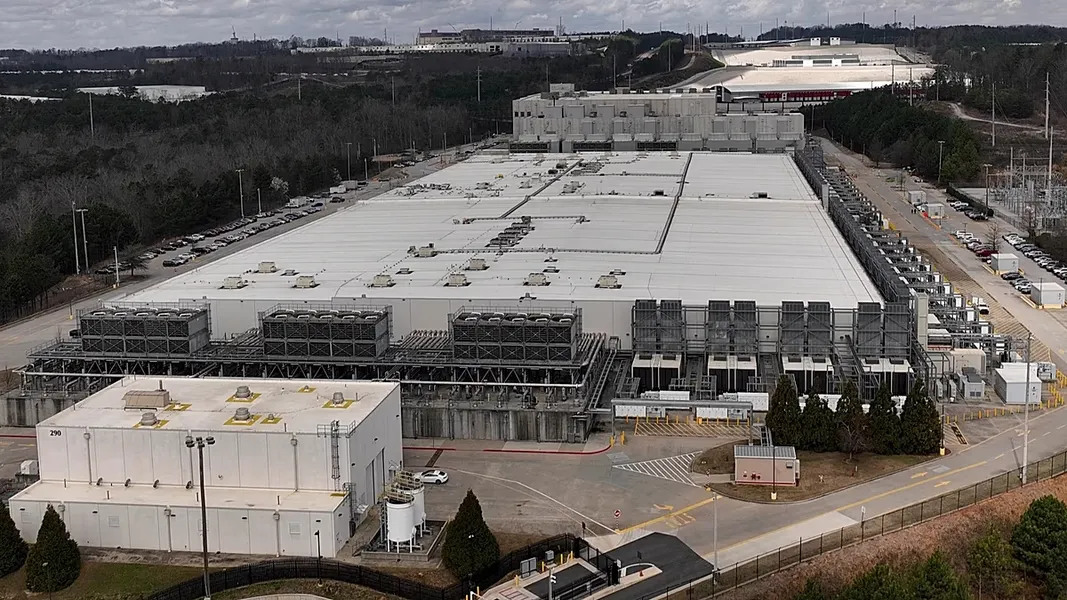
The AGI declaration is Huang's own framing, not an independent evaluation. Several outlets reported that benchmark makers remain unconvinced. OpenAI itself hasn't publicly called GPT-6 Astra AGI. The claim is layered on top of a real hardware number: the Astra training cluster uses more than 100,000 Grace Blackwell GPUs connected via NVLink72. That scale is genuinely unprecedented, but whether it proves AGI depends on how you define it. For builders, the more concrete takeaway is that training such a cluster costs hundreds of millions of dollars and requires hyperscaler-level infrastructure.
Why AI Builders Should Care About Compute as Revenue
Huang's framing that "compute is revenue" matters for anyone building on top of these models. NVIDIA's data center revenue hit $89.02 billion in Q2 FY2027, up 117% year over year, with gross margins at 75%. The company guided Q3 revenue to $108 billion and expects fiscal 2028 to grow about 70%. Huang described current supply as constrained: "at this moment, we have supply for 70%. Our demand is much higher than that." For AI builders, this means GPU availability will remain tight and expensive. Hyperscaler capex is projected to reach nearly $800 billion in 2026 and $1.3 trillion in 2027, much of it flowing to NVIDIA hardware. The implication: if you're building a startup or product that depends on large-scale inference or training, expect continued high costs and allocation challenges. The 400,000 additional GPUs Huang says are coming online next may ease supply, but not dramatically.
The Hardware Numbers That Matter
NVIDIA's unit economics provide context for why the AGI narrative benefits the company. Huang stated on the Q2 call that a Grace Blackwell deployment generates $25 billion per gigawatt in revenue opportunity, while the successor Vera Rubin lifts that to $40 billion per gigawatt. These numbers are not independent projections; they are NVIDIA's own estimates for what hyperscalers will spend on its platforms. For builders, the takeaway is that NVIDIA is investing heavily in next-generation architectures (Vera Rubin) that will likely drive even larger training clusters and higher costs.
What's Still Unclear
Several important questions remain unanswered. First, GPT-6 Astra's actual capabilities beyond what OpenAI and NVIDIA have claimed are not independently benchmarked in the sources provided. Second, the AGI claim conflates a single model milestone with general intelligence, a leap that many AI researchers dispute. Third, supply constraints could delay the 400,000 GPU rollout. Huang noted current supply only meets 70% of demand. Fourth, the cost of training and running GPT-6 Astra has not been disclosed, making it hard to assess whether the "profitable tokens" claim holds at scale. Builders should treat the AGI announcement as a marketing signal about NVIDIA's hardware ambitions rather than a scientific breakthrough.
For now, the practical takeaway is unchanged: if you need frontier model capabilities, you need access to massive compute. The AGI label may grab headlines, but the underlying trend is about who controls the infrastructure that makes these models possible.
FAQs
Sources
- Jensen Huang Declares “AGI Has Arrived” — Powered by 100,000+ Nvidia Grace Blackwell GPUs
- Nvidia CEO Says ‘AGI Has Arrived’ After GPT-6 Astra: Jensen...
- NVIDIA CEO Declares GPT-6 Astra Marks AGI Arrival
- Jensen Huang says "AGI has arrived" following... | Seeking Alpha
- NVIDIA's Huang Congratulates OpenAI on GPT-6 Astra... | KuCoin
- Jensen Huang declares “AGI has arrived” — powered by 100,000+ Nvidia Grace Blackwell GPUs
- Jensen Huang says AGI has arrived, and 400,000 more GPUs are coming
- Nvidia’s Jensen Huang says OpenAI’s Astra means ‘AGI has arrived’ but benchmark makers aren’t convinced
- Nvidia CEO Jensen Huang says 'AGI has arrived' following OpenAI GPT-6 Astra launch
- Jensen Huang Says AGI Has Arrived. Nvidia Investors Should Pay Attention
- Jensen Huang Declares “AGI Has Arrived” — Powered by 100,000 ...
- Jensen Huang Declares 'AGI Has Arrived' on X, Credits OpenAI ...
- Jensen Huang: "AGI Has Arrived"? The Catch (2026 ...
- Jensen Huang Declares AGI | AIM - Analytics India Magazine
- Nvidia CEO Jensen Huang Declares AGI Era with OpenAI GPT-6 ...