AI data centers are cutting water use with closed-loop cooling, but trade-offs remain
Published by AINave Editorial • Reviewed by Ramit
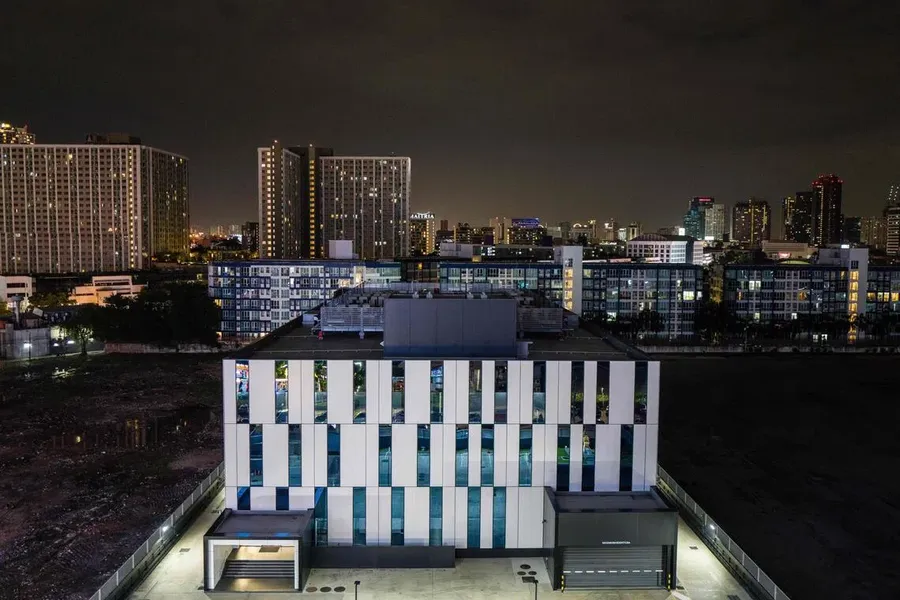
AI data centers are under growing public pressure over their water consumption, and major tech companies are responding with closed-loop cooling systems that can dramatically reduce on-site water use. Nvidia claims its DSX system can virtually eliminate water consumption at some facilities, while Microsoft and AWS report significant improvements in water-use efficiency. But the trade-offs between water and energy, plus hidden water footprints from electricity generation and chip manufacturing, mean the picture is more complex than a simple win.
How Nvidia DSX closed-loop cooling works
Nvidia's DSX system uses a closed-loop design where liquid coolant flows directly through servers, as close to the chips as possible. The key innovation is starting the coolant at about 45°C, much warmer than the typical 32°C used by other closed-loop systems in 2024, according to the Uptime Institute. By starting warmer, Nvidia reduces the need to pump cooled air year-round. Simple fans circulating air are often sufficient, though extreme climates or heat waves may still require chillers or evaporative cooling.
Nvidia claims this approach can virtually eliminate water consumption at some facilities. That's a bold claim, and one the industry is under pressure to prove.
Industry-wide water consumption and efficiency gains
In 2025, data centers worldwide consumed 222 billion liters of water for cooling, according to Rystad Energy. Without adaptive measures, that could nearly triple to 644 billion liters by 2030. Microsoft, AWS, and Meta all report using closed-loop systems that involve no net water loss. Between 2022 and 2025, Microsoft improved water-use efficiency by 25% and AWS by 37%, though total water use still grew as their footprints expanded.
The real trade-offs builders need to understand
Cutting water use usually means more energy consumption. As independent researcher Andy Masley put it, "there's a pretty direct trade-off between how much water is used and how much energy is used" for temperature control. Nvidia's warmer intake reduces some of that energy penalty, but it doesn't eliminate it.
There's also the hidden water footprint. Water used to generate electricity and manufacture chips and servers can be twice the amount a data center consumes on-site in the United States. Upgrading older data centers to newer cooling technology is expensive, though older centers are smaller and need less cooling anyway.
ESG reporting remains inconsistent. SpaceX, now a major data center player after acquiring xAI, has never published an ESG report and received MSCI's lowest ESG score. That makes it hard for builders to compare providers on environmental impact.
What this means for AI builders
When choosing cloud providers or planning AI infrastructure, don't assume lower on-site water use means lower total environmental impact. Closed-loop cooling is a real improvement, but the energy trade-off and supply-chain water use matter too. Look for providers that disclose both water and energy metrics transparently. The technology is getting better, but the full lifecycle footprint is what counts for long-term sustainability decisions.
FAQs
Sources
- AI data centres are less thirsty now, tech giants say
- A ‘thirsty’ AI boom could deepen Big Tech’s water crisis - YouTube
- Datacenters face rising thirst as Europe dries up • The Register
- Making AI less 'thirsty' | Digital Watch Observatory
- Thirsty Machines: The AI Data Centre Boom
- With a lack of federal laws regulating water-thirsty AI data centers, CU Boulder report outlines strategies
- Thirsty machines: AI data centers' need for water prompts local worries over supplies, impacts
- AI data centers are less thirsty now, tech giants say
- Thirsty machines: AI data centers' need for water prompts local worries over supplies, impacts
- AI data centers are less thirsty now, tech giants say
- Bangkok Post - AI data centers are less thirsty now, tech giants say
- AI data centers are less thirsty now, tech giants say | ABS-CBN News
- AI data centers are less thirsty now, tech giants say - Digital Journal
- AI data centres are less thirsty now, say tech giants | FMT
- AI data centers are less thirsty now, tech giants say