NVIDIA Vera Rubin Widens AI Compute Moat as China Export Controls Loom
Published by AINave Editorial • Reviewed by Ramit
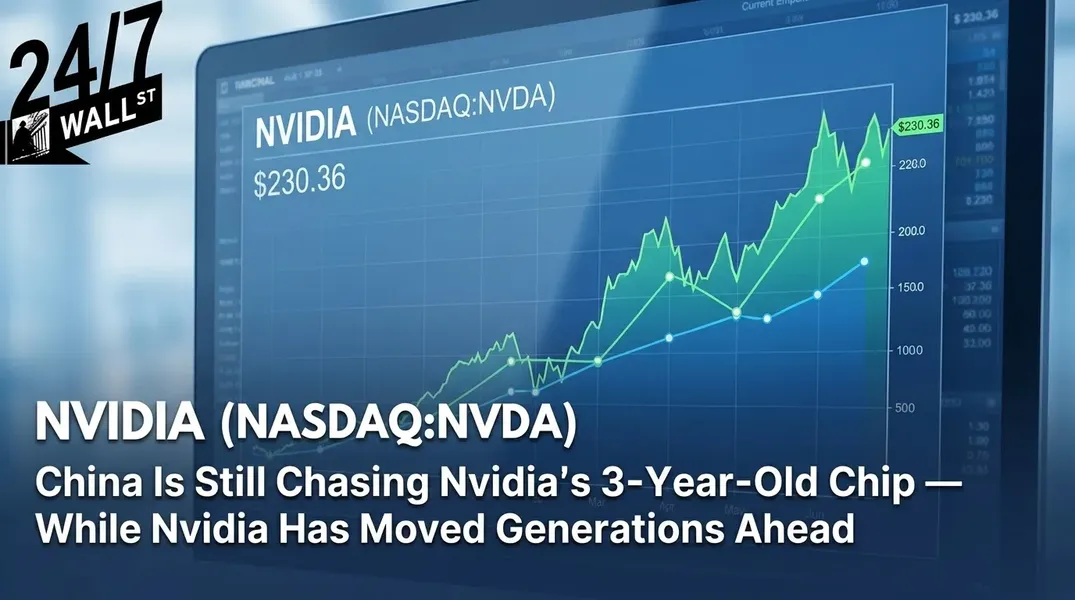
NVIDIA's Vera Rubin GPU is now in full production, delivering 4,000 FP16 TFLOPS per chip, while China's best domestic alternative, the Huawei Ascend 910C, tops out at 780 TFLOPS. For AI builders provisioning training clusters or inference infrastructure, this performance gap means NVIDIA remains the default choice for demanding workloads, but supplier concentration and cross-border restrictions introduce real planning risks.
Vera Rubin's 4,000 TFLOPS vs Huawei's 780: The Gap Widens
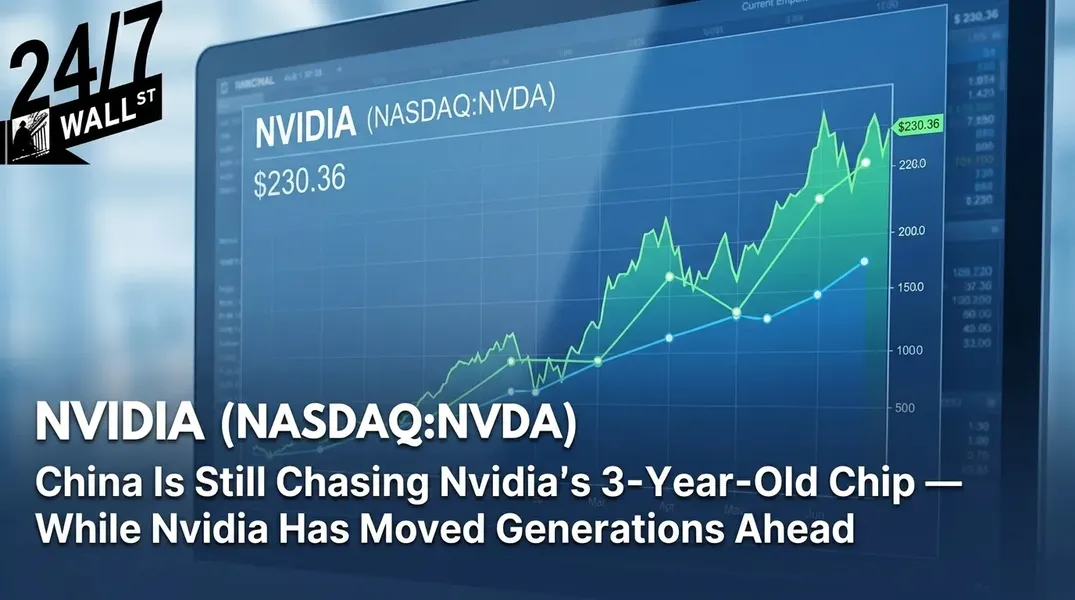
Vera Rubin is NVIDIA's latest architecture, already in production, and its single-GPU FP16 throughput of 4,000 teraflops more than doubles the H200's roughly 1,700 TFLOPS unveiled three years ago. The Huawei Ascend 910C, China's most advanced AI chip, delivers approximately 780 TFLOPS. Even the H200 outperforms the Ascend 910C by more than 2x. NVIDIA has moved through Blackwell and Blackwell Ultra to reach this point, while Huawei remains stuck chasing hardware that is three generations old.
This is not just a headline number. For builders training large models or running inference at scale, peak FP16 throughput translates directly to faster training cycles and lower latency per token. The gap means that for any workload where raw GPU compute matters, Huawei's current silicon cannot compete on a per-chip basis.
NVIDIA's Financial Fortress and Customer Concentration
NVIDIA reported Q2 FY27 Data Center revenue of $89.02 billion out of total revenue of $96.22 billion, with management guiding Q3 to approximately $108.0 billion at a ~74% gross margin. The company generated $21.34 billion in free cash flow in the quarter and has $99 billion remaining on its buyback authorization.
The revenue scale reflects intense demand from a handful of hyperscale customers. OpenAI, Anthropic, Meta, and AWS are all competing for scarce silicon. That concentration gives NVIDIA enormous leverage in allocation and pricing, but it also means any shift in one customer's buildout could create ripples in the supply chain.
Export Controls and Evolving Access
U.S. export controls remain a significant factor. Hopper shipments to China were less than 1% of Data Center revenue in Q2, and the Q3 guide explicitly assumes zero Data Center compute revenue from China. However, reports indicate that limited H200 chips have reached China under quota, and Chinese AI firms have been accessing advanced NVIDIA compute through overseas cloud services.
On the domestic front, China has reportedly banned its largest tech firms from buying NVIDIA chips, and DeepSeek ordered 160,000 Huawei Ascend chips. Meanwhile, NVIDIA denied plans to ship a China-specific language processing unit this year. The net effect is that the Chinese market is largely closed to NVIDIA's most capable hardware, pushing Chinese builders toward domestic alternatives or cloud access abroad.
What Builders Should Watch For
For AI builders outside China, the key takeaway is that NVIDIA's hardware lead is likely to persist, but supply may remain constrained for the highest-end SKUs. Builders serving Chinese customers or operating in China should plan for limited to no access to Vera Rubin-class hardware and evaluate Huawei's ecosystem or overseas cloud arrangements.
The widening GPU gap also means that software stacks optimized for CUDA and NVIDIA's ecosystem will have a long tail of relevance. However, reliance on a single supplier carries geopolitical and supply-chain risk, especially if export controls tighten further or if demand outstrips production capacity.
The financials suggest NVIDIA has the resources to continue investing aggressively, but the concentration of demand among a few hyperscale customers and the uncertainty around China access are real caveats. Independent benchmarks for Vera Rubin are not yet available, so the 4,000 TFLOPS figure is a vendor claim. For builders, the practical decision is whether to target the performance ceiling offered by NVIDIA's roadmap or to diversify across suppliers early.
FAQs
Sources
- China Is Still Chasing Nvidia’s 3-Year-Old Chip — While Nvidia Has Moved Generations Ahead
- China Is Still Chasing Nvidia's 3-Year-Old Chip — While ...
- China Is Still Chasing Nvidia’s 3-Year-Old Chip — While ...
- The U.S. banned Nvidia's best chips from going to China. Now ...
- Nvidia's AI chip sales in China stall, as local chipmakers ...
- Nvidia's AI chip sales in China stall, as local chipmakers ...
- China is still chasing Nvidia’s 3-year-old chip — while Nvidia has moved generations ahead
- China Bans Top Tech Firms From Buying Nvidia Chips, Report Says
- Nvidia denies report it is rolling out China AI chip by year-end
- Nvidia H200 Chips Enter China at 13% of Quota; Beijing, Not Washington, Controls Rest
- Nvidia H200 chips reach China in small shipments, FT reports
- China Is Still Chasing Nvidia’s 3-Year-Old Chip — While... - AOL
- Nvidia Drivers (V 610.88 vs V 616.56) | Test In 10 Games... - YouTube
- World Leader in Artificial Intelligence Computing | NVIDIA
- DeepSeek's 160,000 Huawei Order Is A Real Threat To Nvidia In 2027
- NVIDIA Brings Simplified Local AI Support To NVIDIA GPUs Carrying...