European robot compute modules: NEURA and SECO partner on Physical AI hardware
Published by AINave Editorial • Reviewed by Ramit
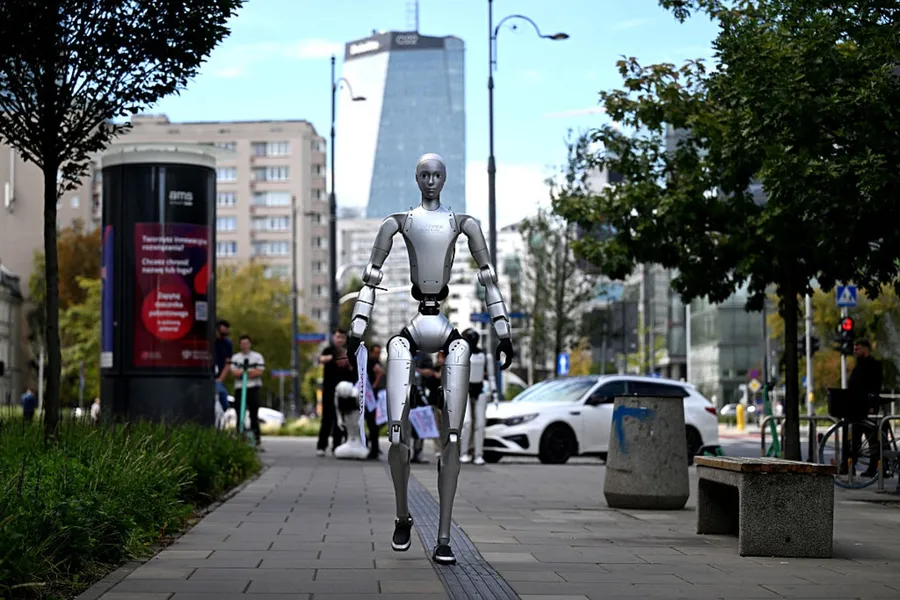
NEURA Robotics has partnered with Italian embedded-computing firm SECO to design and manufacture the compute modules for its cognitive robots, including the 4NE1 humanoid. The modules will be built in Europe, but the processors inside them will come from Qualcomm's Dragonwing line. This is the European Physical AI stack as it actually exists: European integration and manufacturing, American compute.
The deal: European robot compute modules
SECO will engineer, qualify, and produce the electronic compute modules at volume in Europe. The modules use Qualcomm Dragonwing processors, supplied under a separate collaboration announced in March covering the Brain and Nervous System reference architectures. NEURA plans to deploy millions of cognitive robots by 2030 and will open a NEURA Gym in Italy to train robots by demonstration. The partnership also includes a plan to use production-line data to build Physical AI automation for semiconductor and electronics manufacturing, feeding into NEURA's Neuraverse platform where skills learned on one job become reusable.
What Europe supplies and what it doesn't
For teams building AI-enabled robots, the partnership highlights where Europe's advantage sits: not in the silicon, but in the integration, qualification, and volume manufacturing of embedded boards. SECO's gross margin rose to 54% despite higher memory prices, indicating operational discipline. The company reported first-half revenue of €98.8m and guided to about €60m in the third quarter. Europe supplies the board engineering and manufacturing; Qualcomm supplies the compute. NEURA founder David Reger framed the goal as combining European industrial knowledge with the best technologies in the world, a coherent position that is narrower than full sovereignty.
The scale question
NEURA wants millions of robots by 2030. SECO turned over €98.8m in six months across all its markets, from hospital equipment to vending machines. A humanoid robot with NEURA's distributed Smart Limbs approach needs many modules, so millions of robots means tens of millions of modules. Neither company has disclosed production capacity or who pays to build it. That is the open question for anyone evaluating the hardware supply chain.
Caveats and unknowns
The announcement is a single partnership. No shipping figures for the 4NE1 have been published. Production timelines and capacity details are absent. The broader impact depends on whether European industrial integration can scale to meet NEURA's ambitions. The bet in Metzingen and Arezzo is that the next layer is physical, and that industrial engineering is the part Europe never lost. It is a reasonable bet, but for now only a bet.
FAQs
Sources
- NEURA and SECO will build robot compute modules in Europe
- NEURA and SECO Partner on Robot Compute Modules Built in...
- NEURA Robotics and SECO Team Up to Scale European Physical AI...
- NEURA Robotics and SECO join forces to scale physical AI from...
- Machine Economy News and Market Analysis | Korthos
- NEURA And SECO Partner On Dragonwing Robot Compute Modules In Europe
- NEURA Robotics and SECO Join Forces to Scale Physical AI from Europe
- NEURA Robotics and SECO to develop compute modules for robots ...
- Are Humanoids Over? NEURA Is Making Its Case | XMAQUINA DAO