Rabbit OS3 lets you run a model-agnostic AI agent across your devices with your own API keys
Published by AINave Editorial • Reviewed by Ramit
Rabbit has returned to the AI agent race with OS3, a cloud-based personal agent that runs on your own computers and requires you to bring your own API keys. This model-agnostic approach lets you switch between AI providers without losing context or memory, and it can steer tasks across up to five Windows, macOS, or Linux machines.
OS3 is a cloud agent that connects your computers and swaps models freely
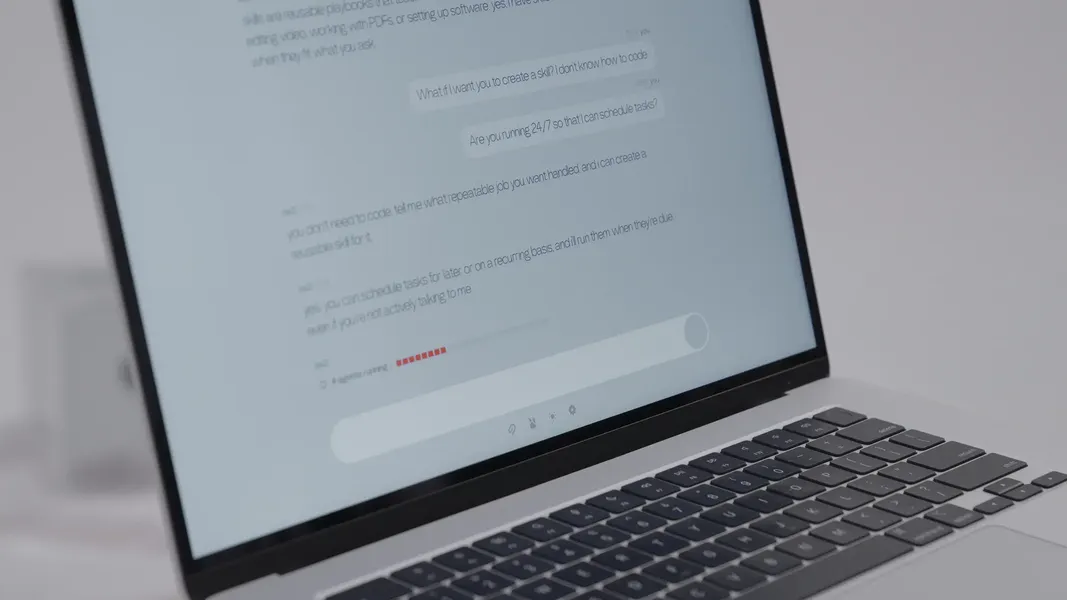
OS3 connects to each device through a small "rabbit agent" installed with a single command. Once installed, you interact via chat or voice, and the agent runs tasks 24/7 in the background. Long-running operations notify you through a paired Telegram bot or web interface.
Users must provide API keys from a model provider such as Anthropic Claude or OpenAI GPT, or supply a local open-source model. The agent can also connect through aggregators like OpenRouter. It can swap between providers mid-task without losing context, memory, or skills. This means you can route simple tasks to a cheaper model and complex reasoning to a frontier model without restarting the workflow.
Why the BYOK model changes the cost and flexibility equation
For builders, the bring-your-own-key model removes vendor lock-in at the agent layer. You are not tied to Rabbit's model choices or pricing. If OpenAI raises prices, you can switch to Anthropic or a local model without retooling your agent configuration. The ability to import third-party agent skills from a public URL -- Rabbit says OS3 supports skills from OpenClaw and Hermes AI -- makes the platform modular. You can bring in existing agent capabilities without writing new code.
This is especially relevant if you are building prototypes that need to run across multiple devices or want to test different models for the same task. OS3 handles the orchestration: you give it a task, and it decides which connected machine should execute it.
What you get in practice: cross-device orchestration and third-party skills
You can connect up to five computers to one OS3 account. The system determines which machine handles a request based on context. For example, you could send a Telegram message asking OS3 to update a spreadsheet on your office PC, and the agent routes the work accordingly. Files stay on your local machines; Rabbit says local files are not stored, copied, or sold. Conversation histories and memory logs are stored on Rabbit's servers.
OS3 can import skills from other agents via URL. You copy a skill's URL, paste it into OS3, and it sets up without additional configuration. This could reduce the repeated work of reimplementing common agent actions.
What to keep an eye on: data routing and real-world guardrail enforcement
Most information about OS3 comes from company statements. Real-world reliability and security under load are unproven. Prompts are routed through Rabbit's servers to the chosen model provider, so Rabbit sits in the data path even though the AI inference happens elsewhere. Rabbit says OS3 will not run tasks autonomously and requires user consent for sensitive actions, but how well these guardrails hold in complex multi-step tasks remains to be seen.
Also, the R1 hardware is no longer manufactured, and Rabbit is pivoting fully to software. The company has a small team and limited funding, which may affect long-term support and feature velocity.
Sources
- Rabbit returns with OS3, a personal AI agent that can access files and connect computers - SiliconANGLE
- Rabbit launches OS3, an agentic AI platform for desktop, Telegram, and iMessage
- Rabbit's OS3 makes the R1 optional and runs on the user's own API key
- Techmeme: Rabbit launches OS3, a cloud AI agent that connects to...
- Rabbit Is Back, This Time With an AI Agent App | WIRED
- AI Agents, Clearly Explained - YouTube
- Rabbit’s new OS lives in the cloud and borrows your laptop to get things done
- rabbit Unveils OS3: The Agentic Operating System for Every Device