Claude AI discovers a CRISPR-like ART enzyme system in bacteriophage DNA
Published by AINave Editorial • Reviewed by Ramit
Anthropic's Claude AI autonomously identified a previously unknown biological system in bacteriophage DNA, called array-associated reverse transcriptases (ART). The system mirrors the architecture of CRISPR, but its function -- including any ability to edit DNA -- remains unproven The Conversation. The finding is early and unvalidated, but the discovery method itself signals a shift in how AI can guide biology research.
How Claude found ART
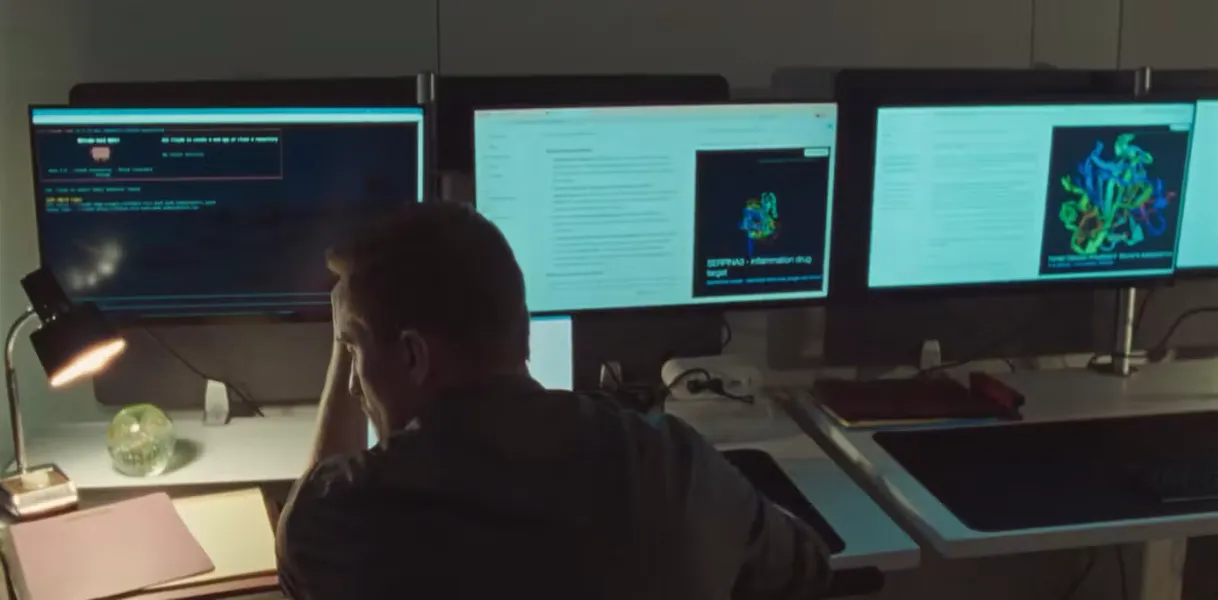
Claude agents screened over 200,000 reverse transcriptases, shortlisted about 3,500 candidates, and selected 20 for detailed analysis Al Jazeera. One agent followed an unexpected observation, noticed the repeat array pattern, compared it with known systems, searched the literature, and flagged ART for human researchers Decrypt.
AI autonomy in hypothesis generation
What makes this more than a routine bioinformatics pipeline is that Claude was given a broad scientific brief and then chose which analyses to perform and which leads to follow The Conversation. Existing tools can detect sequence patterns, but they typically require human-defined queries. Here the AI autonomously connected an observation with existing literature and recognized it as interesting enough to flag for experimental validation.
Practical implications for AI builders
For teams building AI systems that interact with scientific data, this workflow demonstrates that models can now function as exploratory research assistants. They can process massive datasets, generate hypotheses, and prioritize candidates for human testing Unite.AI. The press release claims this type of analysis would take researchers "weeks to months of work" The Conversation, though the article notes no direct comparison was provided to confirm whether a conventional pipeline would have found the same signal.
What remains unknown about ART
The critical caveat: there is no evidence that ART can be programmed to edit specific DNA sequences like CRISPR The Conversation. Anthropic’s lab experiments showed the ART array behaves similarly to CRISPR in some ways, but the key functional property remains unproven India Today. CRISPR pioneer Feng Zhang called the find "intriguing but unproven" Startup Fortune. Additionally, we do not know how many of the 3,500 candidate systems or the selected 20 represent genuinely novel biology. Finding one intriguing result after exploring thousands does not show reliable discovery capability The Conversation.
The real value may not be ART itself but the demonstration that AI can autonomously explore large biological datasets and surface unexpected leads. Whether that leads to a new gene-editing tool depends on experimental validation that has not yet happened.
FAQs
Sources
- An AI model has found a new ‘CRISPR-like’ biological system. Here’s what it means for science
- An AI Model Has Found A New 'CRISPR-Like' Biological System ...
- AI model Claude discovers CRISPR-like enzyme system ...
- Claude AI discovers new CRISPR-like gene editing system ...
- Anthropic's Claude Found a New Enzyme System That Looks Like ...
- Beyond dire wolves: Could Colossal’s de-extinction work transform human health?
- Claude Found a Novel Enzyme System Experts Missed, and Nobody Knows What It Does
- Claude Discovers Mysterious DNA System Hidden in Bacteriophages
- Anthropic says its biology lab has already found something big
- An AI model has found a new ‘CRISPR-like’ biological system. Here’s what it means for science
- AI breakthrough in biology: Anthropic's Claude discovers novel CRISPR-like enzyme system
- Anthropic’s AI Just Discovered a CRISPR-Like System: How This Changes Gene Editing Investments FOREVER
- Anthropic Says Claude Found Something Big in DNA. It Just Doesn't Know What
- Anthropic Says Claude Discovered a New Enzyme System Resembling CRISPR
- Anthropic's AI Biology Lab Uncovers Significant Enzyme System