Why Schnucks' AI shopping assistant depends on data quality more than model choice
Published by AINave Editorial • Reviewed by Ramit
When Schnuck Markets launched its AI-powered agentic shopping assistant earlier this year, the team expected shoppers to ask for dinner ideas. Instead, the first question was: "What time do your stores open?" The early flub revealed a harder truth: building a useful grocery AI is a data engineering problem, not a model selection problem.
The Schnucks AI shopping assistant, built in partnership with VitalityIP, was designed to provide nutrition guidance, meal ideas, and product recommendations through the Schnucks Rewards app and website. But the system's usefulness depends entirely on cohesive, up-to-date data across nutrition, pricing, and product attributes from multiple internal and producer sources.
The data cleanup behind Schnucks' AI shopping assistant
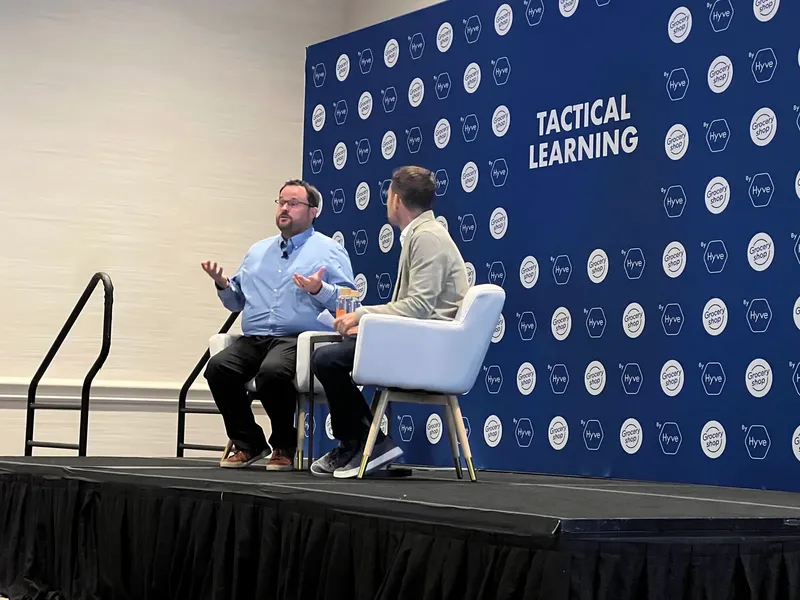
Schnucks' senior director of data science and engineering, Caleb Carr, explained the core challenge during a Groceryshop session. Although 90% of Schnucks' SKUs have syndicated data (formatted and regularly updated), health attributes like calories were often missing. When shoppers asked for meals with a specific calorie count, the assistant could not answer. Getting cohesive data from small producers without syndication tools added another layer of difficulty.
Internal data gaps were just as problematic. Service departments like bakery and meat hold tacit knowledge that skilled staff know but is not written down anywhere. Customers asked the assistant to recommend birthday cake messages, but the system had no access to the bakers' expertise. Schnucks had to convert that institutional knowledge into written data assets.
Even internal terminology caused trouble. Schnucks, like many retailers, refers to discounts as TPRs (temporary price reductions). Shoppers do not understand that term. The team built a separate AI model to decode internal jargon into shopper-friendly language.
Why data quality is the real bottleneck for grocery AI
For AI builders, the Schnucks case illustrates a pattern that applies well beyond grocery. Agentic commerce tools require multi-source data integration and ongoing data governance. A 2026 FMI survey found that more than two-thirds of food retailers now employ AI, up from 47% a year earlier. As adoption accelerates, the differentiator will not be which LLM a retailer picks, but whether they can keep product data, pricing data, and nutrition attributes complete, current, and connected.
Carr emphasized that grocers are well positioned to own the customer relationship through their own AI tools, rather than relying on generic external platforms. But that requires treating data infrastructure as a first-class product.
Practical steps for builders deploying retail AI
Start with the data gaps that will break the most common queries. For Schnucks, the missing calorie data meant nutrition queries failed. For your retail AI, identify the top 5-10 question categories and audit whether the underlying data exists, is structured, and is current.
Build a translation layer for internal jargon. Schnucks created a dedicated model to convert terms like TPRs into consumer language. That approach is better than trying to force a general-purpose LLM to learn your internal taxonomy through prompting alone.
Surface tacit knowledge systematically. Service department expertise that lives only in employees' heads is invisible to AI. Map that knowledge into structured or semi-structured data before launch.
What remains uncertain
Schnucks reported rising shopper uptake but did not share quantitative usage or satisfaction metrics. Data gaps around calories and some nutrition attributes are known, but the full scope of missing product information across all departments is unclear. Vendor claims about AI capability should be evaluated against real-world data completeness. The assistant's long-term usefulness will depend on how consistently Schnucks maintains data quality across thousands of SKUs and dozens of small producers.
For builders, the takeaway is clear: invest in data infrastructure before model selection. The AI is only as good as the data it can reach.
FAQs
Sources
- How Schnucks brought its AI shopping assistant to life
- VitalityIP and Schnucks Pioneer Agentic Commerce With Personalized...
- Shopping in A Grocery Store Using Ai and Your Camera | TikTok
- Schnucks brings smart salad bar from Picadeli to... - Retail Optimiser
- Schnucks Customer Story | Domo
- How Schnucks is embracing digital innovation in its... | Grocery Dive
- Schnucks partners with VitalityIP to launch AI-powered agentic shopping assistant
- Schnucks showcases latest digital shopping features
- Schnucks rolls out AI assistant, interactive ad tools for shoppers
- Zebra Case Study: Schnucks' Digital Transformation - YouTube
- Shop - Shopping designed around you
- Schnucks turns to agentic AI shopping assistant
- Schnucks Enhances Customer Shopping Experience With New ...
- VitalityIP and Schnucks Pioneer Agentic Commerce With ...
- Schnucks Teams With VitalityIP on AI-Powered Agentic Shopping ...