Meta Muse AI Agent Surges on Adoption and Analyst Bets, but OpenClaw Roots and Security Questions Remain
Published by AINave Editorial • Reviewed by Ramit
Meta's Muse AI agent launched to strong consumer adoption, prompting Jefferies and JPMorgan to raise price targets and call it a "killer app." But the rapid rise comes with questions about its OpenClaw lineage, unresolved security issues, and uncertain monetization that builders should watch closely.
Adoption and Wall Street Bets
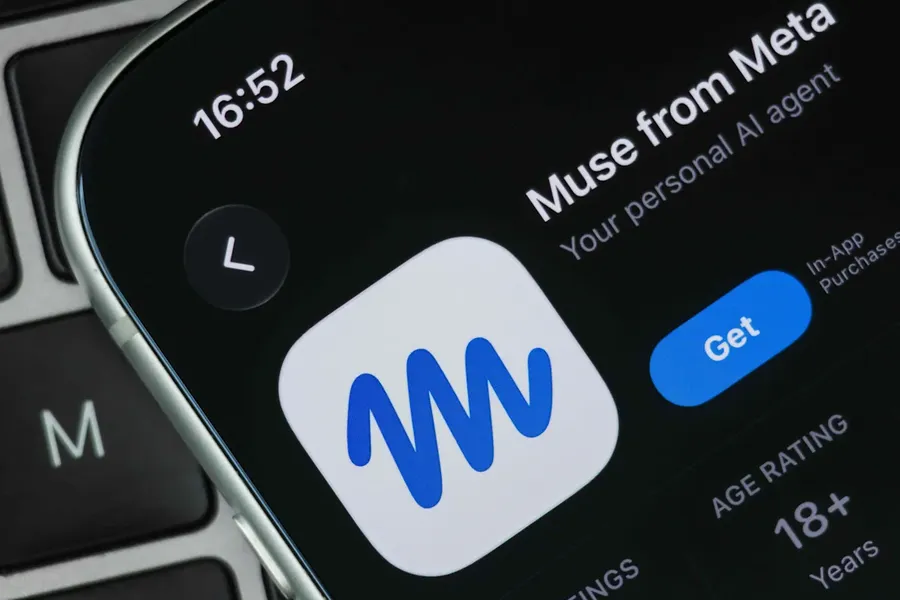
Muse hit No. 1 on the U.S. App Store shortly after launch, according to TechCrunch. Jefferies analysts called the adoption "unprecedented" and raised their Meta price target to $875 from $710, citing an "outsized monetization opportunity" from subscriptions and commerce. JPMorgan upgraded Meta to "overweight" with an $820 target, pointing to early consumer response and AI-driven growth. Citi analysts noted that the upcoming Connect conference could serve as a catalyst for further AI strategy updates.
OpenClaw Lineage and SOUL.md
Meta's head of product for Superintelligence Labs, Nat Friedman, acknowledged that Muse was "heavily inspired" by the open-source personal agent framework OpenClaw, though built from scratch. Observers quickly spotted that Muse's workspace included a SOUL.md file with nearly identical content to OpenClaw's. Friedman replied that OpenClaw's creator "got those things exactly right." This mirrors Meta's known playbook of adopting successful product patterns and scaling them.
Monetization Questions and Platform Friction
While analysts see potential in subscriptions and commerce, concrete plans remain unspecified. Amazon has already blocked Muse from shopping on its platform, highlighting that retailers may not welcome autonomous agents executing transactions. Meta is also reportedly testing a "human concierge" service for some phone calls, which raises questions about how much of Muse's actions are truly autonomous versus human-assisted.
Security Caveats for Builders
Meta says Muse cannot directly access user passwords or payment methods, storing credentials separately. However, security researchers reported a zero-day vulnerability that could let attackers take over a Mac session. The exploit surfaced alongside Amazon's block, putting the spotlight on trust and control infrastructure. For teams building personal AI agents, these incidents underscore that safety governance is not just a promise but a hard engineering problem.
FAQs
Sources
- Meta’s Muse AI Agent Is Showing ‘All the Signs of a Killer App’ Says Jefferies
- Meta admits Muse’s likeness to OpenClaw isn’t a coincidence
- Meta's success with Muse puts consumers back in the driver's seat of.....
- Meta’s Muse Agent Has Wall Street Divided on Its AI Potential
- I Gave My Life Over to Meta’s A.I. Agent and Was Blown Away
- Introducing Muse: The World’s First Personal AI Agent Built for...
- Amazon shows Meta's Muse AI shopping agent the door
- Amazon Blocks Meta’s Muse Agent From Shopping On Its Platform
- Meta’s Muse TV ad is the latest sign that AI agents are going mainstream
- Meta AI agent ‘Muse’ triggers massive tech rally as chips and Wall Street soar
- Meta testing a 'human concierge' for its new personal AI agent, Muse
- Meta's TV Muse Ad Is the Latest Sign That Agents... - Business Insider
- Long-term investors will be able to take advantage here says Jefferies...
- Meta’s Muse reportedly has zero-day vulnerability that lets attackers take over your Mac
- Meta Muse AI assistant suffers from zero-day vulnerability despite promise of privacy and security
- Meta Muse already has a majorly worrying zero-day security issue