AI Data Center IPO Wave Reshapes Infrastructure Ownership for Builders
Published by AINave Editorial • Reviewed by Ramit
A wave of AI data center IPOs is approaching. Three operators-Nscale, Vantage Data Centers, and Humain-are pursuing public listings that could redefine how massive compute capacity is owned and financed. For AI builders, this shift from private debt to public equity markets means the infrastructure they depend on will have new owners, new capital structures, and new risks to watch.
Nscale, Vantage, and Humain lead the AI data center IPO wave
Nscale, a London-based AI cloud company spun out of a Bitcoin mining operation, could go public in the U.S. as soon as this month. CEO Josh Payne has secured a hardware agreement with Figure AI to supply up to 100,000 of Nvidia’s next-generation chips, backed by a $3.5 billion commitment that scales past $6 billion, paired with an equity stake in Figure. Nscale also signed a six-year, $45 billion lease with Anthropic for 460 megawatts at its Monarch campus in West Virginia, an off-grid site powered by its own natural-gas generators. Ahead of its U.S. listing, which could raise about $3 billion, Payne is assembling $3.5 billion in bridge financing, including up to $1.5 billion in convertible notes from Third Point and about $2 billion from Nvidia (the round is not yet finalized). Nscale reported just over $100 million in revenue for the three months ending June 30, operating about 25,000 active chips against roughly 289,000 total deployed or on order.
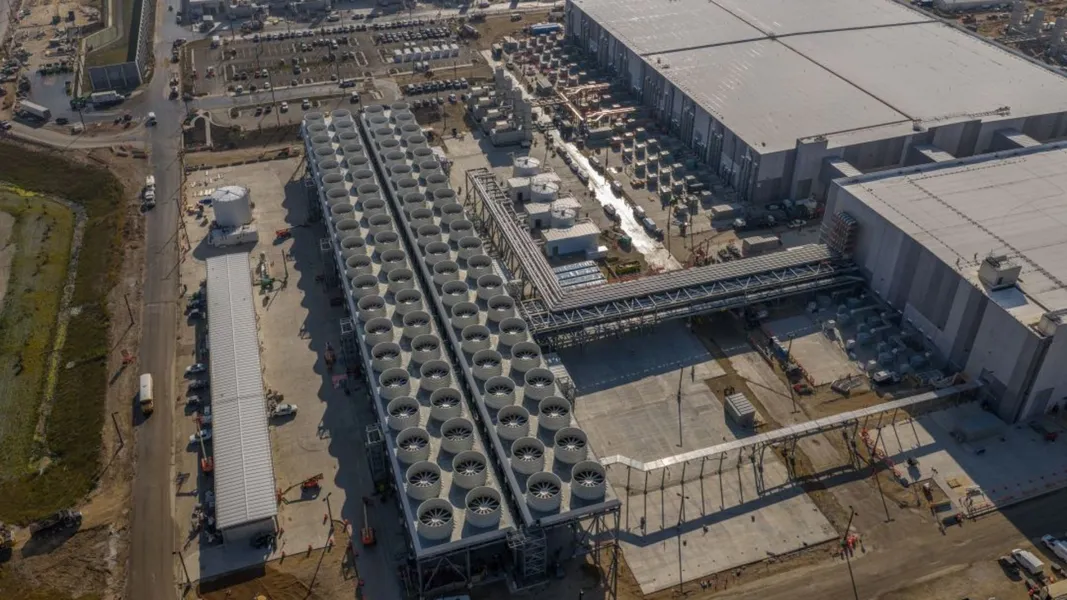
Vantage Data Centers, led by Sureel Choksi since 2013, is exploring an IPO or a sale as soon as next year that could value it at $100 billion, per Reuters. Vantage is backed primarily by private equity; Silver Lake and DigitalBridge led a $9.2 billion investment round in 2024. The valuation is anchored by two megacampus projects: Stargate, a $15 billion, four-building campus in Port Washington, Wisconsin, hosting compute for OpenAI, Oracle, and SoftBank; and Frontier, a $25 billion, 10-building campus in Shackelford County, Texas, where the first data center is due to switch on later this year. An IPO could raise up to $10 billion, potentially making it the largest data center IPO in history.
Humain, Saudi Arabia’s state AI company run by former telecom executive Tareq Amin, is preparing for a dual listing in Riyadh and New York, with a target by the end of the decade. The Saudi Public Investment Fund (PIF) is the primary financier. Humain has signed agreements with AMD to deploy up to $10 billion for 500 megawatts of compute capacity over five years, a matching supply commitment with Nvidia, and a $5 billion-plus “A.I. Zone” with Amazon Web Services. The Commerce Department cleared Humain last November to buy up to 35,000 Nvidia Blackwell chips, though shipments remain subject to individual licenses. Amin confirmed on LinkedIn in September that he is hiring an investor relations team with IPO experience.
Public equity becomes the liquidity engine for megacampuses
Historically, data centers were financed like commercial real estate: developers put in equity, banks lent against leases, and tenants paid down loans over 10 to 15 years. But AI-ready data centers cost about three times as much as conventional ones-averaging roughly $1.4 billion per project-and often require their own power plants. Mega-campuses like Stargate and Frontier are leased to customers whose businesses are only a few years old, making commercial lenders unwilling to underwrite the liabilities against a single corporate balance sheet. Public equity markets offer the pool of liquidity large enough to absorb that risk, which is why Amin, Payne, and Choksi are preparing their offerings.
How this reshapes compute access for AI developers
If these IPOs succeed, they will transfer ownership of massive compute capacity from private hands to public shareholders. For AI builders, this could mean more transparent pricing for compute leases, because public companies must disclose revenue and capacity utilization. It could also create new counterparty risk: a publicly traded data center operator may face pressure to maximize shareholder returns, potentially shifting contract terms or raising prices. On the positive side, the influx of public capital could accelerate the buildout of megacampuses, making more compute capacity available to AI developers and reducing wait times for hardware.
What remains uncertain: export controls, timelines, and valuations
The timelines are fluid. Nscale’s bridge financing is not yet finalized, and its IPO could slip. Vantage’s IPO or sale is targeted for next year, but the $100 billion valuation is a Reuters report, not a guaranteed figure. Humain’s dual listing is not expected until 2029, and its ability to scale depends on U.S. export licenses for Nvidia and AMD chips. The Commerce Department’s clearance for up to 35,000 Blackwell chips is a cap, not a guarantee of shipment, and each shipment requires individual approval. Additionally, the $103 billion in customer commitments that Nscale has marketed is described by a person familiar with the company’s plans as illustrative of long-term commitments rather than formal guidance for analyst modeling. AI builders should track these developments but avoid assuming near-term capacity changes based on IPO announcements alone.