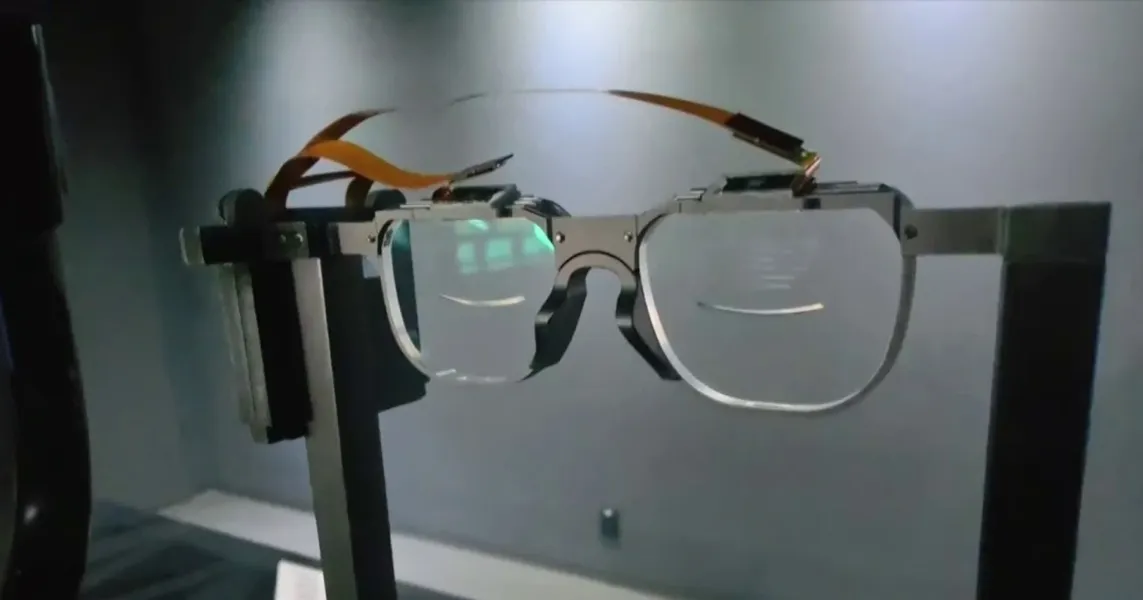
PinTILT AI glasses: LetinAR's line-of-sight optics and what builders should know
Published by AINave Editorial • Reviewed by Ramit
South Korean startup LetinAR has demonstrated PinTILT, a lens technology that places AI and digital information directly in the user's line of sight. If it scales, this approach could shift how builders think about hands-free, context-aware AI interfaces for operators, developers, and consumers.
How PinTILT works: optical tilting for contextual data
The core mechanism is compact optical tilting. Unlike conventional AR displays that project images onto a waveguide or reflect them off a prism, PinTILT tilts light paths through the lens to overlay digital content directly in the wearer's field of view. The design goal is to render real-time information without obstructing natural vision, a common complaint with bulkier head-mounted displays.
The demonstration focused on embedding AI-driven contextual data into everyday sightlines, not just static notifications. The technology was featured in a Sept. 24, 2026 NBC News segment that toured LetinAR's facility.
Why PinTILT AI glasses matter for builders
For developers and product teams building AI-powered workflows, the concept of line-of-sight AI prompts introduces both opportunity and design friction. Hands-free information access could be a breakthrough for industrial AR workflows: field operators could receive maintenance instructions, safety alerts, or real-time translations without breaking focus. The same idea applies to developers debugging remote hardware or interacting with AI agents in head-up mode.
However, embedding AI into glasses creates sharp design challenges around context relevance. Does the system know which data is useful at that moment? How does it avoid overwhelming the user? The data processing model matters too. A separate report from Techmeme noted that Meta is allowing opt-out of server-side processing for its AI glasses, but LetinAR has not disclosed a privacy model for PinTILT.
What remains unclear about LetinAR's technology
The available evidence is limited to the NBC video feature and supplementary summaries. Detailed specifications, field of view measurements, frame weight, battery life, and deployment economics have not been published. No independent benchmarks or third-party validations of the optical quality are available. The timeline from demonstration to production is unknown.
For now, PinTILT is an interesting optical concept that illustrates a key trend: AI information will increasingly live in our natural line of sight rather than on separate screens. Builders evaluating AR wearables should watch for performance data, developer SDKs, and privacy architectures before investing in this specific approach.
FAQs
Sources
- AI glasses: The lens technology bringing AI into your line of sight
- AI glasses put digital data in your line of sight with... | News Minimalist
- Techmeme: Meta says it will allow its AI glasses users to opt out of...
- Halliday G2 | Display AI Glasses Built to Enhance Every Moment
- Smart Glasses with Display & Ambient AI Prompts | Even G2
- AI glasses: The lens technology bringing AI into your line of sight
- 10 Best Smart Glasses in 2026: Camera, AI & AR Features Compared
- Tech CEO predicts AI glasses will turn Americans into 'walking cameras' as next tech era arrives
- Samsung unveils AI smart glasses powered by Gemini and Android XR
- The INMO GO3 are lightweight AI glasses with features built for everyday use
- Rokid AI Glasses & AR Glasses | Official Store
- Ray-Ban Meta AI glasses Gen 2 & Gen 1 | Ray-Ban® USA
- AI glasses: The lens technology bringing AI into your line of sight
- AI glasses: The lens technology bringing AI into your line of sight
- TOZO AIVU AI Glasses Surpass $100,000 on Kickstarter with Tinted Waveguide Innovation