Micron ends 2GB GDDR7 production as AI-focused memory demand reshapes GPU memory strategies
Published by AINave Editorial • Reviewed by Ramit
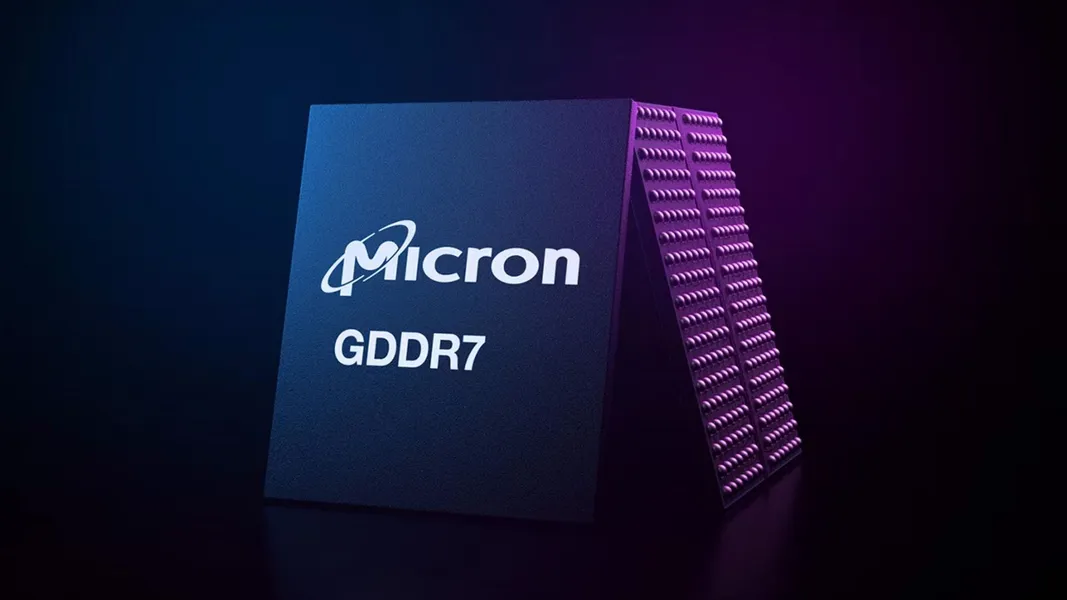
Micron has marked its 2GB GDDR7 memory chips as End of Life, ending production of both the 28 Gbps and 32 Gbps variants. The company is shifting focus to higher-density 3GB GDDR7 modules used in Nvidia's RTX PRO Blackwell GPUs for generative AI and agentic workloads. For AI builders, this confirms a broader industry pivot: memory suppliers are prioritizing high-margin, AI-optimized parts over consumer gaming VRAM.
Micron marks 2GB GDDR7 as End of Life
Micron's 2GB GDDR7 chips were only ever used in a small number of Nvidia GeForce RTX 50-series cards, such as retail variants of the RTX 5060. Samsung and SK Hynix remain the primary suppliers for 2GB GDDR7 modules, so the immediate supply risk for consumer GPUs is minimal. Micron's quick exit from the 2GB segment frees fab capacity for its 3GB GDDR7 production, which carries higher margins and aligns with demand from Nvidia's high-end AI GPUs.
Why the shift to 3GB GDDR7 matters for AI workloads
3GB GDDR7 chips allow GPU vendors to pack more VRAM per module, enabling larger memory pools for running large language models, fine-tuning, or agentic inference without switching to expensive HBM. Nvidia's RTX PRO Blackwell lineup is designed for exactly these workloads. But the 3GB parts are reportedly more expensive and less compatible with consumer memory configurations, meaning the technology may stay limited to professional and data-center SKUs for now.
Short-term impact on RTX 50-series supply is limited
Because Samsung and SK Hynix already supply most 2GB GDDR7 modules for the RTX 50 retail lineup, Micron's departure does not create an immediate shortage. However, if the other two vendors eventually follow Micron toward higher-density parts, consumer GPU configurations may see fewer 2GB options and potentially higher prices on lower-VRAM SKUs. For builders buying RTX 50 cards today, the change is unlikely to affect availability or cost.
What builders should watch next
This move is part of a larger trend: memory makers are diverting capacity away from consumer products toward AI data-center demand. Micron previously exited its Crucial consumer memory and SSD business for the same reason. For founders and product teams using consumer GPUs for AI inference or training, this signals that future VRAM upgrades may come at a premium and with a longer refresh cycle. Keep an eye on Samsung and SK Hynix roadmaps if you depend on 2GB GDDR7 availability for mid-range GPU clusters.
FAQs
Sources
- Micron discontinues 2GB GDDR7 chips for gaming GPUs as it pivots toward higher-density memory for AI
- Micron Technology - Wikipedia
- Micron Marks 2GB GDDR7 Memory Chips as End of Life - eTeknix
- Micron has discontinued 2GB GDDR7 chips for GeForce RTX 50...
- Micron Ends Production of 2GB GDDR7 Chips Used in RTX 50 Series...
- Micron discontinues 2GB GDDR7 chips for gaming GPUs as it pivots toward higher-density memory for AI
- Micron is done making the 2GB GDDR7 chips inside some RTX 50 cards
- [News] Micron Reportedly Ends 2GB GDDR7, Narrowing Supply Options for NVIDIA’s RTX 50 Series
- Micron reportedly ends production of 2GB GDDR7 used in GeForce RTX 50 series
- Micron reportedly ends production of 2GB GDDR7 used by GeForce RTX 50
- Micron Ends 2GB GDDR7 Production: Will RTX 50 Be Affected?
- Micron discontinues 2GB GDDR7 chips for gaming GPUs as it pivots toward higher-density memory for AI