Oracle Cuts 21,000 Jobs in One Year, Blames AI Adoption for Workforce Restructuring
Published by AINave Editorial • Reviewed by Ramit
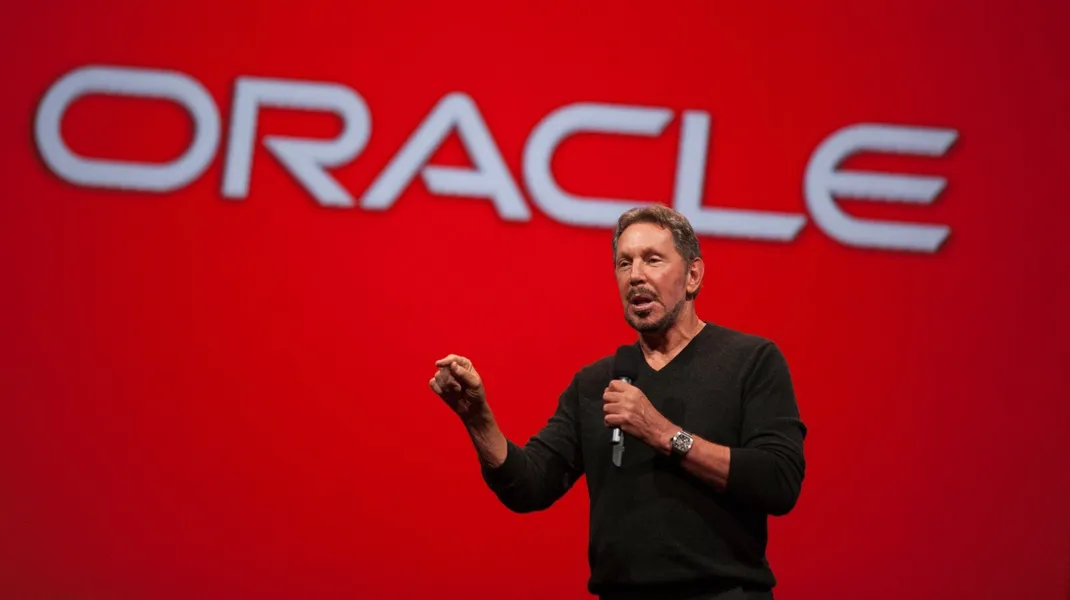
Oracle's latest annual report reveals a workforce reduction of 21,000 jobs over the past year, with the company explicitly pointing to the adoption and deployment of AI technologies as one of the drivers. The company's global headcount declined from about 162,000 to 141,000, and it recorded $1.8 billion in restructuring costs related to the changes. For AI builders and cloud developers, this signals how aggressively enterprise infrastructure players are reshaping their cost structures to fund AI compute expansion.
What happened
According to an SEC filing cited in the report, Oracle states that "the adoption and deployment of AI technologies across our operations have resulted, and may continue to result, in reductions to our workforce". The cuts amount to roughly 13% of Oracle's workforce. The filing also warns that restructuring can cause "shortages of sufficiently skilled employees in certain roles, loss of valuable institutional knowledge and damage to employee morale and retention."
While cutting headcount, Oracle is simultaneously pouring capital into data centers. Its capital expenditures totaled $55.7 billion in the last fiscal year to expand capacity for AI workloads, including for customers like OpenAI. Bloomberg previously reported that cash shortages were leading to layoffs, a dynamic the filing appears to confirm.
Why AI builders should care
The Oracle layoffs tied to AI adoption are a concrete signal for anyone building on or competing with enterprise AI infrastructure. The company is trading headcount for compute capacity, betting that AI workload demand from OpenAI and others will eventually generate enough revenue to justify the debt. This shift has three direct implications for AI builders:
- Talent market shifts: Skilled workers leaving Oracle may become available for startups and AI-native companies, but the filing also warns of skill shortages in certain roles, which could make hiring for AI-specific positions harder.
- Infrastructure bet: Oracle's $55.7 billion capex underscores that AI-ready compute is becoming a gating factor for companies deploying large models. If you rely on Oracle cloud for training or inference, expect capacity to grow, but pricing and terms may tighten.
- Ecosystem strategy: During an earnings presentation, CEO Mike Sicilia said Oracle is using AI coding tools and developers to accelerate its SaaS business and enable AI-driven ecosystems across industries. That suggests Oracle will push AI-native features deeper into its product suite, potentially competing with third-party AI tooling.
Practical implications
For AI builders evaluating infrastructure partners, Oracle's restructuring suggests a few practical moves:
- Monitor Oracle's AI SaaS roadmap: If Oracle accelerates its SaaS offerings with integrated AI, as Sicilia described, it may affect the competitive landscape for AI-enabled enterprise applications. Builders targeting the same workflows should watch for faster feature rollouts.
- Consider data-center-dependent timelines: Oracle's ability to monetize compute for OpenAI and others relies on data centers coming online quickly. Any delays or cost overruns could ripple to customers.
- Plan for workforce volatility: The filing acknowledges that restructuring can disrupt operations. If your startup depends on Oracle's APIs, cloud services, or partner programs, the internal churn could affect support and product stability.
Caveats
- The $55.7 billion in capital expenditures reflects Oracle's last fiscal year and may not continue at the same pace. Numbers beyond that period were not provided in the source context.
- Some earlier reporting on cash shortages as a cause for layoffs relied on anonymous sourcing. The SEC filing is the primary document confirming both the headcount reduction and the restructuring costs.
- The direct attribution to AI adoption is the company's own characterization. The filing does not break down how many roles were specifically replaced by AI versus eliminated through other restructuring initiatives.
- Oracle's ability to generate enough revenue from AI workloads to offset its massive infrastructure debt is unproven. The filing frames this as a bet rather than a guaranteed outcome.
FAQs
Sources
- Oracle Cuts 21,000 Jobs in One Year, Blames AI For at Least Some
- Tech giant Oracle cuts 21,000 jobs as it embraces AI - BBC
- Oracle workforce shrinks by about 21,000 employees amid AI adoption
- Tech giant Oracle cuts 21,000 jobs as it embraces AI - Yahoo Finance
- Oracle cut 21,000 jobs in 12 months, says AI replaced some roles - MSN
- Tech giant Oracle sheds 21,000 jobs in a year as AI replaces some roles
- Oracle cuts 21,000 jobs amid major AI transformation
- 21,000 jobs gone, $70 billion to be spent: Oracle’s AI gamble explained
- Oracle layoffs: Tech firm cut 21,000 jobs last year. Its latest filing reveals why
- Is AI coming for your job? Concerns mount as Oracle lays off another batch of 21,000 employees
- Layoffs | Oracle cut 21000 jobs in 12 months, says AI replaced some ...
- Oracle Cuts 21,000 Jobs in One Year, Blames AI For at Least Some
- Oracle Cuts 21,000 Jobs as AI Reshapes the Workforce ...
- Oracle Cuts 21,000 Jobs in One Year, Blames AI For at Least Some
- Oracle layoffs: Tech firm cut 21,000 jobs last year. Its latest filing reveals why