AI decodes the initiator DNA sequence, revealing a hidden on/off switch in 60% of human genes
Published by AINave Editorial • Reviewed by Ramit
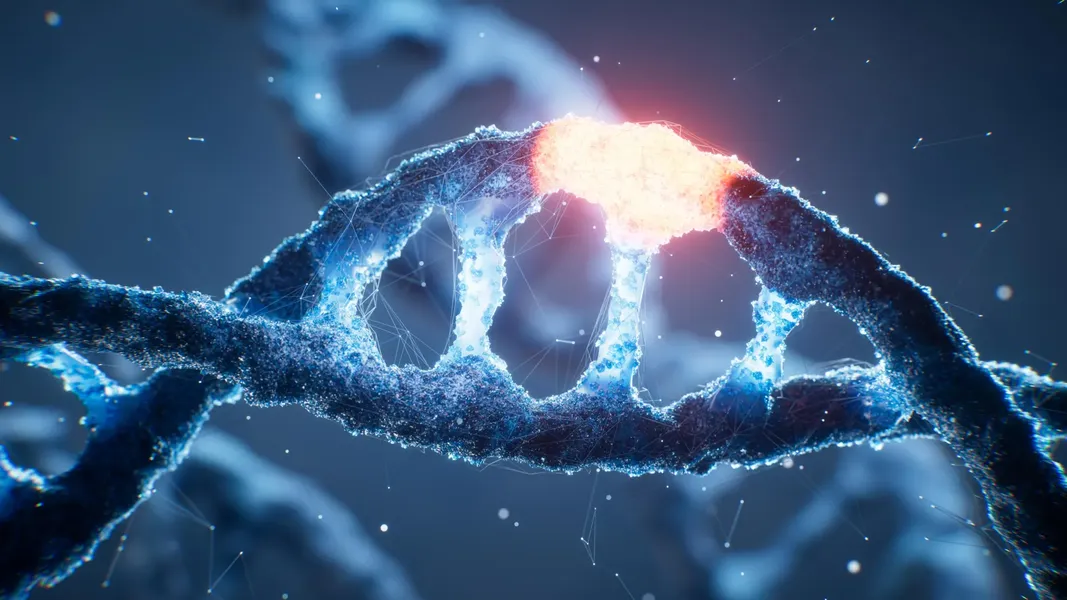
UC San Diego researchers used high-throughput experiments and a machine learning model to decode the initiator DNA sequence, a regulatory element that marks where a gene starts being expressed. The AI identified the initiator in roughly 60% of human genes, and the findings open the door for predicting how mutations in this region affect gene activity and for designing synthetic promoters with precise on/off control.
Decoding the initiator
Led by Professor James T. Kadonaga and graduate student Torrey Rhyne-Carrigg, the team measured gene expression activity across approximately 500,000 different versions of the initiator using high-throughput DNA sequencing. They used those results to train a machine learning system to recognize the initiator's characteristic DNA pattern. Once trained, the model scanned human genes and predicted the initiator's presence with strong accuracy, finding that roughly 60% of human genes contain this sequence.
What AI-assisted genomics looks like in practice
For builders working in AI and biology, this study is a compact proof of concept. The pipeline was straightforward: generate a large labeled dataset through targeted experiments, train a model to recognize a functional pattern, then apply that model to the entire genome. The same approach could be extended to other regulatory elements, promoter variants, or even entire gene expression codes.
The key technical detail is that the model didn't just memorize sequences. It learned the DNA base sequence pattern of the initiator and could generalize to predict its presence in genes it had never seen. That matters for anyone building predictive models in genomics because it validates that experimental design matters more than model complexity for this class of problems.
Toward predictive gene expression models
The most immediate practical implication is the ability to predict how mutations in the initiator might alter gene activity. When a patient has a variant in a known regulatory region, researchers could use this model to estimate whether that change disrupts the initiator and therefore affects gene expression. Over time, similar models could be combined to build what Kadonaga calls a "gene expression code" that predicts activity for any gene variant in any individual.
On the synthetic biology side, the decoded initiator pattern can be used to design synthetic promoters with tailored on/off functions. Instead of guessing which sequence will drive a gene at the right level, engineers can incorporate the initiator signature to get more predictable results, which is valuable for everything from therapeutic gene circuits to industrial enzyme production.
What's still unknown
The evidence for this article comes entirely from a ScienceDaily summary of the UCSD study, not the primary research paper itself. That means full technical details (model architecture, training data specifics, validation methodology, false positive rates) are not available in the provided context. Readers should consult the original publication for deeper evaluation of the model's performance and the 60% prevalence figure.
The study represents a narrow step. Decoding one regulatory element is a long way from a complete gene expression code, but it provides a concrete example of how AI and wet-lab experiments can work together to reveal the information hidden in human DNA.
FAQs
Sources
- A hidden “on switch” in human DNA has finally been decoded
- Scientists just discovered a secret code hidden in your DNA | ScienceDaily
- A hidden world inside DNA is finally revealed | ScienceDaily
- A hidden code in our DNA explains how new pieces of genes are made
- New Discovery Reveals Hidden DNA Element That Helps Switch On Genes from Afar - Charlie Dunlop School of Biological Sciences
- Is There a Secret Code Hidden in Human DNA?
- UC San Diego Researchers Decode Key DNA Element Influencing ...
- New study reveals how genes switch on and off in human cells
- AI-designed DNA switches flip genes on and off, allowing ...
- Scientists Discover Hidden DNA Scaffolding Built Before Life ...