Harvey Tenet: What the First In-House AI Legal Model Means for Builders
Published by AINave Editorial • Reviewed by Ramit
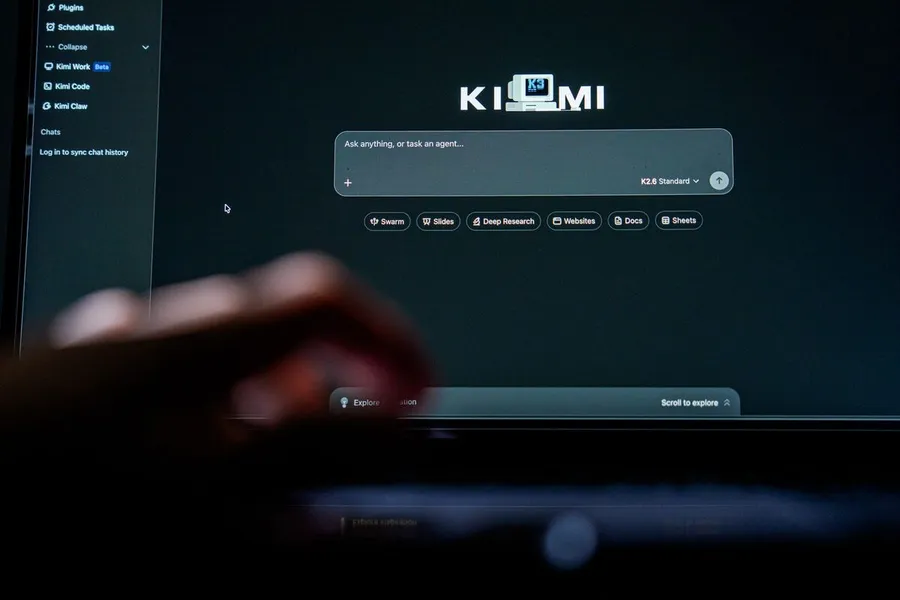
Harvey has launched Tenet, its first proprietary model for legal work, post-trained on Moonshot's Kimi K3 open-weight base source. The move shifts Harvey from renting inference on third-party models to owning its engine, a change that directly affects cost structure, vendor dependence, and regulatory risk for the legal tech firms and their law firm customers.
What Tenet Is and How It Was Built
Tenet is a post-trained derivative of Kimi K3, an open-weight model released by Chinese startup Moonshot. Harvey worked with Fireworks AI on the training source. To shape the model for legal work, Harvey's in-house lawyers and external partners like Mercor and Snorkel created mock disputes and case files, then graded the model's reasoning on those fabricated scenarios.
The company's cap table makes the move more pointed. OpenAI is an investor in Harvey alongside Sequoia and Andreessen Horowitz source. Tenet is designed to displace GPT-based workflows within Harvey's own product, converting what was a variable invoice to a competitor into a fixed licensing cost.
What Changes for AI Builders Using Harvey
The practical shift for builders is in two areas: cost exposure and counterparty risk. Every model call Harvey used to make on a customer's behalf was a transaction with a model provider that could change pricing, capabilities, or terms at any time. Owning Tenet turns that into a license negotiation with Moonshot.
The Kimi K3 license permits derivative models, but it requires a separate agreement with Moonshot for model-as-a-service operators whose revenue exceeds $20 million in any twelve months source. Harvey's annualized revenue is above $350 million, so the terms of that upstream agreement matter directly. For builders integrating Harvey into a larger stack, the licensing of the base model becomes a compliance input, not just a technical one.
Regulatory and Cross-Border Implications
For law firms operating in Europe, the EU AI Act adds another layer. The Act's guidelines use roughly a third of the original training compute as the marker for a significant modification that would shift provider obligations downstream source. A post-train like Tenet almost certainly falls well below that threshold, meaning most obligations stay upstream with Moonshot. But the practical effect is that a European firm deploying Tenet must rely on a documentation chain that starts in Beijing. That creates due diligence challenges around data handling, model behavior, and audit trails that may not align with European regulatory expectations.
The choice also raises a question about privilege. Harvey has effectively placed Chinese open weights underneath data that may be covered by legal privilege. For law firms and their clients, the counterparty risk in the model supply chain is now a factor in client engagement letters and risk assessments.
Caveats
The performance claims for Tenet come from Harvey's own research, which showed the model performing competitively against frontier models from Anthropic and others source source. Independent benchmarks have not yet validated these results in legal-domain tasks. Pricing for the model and the exact timeline for replacing GPT workflows within Harvey's product have not been disclosed. Builders should treat the licensing and compliance details as directional until Moonshot and Harvey publish definitive contractual terms.
Sources
- Harvey’s first in-house model for legal work is here
- Harvey (software) - Wikipedia
- Harvey Announces Tenet, Its First in-House AI Model for Legal Work - Business Insider
- Harvey launches Tenet, its first in-house legal model - AI Midday
- Harvey launches Tenet, its first proprietary AI model for legal work - The Legal Wire
- Harvey develops legal model to compete with AI giants | Jawlah
- OpenAI-backed legal tech firm pivots to Chinese Kimi K3 open-weight model
- Harvey Introduces Tenet, Its First Post-Trained AI Model for Legal
- 'It's Going to Happen': Harvey CEO Details Why AI Is Here to Stay in the Legal Industry
- Harvey taps DeepL to power legal-grade AI translation for global law firms
- Harvey’s first LLM for legal work is here – DNYUZ
- Harvey | AI software for legal and professional services
- Introducing Harvey Tenet, our first model post-trained for legal work.
- Customizing models for legal professionals | OpenAI
- Inside Harvey: How a first-year legal associate built one of Silicon Valley’s ho...