US-China AI Safety Dialogue: Notification Mechanism Proposed
Published by AINave Editorial • Reviewed by Ramit
The US and China have proposed a formal notification system for AI incidents that could affect national security, marking the first structured cross-border AI governance discussion between the two leading AI powers in years. For builders, this signals that incident reporting and transparency requirements may eventually shape how frontier models are deployed and monitored internationally.
What the Talks Covered
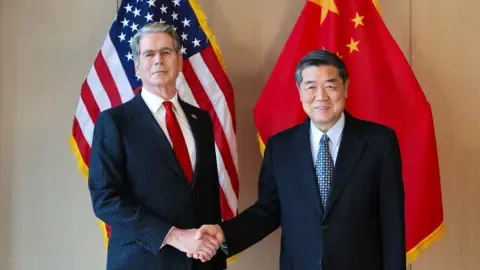
Treasury Secretary Scott Bessent met with Chinese Vice Premier He Lifeng in New York on Sunday ahead of President Trump's summit with Xi Jinping in Washington later this week. Bessent described the talks as "successful" and said the US proposed a new "notification mechanism" for AI-related incidents that could affect national security BBC. The mechanism would be part of a broader US-China AI dialogue aimed at establishing "a shared vision of common goals and common threats" NBC News.
Bessent emphasized the importance of moving "from opaque to more transparency between the number one and the number two AI powers in the world" Business Insider. The Chinese readout via Xinhua acknowledged that AI was discussed but did not mention the specific US proposal, describing the exchanges as "candid, in-depth and constructive" on economic and trade issues Euronews.
Separately, the two sides agreed to operationalize a "Board of Trade" framework that was initially discussed during Trump's visit to Beijing in May. This framework would identify "non-sensitive" goods for potential tariff relief, including consumer goods, energy products, agricultural goods, and medical devices Newsday. US Trade Representative Jamieson Greer clarified that export controls on advanced AI chips and semiconductor equipment were not part of the AI discussions NBC News.
Why It Matters for AI Builders
This is the first time the US and China have discussed a formal incident notification system for AI since 2024, when they last held official AI talks and declared that humans should retain control of nuclear weapons The Economist. While the proposal is still at an early stage, it signals that both governments see value in establishing protocols for reporting AI-related risks that cross borders.
For teams building AI products that operate internationally, this could eventually mean compliance obligations around incident disclosure, particularly if the notification mechanism evolves into a binding framework. Builders working on frontier models, agents, or critical infrastructure should watch whether these talks lead to requirements for safety testing, transparency reports, or cross-border data sharing
Sources
- US and China discuss AI safety plan ahead of Trump-Xi summit
- Bessent proposes U.S.-China AI safety system in talks with China
- U.S. proposes exchanging AI safety alerts with China, Bessent says
- The US wants an AI-era 'red phone' with China
- US and China to seek 'AI dialogue' to communicate shared concerns
- Bessent: US proposes AI incident alert system in talks with China
- US and China discuss AI safety plan ahead of Trump-Xi summit
- US and China discuss AI safety plan ahead of Trump-Xi summit
- Bessent proposes AI safety notifications in talks with China ahead of...
- US, China discuss AI dialogue mechanism and trade ahead of...
- US, China Agree to Launch AI Dialogue, Advance Trade Talks Ahead...
- US and China discuss AI safety plan ahead of Trump-Xi meeting
- Beijing reads Anthropic CEO's AI safety essay as a 'Cold War' attack
- China and Trump reject AI CEOs' calls to slow AI development
- China bristles at Anthropic CEO’s ‘fearmongering’ about its AI development
- Trump envoy Steve Daines to return to Beijing as US and China lock in Xi summit agenda
- US, China discuss AI safety ahead of Trump-Xi summit - France 24
- US, China discuss AI dialogue mechanism and trade ahead of...
- US, China gear up for mid-September AI safety talks
- Deep mutual distrust will scupper US-China co-operation on AI
- US and China prepare for mid-September AI safety dialogue