Dubai's Mghzlan Smart Feeder: AI-Powered Wildlife Management for Builders
Published by AINave Editorial • Reviewed by Ramit
Dubai has deployed the Mghzlan Smart Feeder, an AI-powered wildlife feeder developed by Dub Dev Technology that uses computer vision and IoT to identify animal species, count individuals, and adjust feed quantities in real time. For AI builders, this is a practical case study in edge AI, remote monitoring, and full-stack conservation tech.
How the Mghzlan Smart Feeder Works
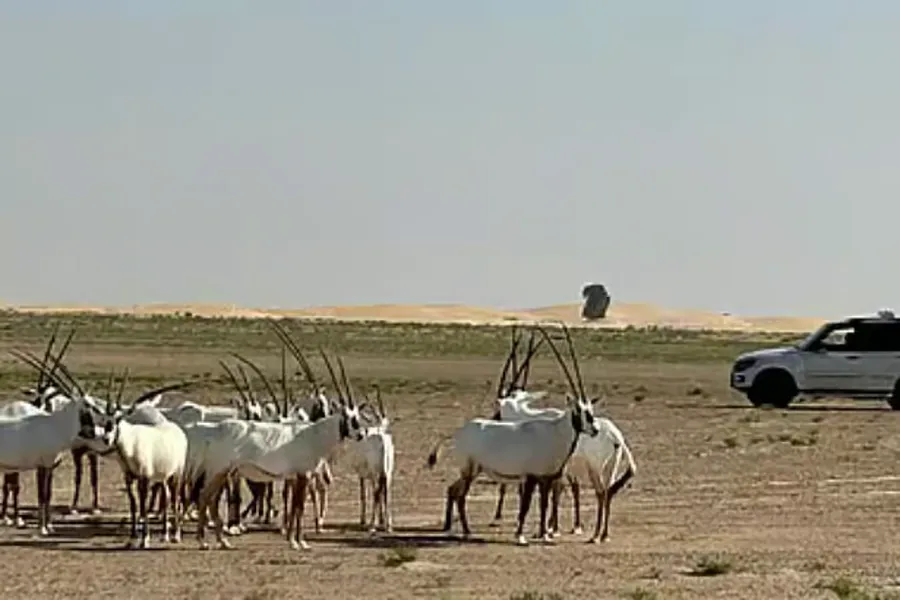
The feeder combines day-and-night cameras, solar power, and IoT sensors to process over 15 million images annually. When animals approach, the system identifies their species and numbers, recording arrival times and activity patterns. Field tests have shown species-identification confidence between 80% and 97% for gazelles, oryx, antelopes, and birds, even in crowded or low-light conditions. The feeder then dispenses calculated feed quantities at scheduled times, adjusting based on real-time consumption and stock data.
Operators can remotely manage multiple units through a centralized dashboard that also tracks temperature, humidity, and feed stock levels. Alerts are sent when feeders need replenishment or when humans or vehicles are detected near operating sites. The system has dispensed more than 50 tonnes of feed in a year and is deployed at the Al Marmoom Desert Conservation Reserve in Dubai and in more than three countries.
A Full-Stack AI Pattern for Conservation Tech
For builders, the Mghzlan Smart Feeder demonstrates a complete pattern: on-device computer vision for species recognition, IoT sensors for environmental monitoring, and a cloud-connected dashboard for remote control. The AI and data platform, including species-recognition algorithms, were developed entirely in the UAE, showing how local development can support regional wildlife management.
This approach reduces the need for daily human presence in sensitive habitats, cutting disturbance while maintaining monitoring fidelity. The integration of wildlife, feed, and environmental data on a single platform enables resource efficiency and standardized operations across multiple sites. For teams building similar systems, the key takeaway is the value of combining edge inference with centralized data fusion and remote actuation.
What Remains Unclear
The available evidence comes from news articles and press statements, not independent third-party testing. The reported confidence levels (80% to 97%) are based on field tests described by the developer and may vary by location, lighting, and species. Details on the specific computer vision model, hardware specifications, and data retention policies are not publicly available. Builders evaluating similar approaches should verify performance in their own deployment conditions and consider edge-case scenarios like rare species or extreme weather.
FAQs
Sources
- Dubai deploys AI-powered feeder to monitor and manage wildlife
- UAE-Developed AI Feeder Tracks & Feeds Wildlife in Dubai
- Dubai launches AI-powered feeding stations for stray animals | Khaleej Times
- Dubai introduces smart feeding stations for stray animals in parks
- Dubai Municipality Debuts Smart ‘Ehsan Stations’ To Feed Stray Animals. | Gulf Buzz
- UAE smart feeder processes 15 million images to monitor wildlife feeding
- UAE smart feeder processes 15 million images to monitor wildlife feeding
- Dubai deploys AI-powered feeder to monitor and manage wildlife
- Khaleej Times - Dubai News, UAE News, Gulf, News, Latest news...
- Dubai deploys AI-powered cameras to crack... - The Times of India
- WE PUSHED THE LIMITS IN DUBAI - DUBAI VLOG! - YouTube
- Dubai deploys AI robots and drones to keep beaches safe