Humanoid home robots: what's real today and the data privacy challenge for builders
Published by AINave Editorial • Reviewed by Ramit
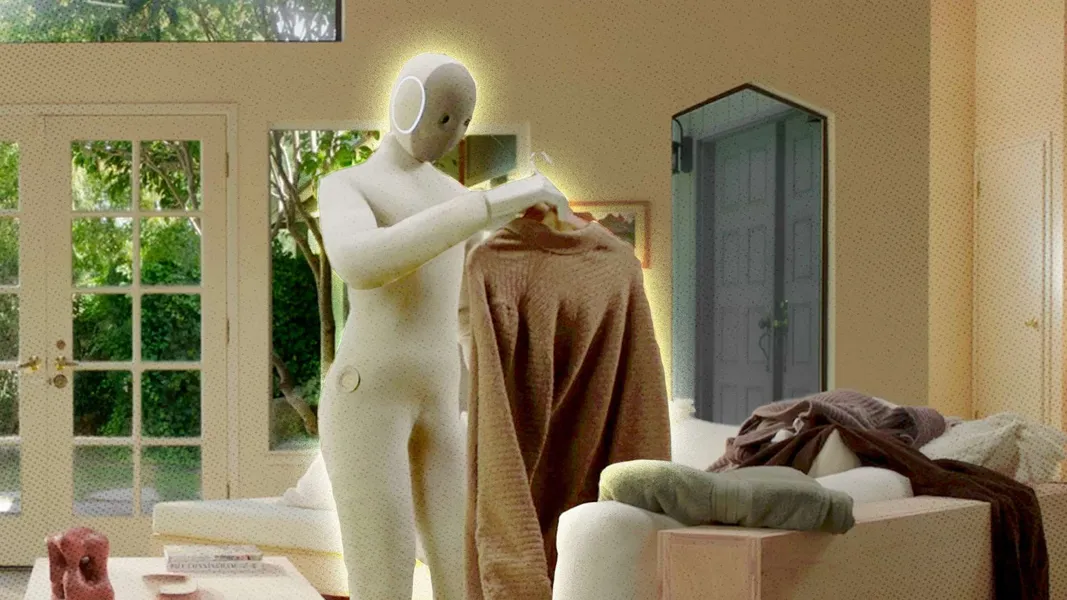
1X Technologies plans to ship its NEO home humanoid robot to consumers by the end of 2026, operating autonomously by default with dexterous, tendon-driven hands. But the real story isn't the hardware: it's how these robots learn and what that means for privacy. As with large language models, humanoid robots need massive amounts of real-world video data to function 1X says its new hands "remove the hardware ceiling" and "make data the only barrier to capabilities". For AI builders and product teams, the lesson is clear: the mechanical race is secondary to the data and trust race.
How NEO and its competitors plan to learn
The primary training pipeline for home humanoid robots today is teleoperation and direct video capture. In 2025, a Wall Street Journal demo of NEO showed a human teleoperator controlling the robot to load a dishwasher. The upcoming consumer version will default to autonomous operation but allow owners to request an expert teleoperator for unfamiliar tasks. That teleoperation session doubles as a data collection opportunity, feeding the robot's training set.
Third-party data collection is already an industry. The company Shift pays participants to record themselves doing chores, and in May offered New Yorkers free cleanings performed by employees wearing head-mounted cameras. Shift's privacy policy prohibits recording children, intimate situations, or passwords, and the company says its algorithms anonymize faces and identifying materials. But this is a commercial data pipeline, not a privacy-first design.
Companies like Figure, Tesla, Agility, and Boston Dynamics are also in the race, with China emerging as a major competitor. The key differentiator may not be locomotion or manipulation but the quality and breadth of training data.
The privacy contract that comes with a home robot
1X has outlined safeguards: owners schedule times for U.S.-based teleoperators, the robot's head lights change color when a human is active, and users can opt out of data sharing. CEO Bernt Børnich told the Wall Street Journal that buying NEO means accepting a social contract: "If we don't have your data, we can't make the product better."
That contract is fragile. Home robots have a track record of privacy failures. In 2024, owners of Chinese-made Ecovacs Deebot X2s reported strangers accessing their vacuums, and a hobbyist accidentally gained control of 7,000 DJI Romo robovacuums, seeing live feeds and IP addresses. These incidents underscore that standard notice-and-consent frameworks may not be enough. Matthew Rueben, a robotics privacy researcher at the University of Portland, argues for ongoing transparency: robots should signal their tracking and data collection in real time, like expressive video game characters.
What builders should design for
For product teams shipping AI agents that operate in physical spaces, the NEO rollout offers several design principles:
- Ongoing consent, not one-time opt-in. A single terms-of-service agreement is insufficient when the robot is constantly sensing the environment. Builders should implement visible, real-time indicators of when data is being captured or transmitted.
- User-controlled teleoperation bridges. Allowing users to summon human oversight for edge cases builds trust and simultaneously collects high-quality training data.
- Transparency about sensor capabilities. Rueben advises asking "what kind of sensors it has and what its software actually does" instead of assuming human-like behavior. Document what the robot sees, hears, and transmits.
- Plan for data misuse. Even with safeguards, unauthorized access is a real risk. Builders should design for breach scenarios, not just compliance.
Caveats and unknowns
1X's 2026 consumer autonomy timeline is a vendor claim, not an established fact. Public demonstrations have relied on teleoperation, and the transition to full autonomy at scale is unproven. The privacy safeguards described are also vendor-reported; independent audits are not yet available. The security incidents with other home robots show that technical safeguards alone do not eliminate risk. Builders should treat these developments as early signals, not settled solutions.
For now, the most important takeaway for AI builders is that humanoid robots will succeed or fail on their data practices, not their mechanical prowess. The companies that get the trust architecture right will have a durable advantage.
FAQs
Sources
- AI companies promise humanoid assistants. How will the robots know what to do?
- AI Companies Promise Humanoid Assistants. How Will the Robots ...
- AI Companies Promise Humanoid Assistants. How Will the Robots ...
- Humanoid Robots Are Coming, Here’s What Everyone Needs To Know
- How Humanoid Robots Work: Inside AI-Powered Robotics
- Humanoid Robots Are Coming: Everything You Need to Know About ...
- Are humanoid robots ready to scrub your kitchen and take out the trash? Not quite.
- San Francisco company offers cleaning service using humanoid robots
- The Robots Are Stumbling on Their Way to the Revolution
- Next AI battleground: US., China scramble to lead in humanoid robots
- Top Examples of Humanoid Robots in Use Right Now | Built In
- A Look at the AI Promise Humanoid Robots
- Persona AI Stands Among the Most Promising Humanoid Robotics...
- Humanoid robots in 2026: Types, prices, and... - Standard Bots
- AI and Robotics: Advancing Towards Humanoid Assistants
- This $20K Humanoid Robot Promises to Tidy Your Home. But There Are Strings...