Data center spending surpasses housing investment for the first time in US history
Published by AINave Editorial • Reviewed by Ramit
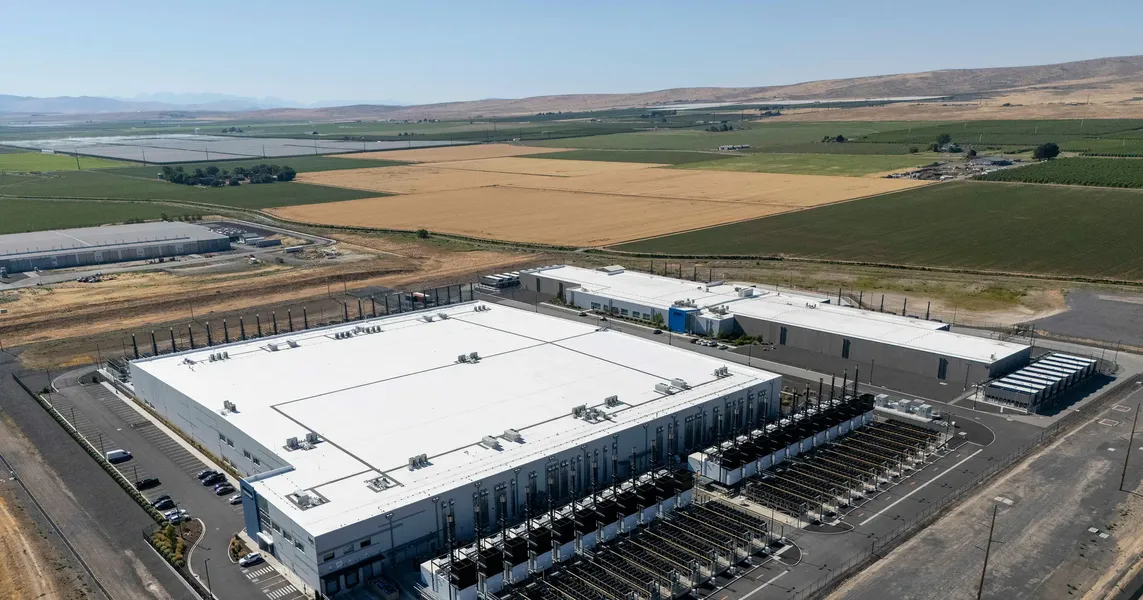
The US economy just crossed a line AI builders should not ignore. Inflation-adjusted spending on information processing equipment, including data centers and computer hardware, hit $752 billion in the second quarter of 2026, surpassing the $748 billion spent on residential housing. The milestone, flagged by San Francisco Fed vice president Adam Shapiro, marks the first time data center infrastructure has overtaken housing as a driver of private investment.
How the numbers break down
Real private residential fixed investment has fallen 18% from its early 2021 peak, held back by elevated mortgage rates near 7% and the lock-in effect of homeowners unwilling to sell. Meanwhile, spending on information processing equipment has soared 51% over the same period, driven entirely by hyperscaler AI buildouts.
The scale is staggering. S&P Global estimates that capital expenditures from Alphabet, Amazon, Microsoft, Meta, Oracle, and SpaceX will reach $470 billion in 2025, $870 billion in 2026, and $1.3 trillion in 2027. That growth is happening even as borrowing costs remain high. Treasury Secretary Scott Bessent recently noted that these companies are "almost yield-agnostic" when issuing debt for AI infrastructure, believing the returns will justify any interest rate.
Why this matters for AI builders
For anyone building AI products or running inference at scale, this macro shift has three practical consequences.
Compute availability and pricing. Hyperscalers are betting billions that demand for AI compute will keep growing. That should mean more GPU and TPU capacity coming online, but the near-term effect is upward pressure on electricity and device prices as utilities and supply chains strain to support new data centers. Builders should expect higher energy costs in their cloud bills and potential hardware price increases.
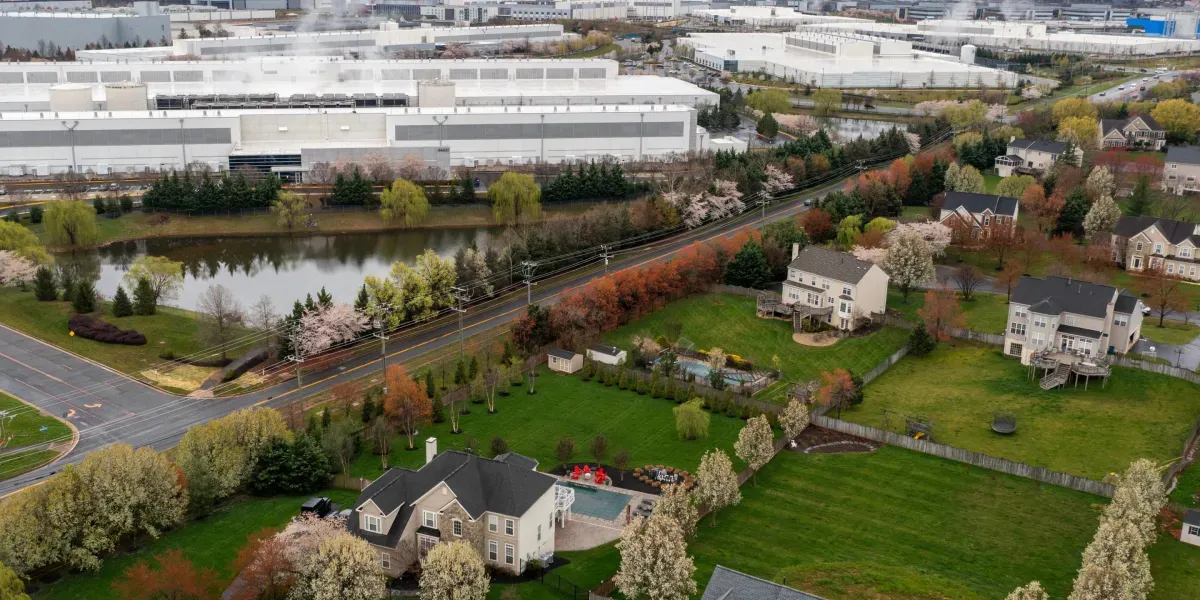
Policy and siting risk. The political backlash is real. An NBC News poll found that 64% of registered voters would be less likely to support a candidate who favors building a data center in their community. That could slow permitting and increase the cost and timeline for new facilities, especially in regions with strong local opposition. AI builders reliant on specific regions may face supply constraints or regulatory hurdles.
Financing health of hyperscalers. The aggressive buildout is cash-flow negative for the six largest players through 2026 and 2027, according to S&P. Alphabet already reported negative cash flow earlier this year. If revenue growth doesn't accelerate as expected, capex cuts could follow, potentially tightening compute supply in 2028 and beyond.
The overcapacity question
S&P Global explicitly warns that the industry's capex is growing faster than revenue, creating a risk of overcapacity if demand doesn't materialize as expected. They see 2028 as an inflection point where revenue catches up and capex flattens. For AI builders, that timeline matters. If overcapacity hits, it could mean lower inference prices and more negotiation leverage with cloud providers. If demand keeps pace, the tight supply will persist.
Housing starts fell 2.6% in August, and builder sentiment dropped to a one-year low. The contrast with the AI buildout is stark. Whether this divergence is sustainable depends on whether AI applications generate the returns hyperscalers are betting on.
What builders should watch
For now, the AI infrastructure buildout is the dominant force in US private investment. Builders should monitor three signals: hyperscaler earnings calls for capex guidance changes, local data center permitting news in their target regions, and electricity price trends in major data center markets. The next 12 to 18 months will determine whether this investment boom translates into abundant, cheap compute or a painful overhang.
Sources
- U.S. economy hits pivotal milestone: Spending on data centers and other information-processing hardware now exceeds housing investment
- Data Center Spending Just Overtook Housing as a Driver of the ...
- Data center buildout share of US GDP is still relatively ...
- US Economy Increasingly Revolves Around Data Centers, New ...
- How Data Centers Are Reshaping the US Economy - Newsweek
- U.S. economy hits pivotal milestone: Spending on data centers and other...
- US economy hits pivotal milestone: Spending on data centers and other information-processing hardware now exceeds housing investment
- GDP (current US$) from The World Bank: Data
- Understanding the National Debt | U.S. Treasury Fiscal Data
- Yandex Translate - Dictionary and online translation