AI-Powered Tornado Forecasting: What the Stormnet Model Means for Builders
Published by AINave Editorial • Reviewed by Ramit
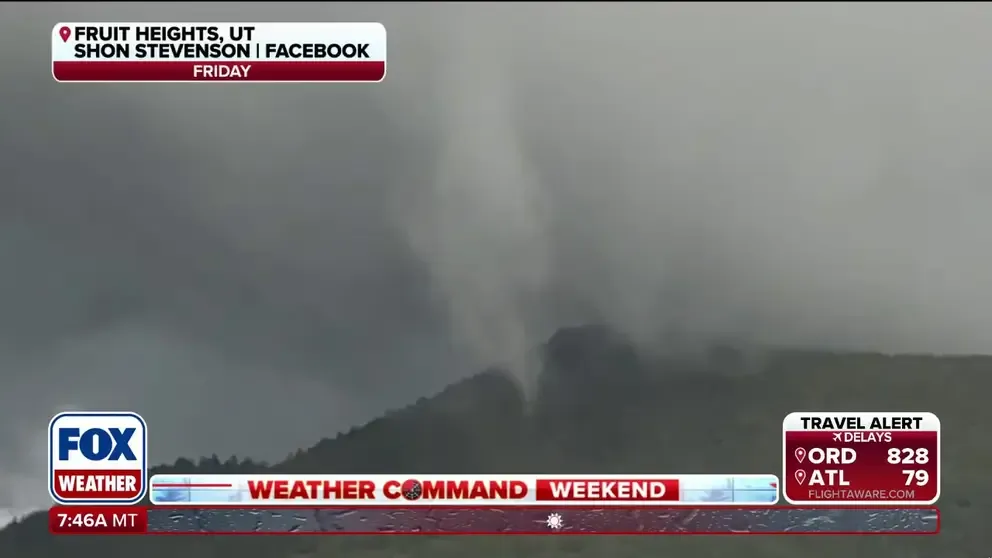
AI-powered tornado forecasting is gaining attention as a tool to extend warning lead times and improve detection of fast-changing risks. In a recent FOX Weather segment, meteorologist Andrew Brady discussed how his Stormnet AI Weather Model could help forecasters spot tornado threats earlier. For builders working on AI for meteorology, emergency response, or any safety-critical prediction system, this signals both opportunity and significant validation work ahead.
How AI Augments Conventional Radar Approaches
Traditional tornado forecasting relies heavily on Doppler radar signatures and human pattern recognition. AI models aim to complement this by detecting subtle correlations in larger datasets. Georgia Tech researchers are studying lightning activity jumps and dives as predictive signals, using ground-based lightning mapping arrays alongside radar data. MIT Lincoln Laboratory’s Intelligent Tornado Prediction Engine goes further, using machine learning to focus forecasters’ attention on the storm cells most likely to produce tornadoes. Their work also explores explainable AI techniques that provide reasoning aligned with existing warning criteria, a critical step for operator trust.
Real-World Signals and Early Deployments
The push toward operational AI is not just theoretical. NCAR’s Medium-Range, Real-Time project is extending severe weather prediction to the three-to-eight-day horizon, aiming to give communities a full week of lead time for tornadoes, hail, and damaging winds. Meanwhile, in Pittsburgh, an AI model called Nadocast is being used operationally on a small scale. One forecaster reported that Nadocast predicted a 3% to 5% chance of tornadoes two days in advance - hundreds of times higher than the climatological average. These examples show AI providing probabilistic guidance that human forecasters can factor into their decisions, rather than replacing them outright.
Data Integration and Practical Implications
AI tornado models ingest multiple data streams: radar reflectivity and velocity, lightning strike rates, satellite imagery, and numerical weather prediction outputs. The ability to fuse these heterogeneous sources in real time is a natural fit for deep learning architectures. For builders, the technical challenge is less about model architecture and more about data latency, quality, and the cost of false positives. A high false-alarm rate erodes public trust in warnings, so model calibration and uncertainty quantification are essential. MIT Lincoln Lab’s focus on explainable AI underscores that operational meteorologists need to understand why a model flags a storm cell before acting on a warning.
Caveats for Operational Deployment
Current AI tornado forecasts come with substantial caveats. The gap between research performance and reliable 24/7 operations remains wide. Models trained on historical data may not generalize to rare or extreme events. Explainability tools are still in early stages, and most deployments are pilots with limited geographic scope. As the NOAA Storm Prediction Center notes, any tornado can cause damage, and AI tools must be validated against real-world outcomes, not just archive benchmarks. Builders entering this space should plan for multi-year evaluation cycles and close collaboration with operational forecasters.
For teams building AI for high-stakes environmental predictions, the takeaway is clear: the opportunity is real, but the path to production is long. Start by focusing on data fusion and model interpretability, and treat every deployment as an experiment until independent validation proves otherwise.
FAQs
Sources
- Can AI improve tornado forecasts? New tool targets fast-changing tornado risks
- Identifying severe weather hazards further in the future with AI | NCAR & UCAR News
- New Approaches, Including Artificial Intelligence, Could Boost Tornado Prediction | Research
- Intelligent Tornado Prediction Engine | MIT Lincoln Laboratory
- How AI Helps Predict Tornado Formation Earlier: New Advances in Forecasting – ChaseDay.com
- AI is improving Pittsburgh's tornado forecasting — but its full potential isn't clear
- Can AI improve tornado forecasts? New tool targets fast-changing tornado risks
- Watch Can AI improve tornado forecasts? New tool targets...
- EF4 Tornado Strikes Enid Oklahoma - April 23, 2026 - YouTube
- Hot Air Balloon Festival Takes Flight in New York | FOX Weather
- Live Tornado Tracker Map | Real-Time Tornado Warning Alerts
- AI vs Wayne Adams Tornado Forecast Challenge in March
- The Online Tornado FAQ (by Roger Edwards, SPC)