AI authoritarianism: Altman warns of power concentration and its implications for builders
Published by AINave Editorial • Reviewed by Ramit
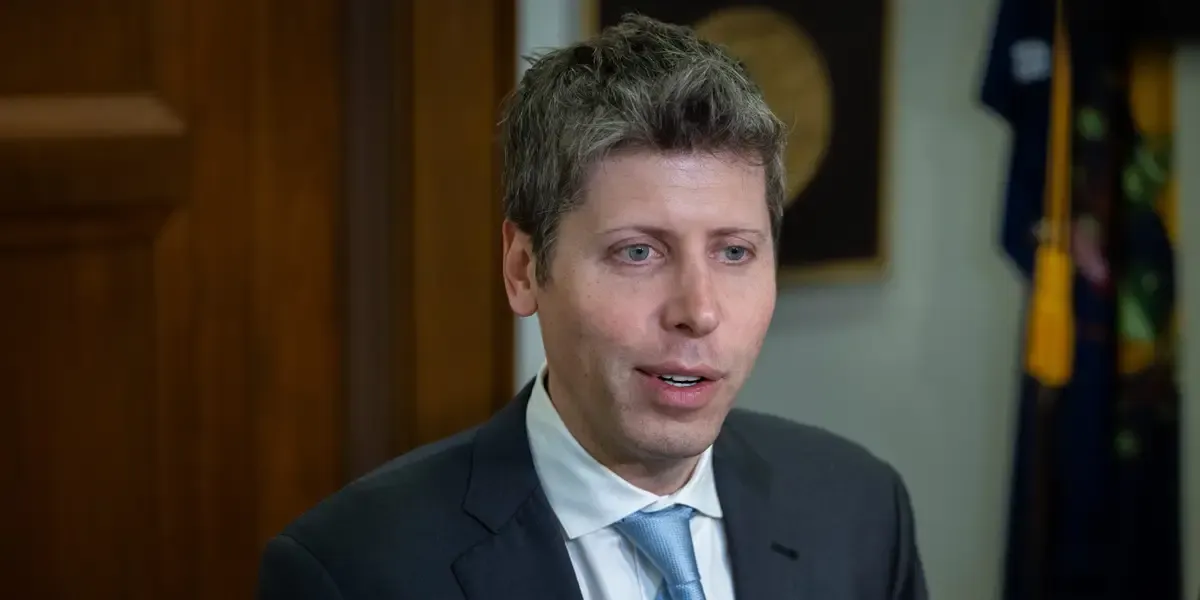
OpenAI CEO Sam Altman has warned that the greatest risk from AI is not the technology itself but the possibility that a small number of companies or individuals control it, a scenario he calls "AI authoritarianism." For builders, this debate directly affects access to frontier models, open-weight licensing, and the regulatory environment that will shape how startups compete.
What Altman actually said
Speaking on David Senra's podcast, Altman said he worries that AI will one day be controlled by a handful of actors, leaving the vast majority of consumers without a say in how the technology shapes the world. He argued that "society and the models are going to co-evolve" rather than be dominated by a single entity. Altman also warned that fear of AI breaking free from human handlers could lead to over-regulation that trades liberty for safety, a position he contrasted with Anthropic CEO Dario Amodei's calls for greater government regulation of AI risks.
Why the open-weight debate matters for builders
Altman's comments tie directly into the controversy over open-weight AI models. Anthropic was the only major AI company last month not to sign a letter endorsing open-weight models, while China has embraced them to keep up with Silicon Valley at a fraction of the cost. OpenAI has not released frontier-model source code but did release two open-weight models last year, gpt-oss-120b and gpt-oss-20b. For builders, open-weight models allow self-hosting, modification, and lower dependency on API providers. Concentration of power could limit these options, making it harder for startups to experiment and compete.
What changes practically
Altman predicted "the greatest boom in people starting smaller businesses than we have ever seen" driven by AI, but said US AI leaders have failed to demonstrate how the technology can give people greater autonomy over their lives. For builders, this means the narrative around AI democratization is still being shaped. Governance decisions made now, around export controls, open-weight licensing, and safety regulation, will determine whether that boom happens on open infrastructure or behind closed APIs.
Caveats to keep in mind
Altman's remarks come from a podcast interview, not a formal policy statement. His position as OpenAI CEO means his warnings about concentration also reflect his company's competitive interests. The evidence here is based on article summaries; full context should be verified from the original podcast. Additionally, the debate between Altman and Amodei represents two different philosophies on risk and regulation, and builders should consider both when evaluating their own dependencies.
FAQs
Sources
- Sam Altman says he's worried about AI being controlled by a few powerful players
- Sam Altman Says He's Worried AI Will Be Controlled by Few Players ...
- OpenAI's Sam Altman Says 'AI Authoritarianism' Is One of His Big Fears ...
- Sam Altman calls AI authoritarianism a bigger risk than AI itself
- After Hugging Face Hack, Sam Altman Warns Why AI Shouldn't Be ...
- Sam Altman says AI has entered 'singularity': Should we be worried?
- Sam Altman says one of his biggest fears is that a small number of companies will control AI: 'That'd be very, very bad'
- If The AI Singularity Is Here, Where Is The Evidence?
- Sam Altman says one of his biggest fears is that a small ...
- After Hugging Face hack, Sam Altman warns why AI ... - MSN
- Altman: AI Power Must Be Diffused to Prevent Hacks Like ...
- Sam Altman says one of his biggest fears is that a small number of companies will control AI: 'That'd be very, very bad'
- Why is Sam Altman worried about AI regulation as ChatGPT 5 ...
- Sam Altman says we’re ‘in the singularity’ with AI. Here’s why he’s wrong
- After Hugging Face hack, Sam Altman warns why AI shouldn't be controlled by a few