LDraw Nova Turns AI Prompts Into LEGO CAD Builds
Published by AINave Editorial
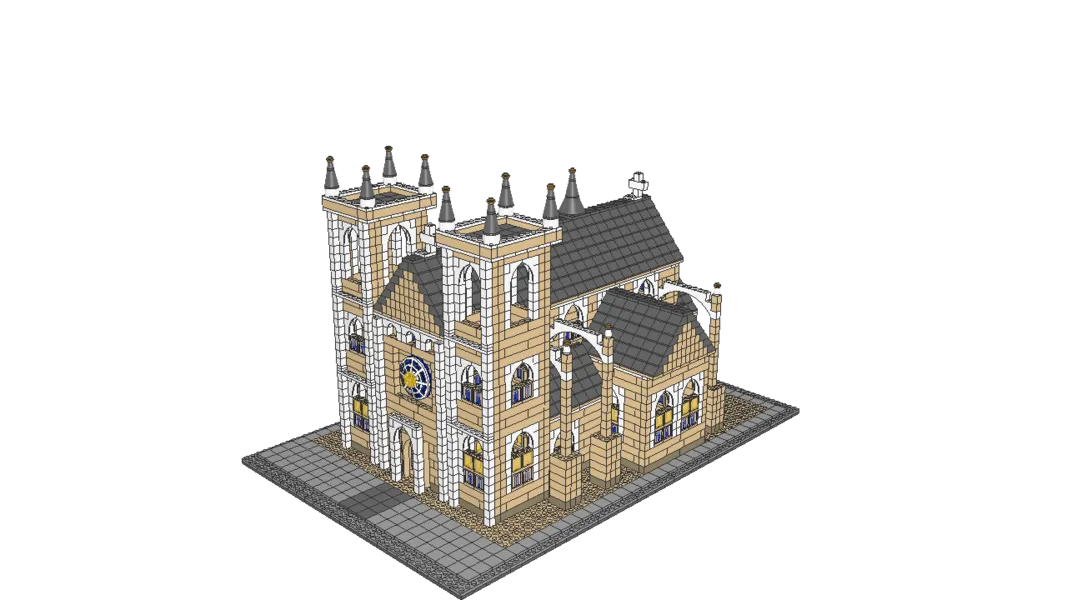
LDraw Nova, an open-source tool for AI LEGO design, turns prompts into detailed CAD files through planning, code generation and iterative rendering. One result, Sakura Garden, contains 2,175 pieces. But the scale of the virtual build is not evidence that it can stand: no Nova designs had been assembled with real bricks when reported, and the tool lacks stability modeling. Tom’s Hardware reported both the model and the limitation.
From a prompt to a rendered model
Sakura Garden began with a prompt to Claude Opus 5.5 asking for “the most beautiful model that comes to your mind.” Nova’s workflow does not ask the AI to place each brick manually. An agent makes a JSON plan describing the model and its submodels, writes Python code, then generates the LDraw file. The agent can render the result, inspect the image and revise the design in another round. That workflow produced the 2,175-piece garden.
LDraw records each placed piece with a line that specifies its position. The resulting files can be opened in LDView, LeoCAD and Studio. Nova runs as a Docker web app and can use models from providers including OpenAI, Anthropic and OpenRouter. The useful distinction is that the AI is producing structured model data through code, rather than only an image of a possible build. The project’s output and supported viewers are described here.
CAD detail does not prove physical stability
Developer Carlos Antelo said he had not tried building any of the designs. Nova handles collisions, according to the report, but lacks physics modeling for stability. A file can therefore describe an elaborate arrangement of real LEGO parts without establishing that the finished construction will hold together. Larger models also mean collecting thousands of pieces, which Antelo expected would be difficult. None of the designs had been physically built at the time.
That distinction separates Nova from BrickGPT, formerly LegoGPT. The report describes BrickGPT as trained on more than 47,000 LEGO structures and checking designs for validity and physical stability during generation. Nova’s approach instead centers on a general-purpose AI agent writing code and revising rendered output. Those are different capabilities, not proof that either tool produces a better overall design. The reported comparison and training figure.
Running the workflow has a model cost
Nova itself is open source, but generating designs can involve paid model use. Antelo gave a roughly $5 token-cost estimate for using Astra to build one Technic mechanism, and characterized the number as a “wild” estimate. It is an example for that task, not a standard price for a Nova model or a full estimate of total costs. Antelo’s estimate was tied to one mechanism.
The project shows how agents can turn an idea into editable CAD through a loop of planning, programming and visual revision. Its next meaningful test is also the simplest: whether a generated file can become a stable physical build. Until that happens, a piece count measures the scope of the CAD design, not a proven construction.