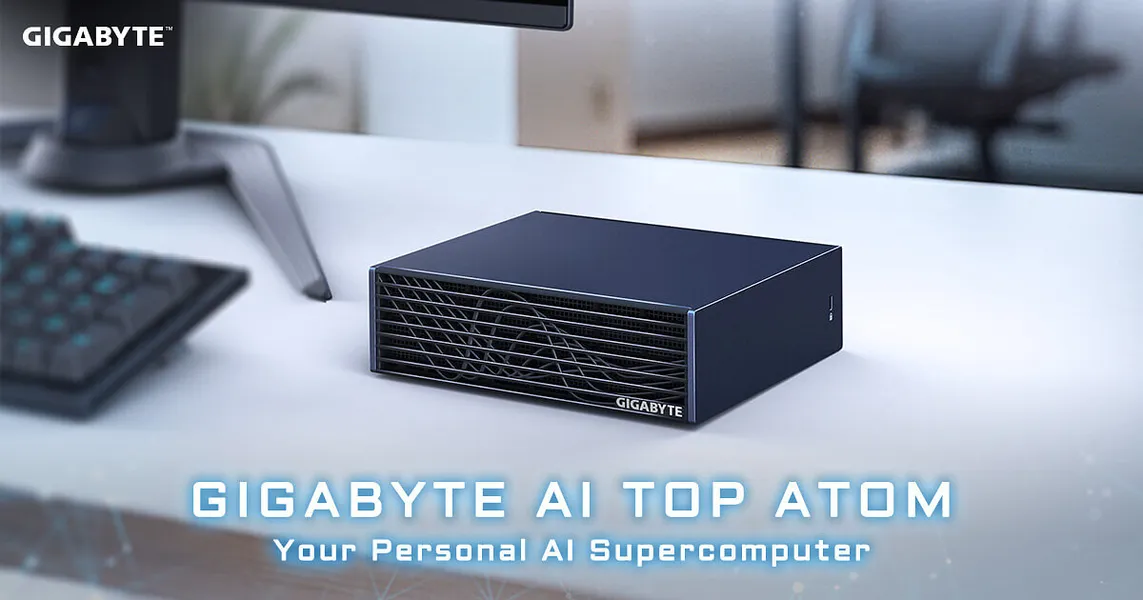
GIGABYTE AI TOP ATOM 64GB Adds a Lower-Memory Option
Published by AINave Editorial
GIGABYTE is adding a 64GB unified-memory configuration to its AI TOP ATOM desktop AI system, alongside the existing 128GB option. The company says the new version will be available starting October 23, 2026, and retains the hardware design based on the NVIDIA DGX Spark platform. Pricing, sales channels, and availability may vary by region, according to GIGABYTE’s announcement.
Memory capacity is the clear difference
The practical distinction in the announcement is memory capacity: 64GB or 128GB. GIGABYTE positions the options for different model sizes, workflows, and multitasking needs, but supplies no head-to-head benchmark, price comparison, or detailed configuration breakdown. So the 64GB model expands the choice; the release alone does not show what performance or cost trade-off buyers should expect.
That matters because memory capacity can influence which workloads fit, but the announcement does not specify model limits or quantify workload performance. The system’s underlying hardware design stays the same, according to GIGABYTE, so the stated change is a configuration choice rather than a new platform.
Local workflows, from inference to document Q&A
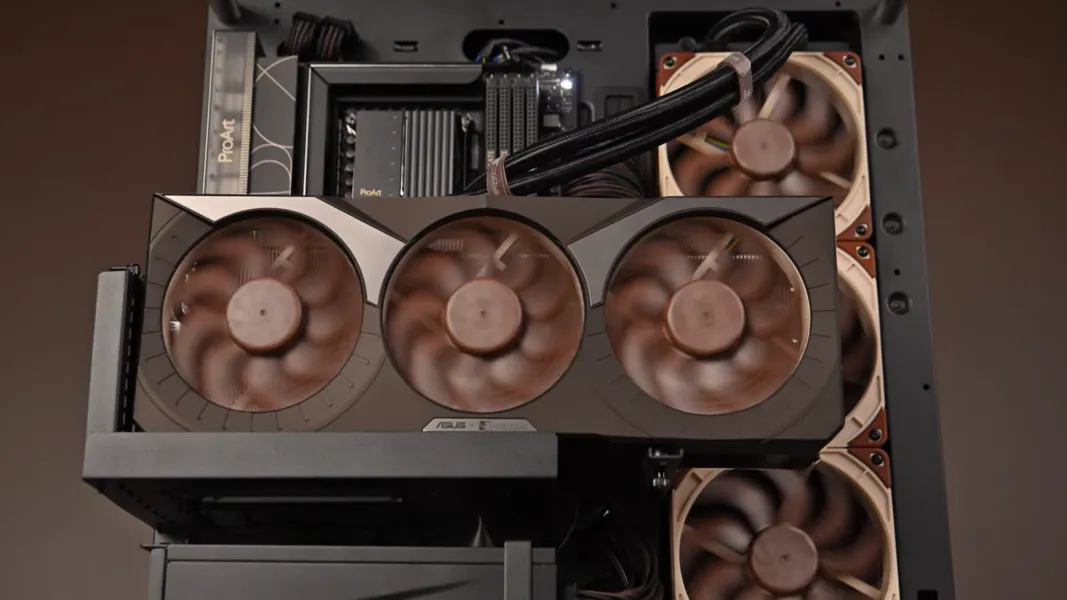
GIGABYTE describes AI TOP ATOM as a compact desktop system for model inference, prototype development, and data analysis in offices, laboratories, and educational settings. Its software setup combines NVIDIA’s CUDA-accelerated AI software ecosystem with GIGABYTE AI TOP Utility, which the company says supports downloading models, running inference, and retrieval-augmented generation, or RAG. Developers can use their own documents to build knowledge-based question-and-answer applications, according to the product announcement.
This points to a specific use for an on-premises system: testing models and document-based applications where teams want to keep development data local. It does not establish which models will run, how quickly, or at what workload scale. Those details would determine whether a particular team’s workflow fits either memory configuration.
Clustering is an expansion path, not a benchmark
The system includes ConnectX-7 networking, and GIGABYTE says up to four units can be clustered with NVIDIA Sync for a larger memory pool and greater compute capability. The announcement does not explain how memory is combined or provide measured cluster performance, so this is a manufacturer-described scaling option, not a quantified performance result.
GIGABYTE also cites a multi-node scientific-computing demonstration using NVIDIA Nemotron open models and the NVIDIA NemoClaw open agent blueprint to connect research hypothesis generation with simulation workflows. The example shows the kind of workflow the company is exploring; it does not establish that every such application is ready for routine deployment. For buyers, the immediate decision remains narrower: whether the model and multitasking needs justify the 128GB option, since the announcement leaves price and comparative performance unanswered.