John Deere's JD AI assistant signals a shift from machinery maker to data-and-software platform
Published by AINave Editorial • Reviewed by Ramit
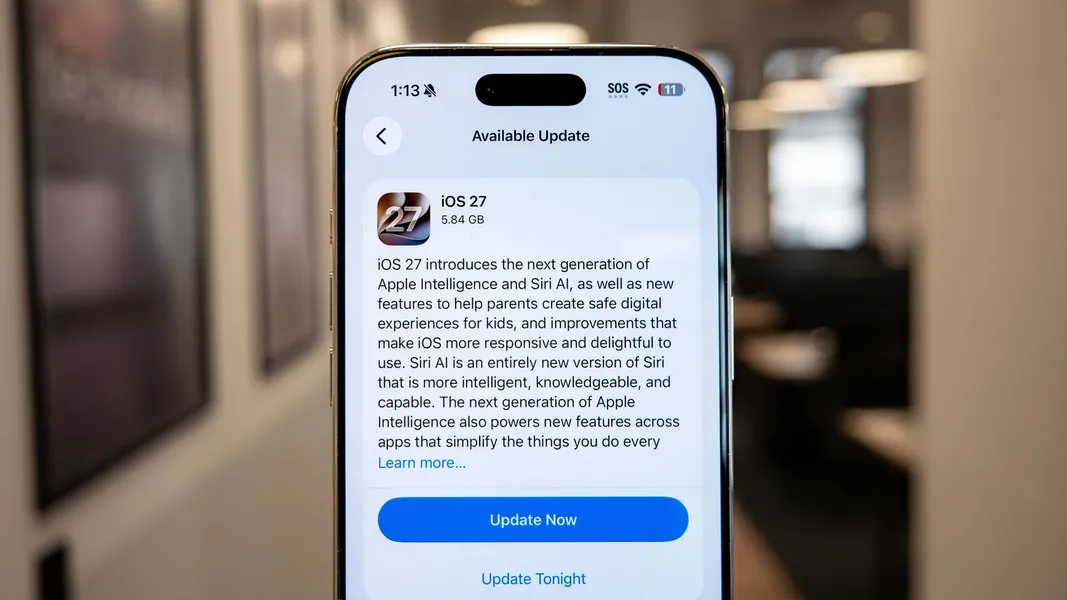
On September 1, John Deere introduced JD, an AI assistant built into its Operations Center that lets farmers ask questions about their own data, including fuel use, yields, machine performance, and harvest timing. For AI builders, this launch is less about the assistant itself and more about what it signals: Deere is evolving from a machinery manufacturer into a technology platform that controls an increasing share of the digital farming stack.
Deere's JD AI assistant: from green iron to data platform
Deere already dominates U.S. agricultural machinery with about 35% of farm equipment sales, and its share is even higher in large tractors and combines, according to Farm Action. The JD AI assistant is embedded in the Operations Center, Deere's farm management system, and queries the farmer's own operational data rather than generic agronomy knowledge. A farmer can ask about optimal harvest timing, machine performance trends, or fuel usage across fields, and JD pulls answers from the data already flowing into Deere's platform.
In its July 2026 report, Farm Action argues that major equipment manufacturers are accelerating technology-focused consolidation, acquiring companies in precision agriculture, AI, automation, and data analytics. This transforms them into platform companies that control both the hardware and the software layer, raising a new competition question: if farmers depend on Deere for both tractors and data tools, does that further entrench Deere's market position?
What the platform shift means for builders
For AI builders, Deere's move is a case study in platform strategy applied to industrial hardware. The JD assistant creates a natural data moat: the more farmers use the Operations Center, the richer the dataset becomes, and the harder it is to switch to competing equipment or software. Deere says farmers should stay in control of their data, but the architecture of the platform inherently ties data analysis to Deere's ecosystem.
Builders working on ag-tech or industrial AI products should note several patterns. First, the integration of AI directly into existing hardware workflows (combines, sprayers, planters) gives Deere a distribution advantage that pure software startups lack. Second, the data collected is high-value and proprietary: yield maps, soil conditions, machine telemetry, and timing decisions. Third, the same platform logic that makes JD useful also makes it harder for third-party tools to compete, because farmers get a unified view only within Deere's Operations Center.
Data governance and repair-access tensions
Deere's deeper push into data and AI comes alongside a regulatory push for openness in its hardware business. In July 2026, the Federal Trade Commission and five states (Illinois, Arizona, Michigan, Minnesota, Wisconsin) reached a proposed settlement requiring Deere to provide independent repair shops and farmers with the same tools, software, and parts it gives to its authorized dealers. This addresses long-standing complaints about repair restrictions, but it also highlights a broader tension: Deere wants to be a platform for data and AI while keeping its hardware ecosystem partially closed.
For builders deploying AI into physical products, the Deere situation illustrates a critical design choice. If your AI assistant depends on data collected from proprietary hardware, you need to define clear data portability and access policies. The repair-access settlement shows that regulators are willing to force openness on the hardware side, but data governance for AI features remains largely unregulated. Builders should expect similar scrutiny as AI becomes central to industrial equipment.
What's still unclear
The available reporting on JD AI does not include specific product capabilities, performance benchmarks, pricing, or a detailed rollout timeline. It is not clear what LLM or model powers the assistant, whether it runs on-device or in the cloud, or how Deere handles data retention and sharing. The proposed FTC settlement is not yet final and its impact on Deere's data platform strategy is uncertain. The competitive concerns raised by Farm Action are still speculative, though they mirror patterns seen in other hardware-plus-software ecosystems.
For now, JD AI is a signal worth watching. Builders in ag-tech and industrial automation should track how Deere handles data access, repair rights, and third-party integration. Those decisions will determine whether this platform shift empowers farmers or locks them into a single vendor's view of their own operations.
FAQs
Sources
- John Deere dominates farm machinery. Now it’s moving deeper into farm data and AI.
- Discover how John Deere is using artificial intelligence, autonomous tractors, precision agriculture, and smart farming technologies to transform global agriculture and inspire the future of sustainable farming 2026. - Data Drive Harvest
- In Iowa, John Deere showed me its AI for farming. But its unexpected AI-era boom? Moving dirt for data centers
- John Deere harvests data insights with new AI technology
- AI Adoption: John Deere & 7 Ways AI Transforms Agriculture
- From the Editor’s Desk: How John Deere is Bringing AI to the Farm | Power & Motion Tech
- John Deere - Wikipedia
- John Deere's China Problem: It's Worse Than You Think - YouTube
- Home | John Deere US
- From The Farm — Shop Local Farms Near You
- SSB Tractor: Farm Tractor Parts, Tractor Data & Manuals