Exein becomes unicorn with $270M for Physical AI security: Why kernel-level defense matters
Published by AINave Editorial • Reviewed by Ramit
Italian cybersecurity startup Exein just became a unicorn with a $270 million funding round at a $1.7 billion valuation, betting that on-device kernel-level defenses are essential for Physical AI security. The company's approach, using eBPF and Rust inside the Linux kernel, is a direct response to AI-powered firmware attacks that can travel faster than any cloud-based detection can respond.
What the funding means and where the money goes
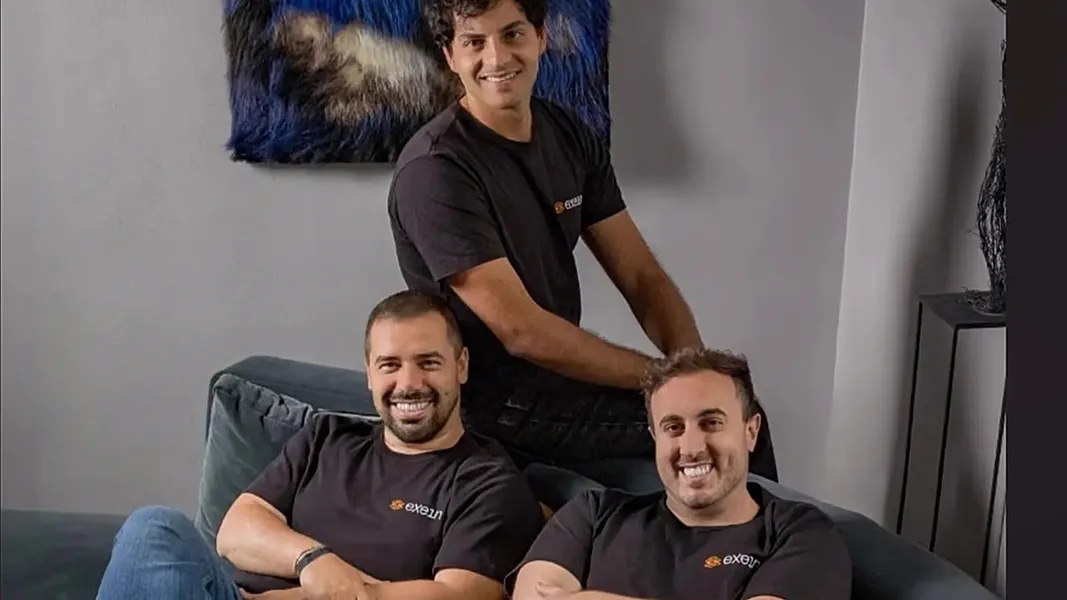
The round was led by Headline with backing from the European Investment Bank, valuing the Rome-based startup at $1.7 billion. Exein's valuation has increased thirtyfold in two years, making it Europe's highest-valued hardware cybersecurity firm. The company, founded in 2018 by Gianni Cuozzo, employs about forty people across offices in Germany, the United States, and Taiwan. Exein says the new capital will fund expansion in the US and Asia-Pacific, which already generate 50% of its revenue, while strengthening its European operations.
Pulsar, Photon, and how they secure devices at the kernel level
Exein's two products, Pulsar and Photon, both rely on the same core architecture. Pulsar is a Linux defense tool that uses eBPF to monitor and enforce security policies directly in the kernel with very low resource consumption. Rust, a memory-safe language, reduces the attack surface of the security layer itself. Photon sits on top of this infrastructure and operates in kernel space to block malicious execution paths before infection takes hold. The company claims this technology protects more than 1.5 billion devices daily.
The key difference from competitors like Palo Alto Networks, Microsoft Defender for IoT, Claroty, and Armis is that those solutions analyze threats from outside the device or at the operating system level. Exein works directly in the kernel, before malicious code executes. That distinction matters for Physical AI applications where a compromised firmware can lead to physical damage, not just data loss.
Why AI builders building autonomous systems should take note
If you are building AI agents that control physical hardware, industrial robots, self-driving vehicles, drones, or medical devices, the threat model shifts. AI-generated attacks can unfold in milliseconds, and open-source models make it easier for attackers to target firmware without expensive tooling. Exein's on-device approach keeps defense latency minimal because the protection lives inside the machine, not in the cloud.
For product teams working on Physical AI, this signals that embedded security is becoming a first-class requirement rather than an afterthought. The funding also aligns with the EU's Cyber Resilience Act, which mandates security-by-design standards for hardware and IoT devices sold in Europe. That regulation will push manufacturers to adopt kernel-level protection, and Exein is positioning itself as the default option.
Caveats
The factual details here are drawn from Euronews and TechCrunch coverage of Exein's announcement. Device counts (1.5 billion daily) and performance claims are company-reported and not independently verified. The funding round and valuation are confirmed, but product roadmaps and expansion timelines may shift. The competitive landscape includes Sternum IoT, Drivesec, Nothreat, and MicroSec, which also operate at the OS level, though Exein claims a kernel-level differentiator. No independent benchmarks or customer case studies were available in the source material.
Sources
- Exein becomes unicorn: Italian Physical AI security start-up valued at $1.7bn
- Exein becomes unicorn: Italian Physical AI security start-up...
- Italian Startup Exein Becomes Unicorn with Massive Funding for AI...
- New Italian unicorn Exein rides the physical AI wave | TechCrunch
- Exein становится единорогом: итальянский стартап Physical AI...
- Can Italy’s Exein, fresh off €100M raise, claim Europe’s first...
- Exein becomes unicorn: Italian physical AI security start-up valued at $1.7bn
- New Italian unicorn Exein rides the physical AI wave
- Physical AI security startup Exein raises $270M at $1.7B valuation
- Exein reaches Unicorn status as it faces 5,000 attacks weekly and raises €234 million for Physical AI cybersecurity
- Exein Raises $270m at $1.7bn Valuation to Build the Security Layer for Physical AI
- Exein becomes unicorn: Italian physical AI security start-up valued at $1.7bn
- Exein Raises $270m at $1.7bn Valuation to Build the Security Layer for Physical AI
- Exein raises $270M to build security for physical AI