Autodesk Flow Studio 3D Editor Moves AI Filmmaking Beyond Prompts
Published by AINave Editorial • Reviewed by Ramit
Autodesk is expanding Flow Studio with a 3D Editor and Canvas workflow, shifting AI-assisted filmmaking away from prompt-only generation and toward spatial control. The practical takeaway for indie teams and product builders is simple: creators can define the shot in 3D before asking AI models to render and refine the visuals.
Autodesk Flow Studio puts direction before rendering
The 3D Editor is designed for blocking scenes in 3D, placing cameras, directing performances, and controlling timing, pacing, and composition. Those decisions happen in a 3D workspace before the workflow moves into Canvas, where the resulting scene can be turned into and refined as 2D imagery or video.
That separation matters because generation and direction are different jobs. A model may produce an attractive shot, but a production workflow needs reusable control over where a character moves, how a camera frames the action, and what changes between iterations. Autodesk presents the 3D Editor as a way to make those choices explicit rather than encoding every requirement in a prompt.
Canvas is a node-based editor for AI image and video models. Teams can stay in the faster 2D workflow for simple experiments, then move into 3D when a shot needs more precise blocking, camera movement, or scene composition.
The useful change is control over independent scene elements
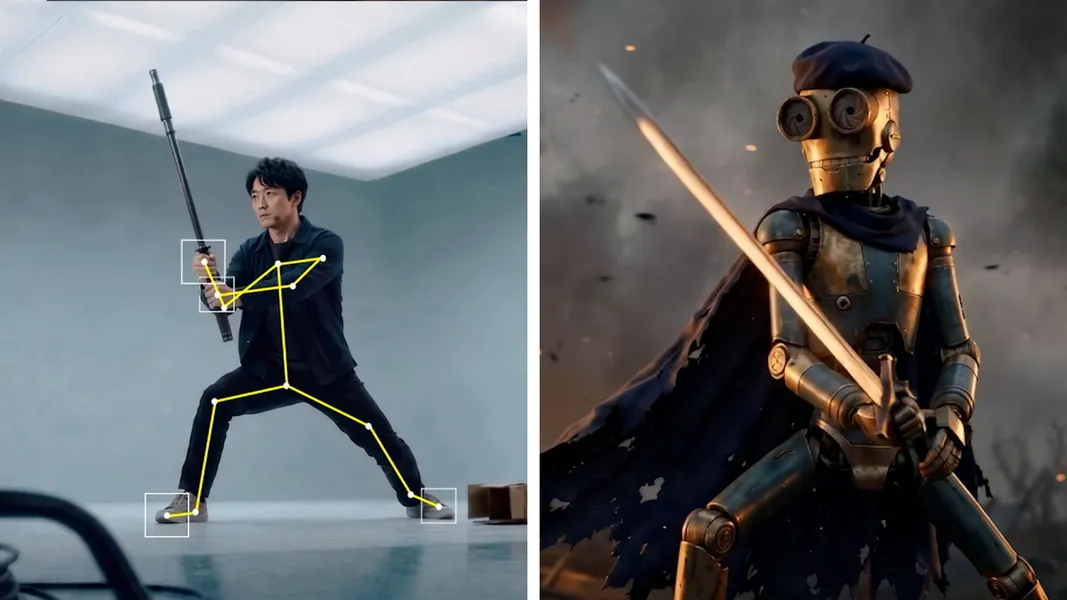
A demonstration described in the source shows footage of a person walking being converted into animation and applied to a Wonder Dynamics character. The workflow also extracted the original camera movement. That performance and camera setup were then reused while the character moved through environments including a World Labs Marble generated city.
The value is less about one impressive clip than about the structure of the workflow. The animation, camera, character, and environment can be treated as separate creative elements. A builder creating an AI video product should recognize the pattern: persistent scene state and editable controls are more useful for iteration than repeatedly regenerating a complete shot.
This is also where cinematography in AI becomes practical. Traditional skills such as staging, composition, camera blocking, and timing remain relevant because the creator is still making the important decisions. Autodesk says 3D skills are not mandatory, but they may become more valuable as AI systems handle more of the rendering work.
Smaller teams may gain a more repeatable pipeline
Autodesk positions the workflow for independent filmmakers, small studios, marketers, artists, and other storytellers. The potential benefit is not that a small team automatically gets studio-level output. It is that a team can explore complex scenes with a clearer production model, reusing performances and camera decisions instead of restarting from scratch.
For AI product teams, this suggests a useful design principle: expose controls for spatial relationships, timing, assets, and review, rather than treating the prompt as the entire interface. A 3D workspace for AI video can make human intent easier to inspect and revise, especially when a generated result is close but still wrong in a specific way.
The roadmap is promising, but incomplete
The reported roadmap includes deeper Maya integration, broader asset import, AI-assisted scene construction, and agent-driven directing. These are roadmap items, not confirmed capabilities available in the current release. The article also does not establish full Blender integration, pricing, rollout details, export formats, or interoperability with wider production toolchains.
Agent-driven directing is therefore still a concept rather than a documented feature. The likely appeal is higher-level control over scene construction and iteration, but the supplied evidence does not explain how such agents would manage continuity, cinematography, asset choices, or human approval.
The broader judgment