US Data Centers Surge as AI Demand Meets Power and Water Limits
Published by AINave Editorial • Reviewed by Ramit
US data centers are expanding rapidly to support AI services, with hyperscale operators such as Google, AWS and Microsoft leading much of the buildout. For AI builders, the practical takeaway is less about a guaranteed capacity boom and more about infrastructure risk: power, cooling, water availability and local approvals may determine where workloads can run and when new capacity becomes available.
AI demand is pushing US data center capacity higher
A Synergy Research Group forecast cited in the reporting expects US data-center capacity to grow by 200% over three years, with more than 700 facilities planned. If all proposed projects are completed, the United States could hold more than half of global operational data-center capacity within five years.
The counts are estimates, not a single authoritative inventory. Cleanview lists more than 1,200 operating facilities and 1,760 planned projects, while Pew Research Center reports more than 1,500 data centers in development. Different definitions of planned, proposed and operational sites make direct comparisons difficult.
Why AI builders should treat infrastructure as a product constraint
AI adoption is increasing demand for training, inference, storage and agent workloads. Those workloads require more than GPU availability. They also depend on reliable grid connections, cooling systems, networking and data-center operators capable of handling sustained high-density compute.
That changes planning for founders and product teams. A model deployment that looks inexpensive at the API layer can still face regional capacity limits, higher data center cooling costs or less predictable availability during periods of extreme heat. Teams choosing between cloud regions should evaluate power and operational resilience alongside latency, compliance and price.
Power and water are becoming site-selection problems
Energy consumption of data centers is now a community and infrastructure issue, not only an operator expense. The source reporting describes possible household energy bill increases near new facilities, while water-intensive cooling can put additional pressure on supplies in drought-prone areas.
Research cited by Mother Jones estimates that US data centers could require up to 73 billion gallons of water annually by 2028, compared with about 17 billion gallons in 2023. That estimate concerns the sector broadly, so it should not be treated as a precise forecast for every facility or AI workload.
Rural locations do not remove local risk
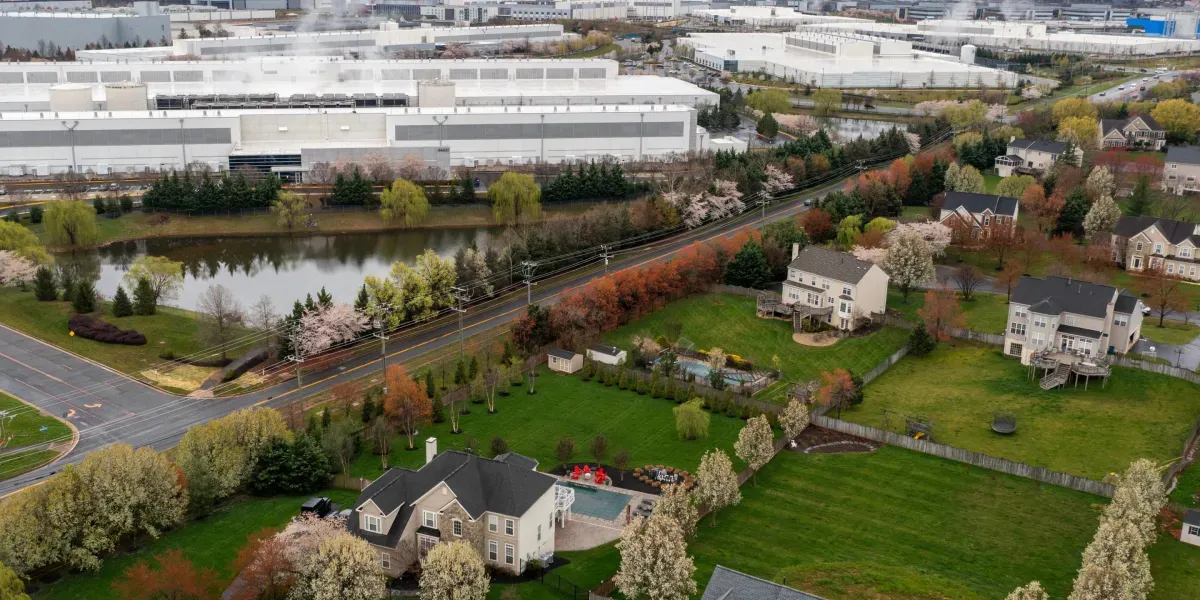
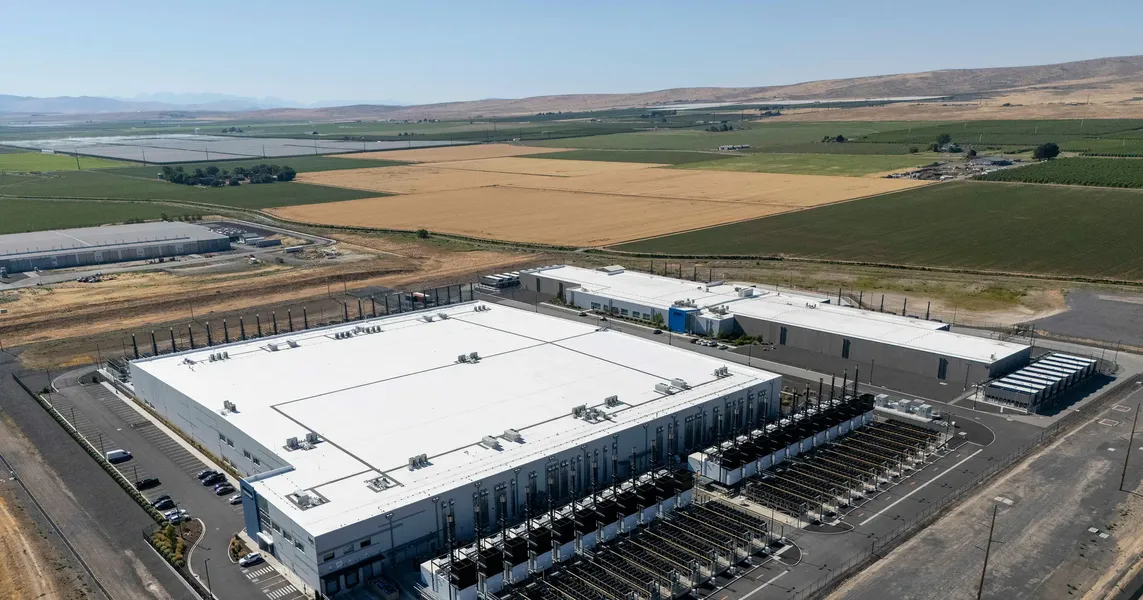
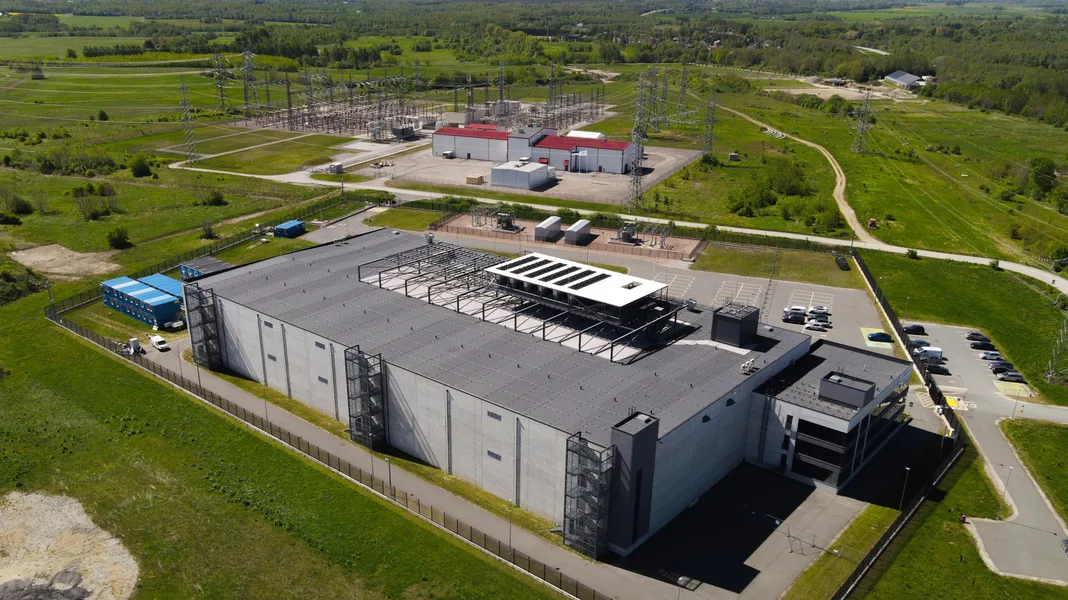
Rural data center locations in the US are increasingly common because land and potential power access can be easier to secure than in dense urban areas. Pew estimates that roughly 1,000 of 1,500 proposed facilities are set for rural locations, particularly in the South and Midwest.
For builders, rural siting can reduce some real-estate constraints while increasing the importance of transmission planning, water assessments, permitting and stakeholder engagement. Public opposition to data centers is also material: the parent report cites polling showing 71% of American adults oppose a facility near their home.
Planned capacity may not arrive on schedule
The expansion pipeline should not be confused with delivered compute. Sightline Climate estimates that 30% to 50% of AI data centers planned for 2026 could be delayed or canceled, citing energy constraints and difficulty procuring electrical equipment. Heat waves add another pressure because hotter conditions increase cooling requirements and operating costs.
The decision rule for AI product teams is straightforward: treat infrastructure availability as an uncertainty in delivery schedules and unit economics. Capacity growth is real, but proposed facilities, available power and usable AI compute are three different things.
Sources
- A Huge Number Of Data Centers Are Set To Be Built In The US, Despite Ongoing Issues
- Most new US data centers are slated for drought-plagued areas
- Data centers are being built across Texas every day.... | KERA News
- How Many Data Centers Are Being Built in The Us | TikTok
- Nearly 7,000 of the world’s 8,808 data centers are built in the wrong...
- A huge number of data centers are set to be built in the US, despite ongoing issues
- A Huge Number Of Data Centers Are Set To Be Built In The US ...
- Most new data centers in the U.S. are coming to rural areas
- Nearly half of US data centers planned for 2026 are facing ...
- Majority of US’s new AI datacenters to be built on drought ...
- Why the United States Is Building Data Centers at ...
- AI’s thirst is real: Big tech’s data centers are drying out parched lands