The data-movement bottleneck: why AI networking may shape the next wave of AI infrastructure
Published by AINave Editorial • Reviewed by Ramit
Networking is replacing raw compute as the main constraint on AI performance, according to Citi analysts at the Hot Chips conference. For AI builders, this means that efficiently moving data between chips, servers, and data centers will increasingly determine system throughput and cost, not just GPU speed.
Data movement becomes the primary bottleneck
The first wave of AI infrastructure focused on faster GPUs and larger training capacity. But as models scale toward trillions of parameters with larger context windows and autonomous agent workloads, moving data efficiently is becoming the tighter constraint. Citi analysts said presentations from Nvidia, Broadcom, Meta, Google, and Samsung all pointed to the same trend: the future AI winner is not necessarily the company with the fastest processor, but the company that can move data most efficiently throughout the entire system.
Memory is increasingly part of the networking challenge. Technologies from Samsung, XCENA, and Cerebras aim to keep more data close to where it is processed, reducing the amount that must travel across congested interconnects. Every byte kept locally reduces communication overhead, making improvements in memory capacity, bandwidth, and efficiency closely linked to network performance.
Why this matters for AI builders
If you are deploying large models or building agentic systems, the bottleneck is shifting from compute to data flow. A model that requires frequent cross-chip or cross-rack communication will see diminishing returns from faster GPUs alone. The practical takeaway: infrastructure decisions around interconnect topology, memory bandwidth, and data locality will matter more for end-to-end performance than raw teraflops.
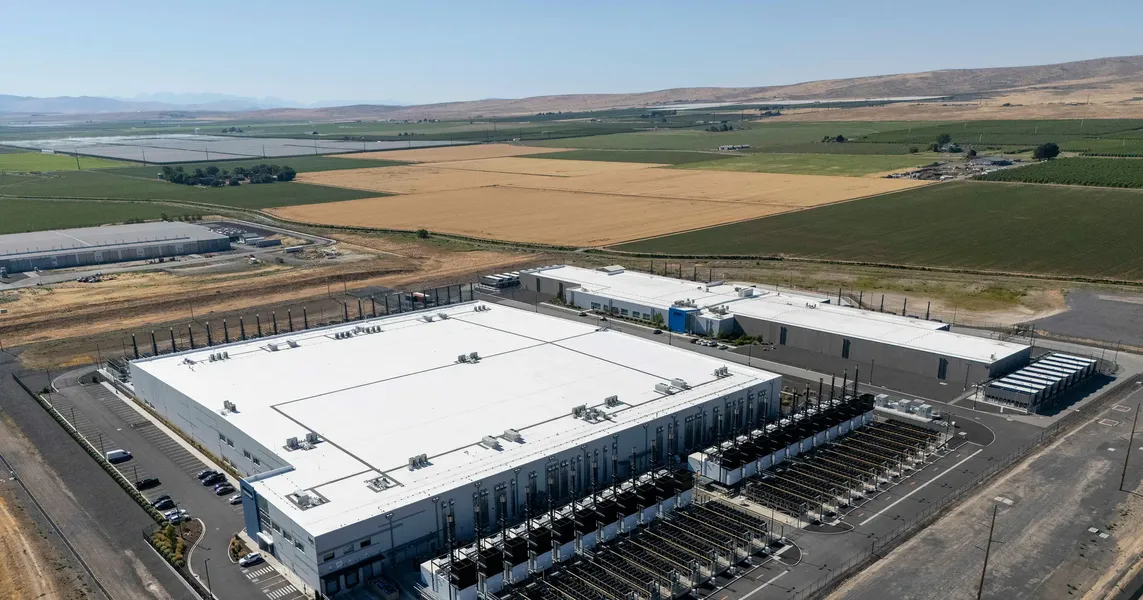
Citi also highlighted Nvidia's concept of "AI factories" -- data centers organized around data flows that integrate compute, memory, networking, storage, and security, rather than traditional server-based layouts. This shift could move more AI infrastructure value toward companies capable of optimizing the entire data movement stack rather than simply supplying standalone processors.
Practical implications for infrastructure planning
For product teams and operators, this means evaluating end-to-end data flow when planning AI deployments. Consider interconnect bandwidth between GPU nodes, memory bandwidth per accelerator, and whether your workload benefits from near-data processing. Technologies that reduce data travel across the network, such as local memory expansion or in-network compute, may offer better returns than upgrading to the next GPU generation.
What remains uncertain
The analysis comes from Citi's interpretation of conference presentations, not from independent benchmarks or product announcements. No specific performance numbers or timelines were provided. The importance of networking varies by workload: training large dense models may feel the bottleneck more acutely than inference on smaller models. Builders should validate these claims against their own deployment patterns rather than treating them as universal truths.
FAQs
Sources
- How networking became the critical layer of AI
- How networking became the critical layer of AI
- Chaos Engineering in the Age of AI: Surfacing Hidden Complexity
- Hugging Face – The AI community building the future.
- ft.com/content/19504fed-5e39-488f-b5b8-c9a7eb8a6b84
- What Is a Neural Network? | IBM
- Agentic AI And The Next Layer Of The Trade: Beyond Nvidia
- Gartner: How AI will transform managed network services
- The AI economy’s next layer of value
- Rethinking AI’s Next Frontier as Meeting Intelligence Emerges as a Critical Layer in Enterprise Communication
- AI revenue puts optical networks at India’s telecom crossroads
- Train the Next Generation of AI as a Freelancer | Outlier AI
- What Is Black Box AI and How Does It Work? | IBM
- AI is a massive problem, here's why. - YouTube
- GoodVision AI Introduces the '7-Layer AI Cake' Framework for the Inference Era
- 3 AI Networking Stocks Dominating a Quiet Niche - 24/7 Wall St.