Sovereign AI compute: why where you run AI matters for builders and investors
Published by AINave Editorial • Reviewed by Ramit
For years, "the cloud" let companies treat computing as an abstraction. AI has ended that. A frontier model runs on specific machines, in a specific building, drawing power from a particular grid, under the laws of the country where it operates. Whoever controls that stack can tax it, subpoena it, or shut it down. This shift is driving a scramble for sovereign AI compute that is reshaping investment, regulatory compliance, and geopolitical competition around AI deployment.
What happened
In May 2025, Karim Khan, chief prosecutor of the International Criminal Court, opened his laptop in The Hague and found himself locked out of his Microsoft email account. The Trump administration had sanctioned Khan over the court's arrest warrants for Israeli officials. Microsoft, a U.S. company subject to U.S. law, was caught in the middle. The company president, Brad Smith, later denied that Microsoft had cut off the ICC, saying its actions never involved suspending the court's services. For the court and its staff, the episode felt like a kill switch flicked from Washington. The lesson was clear: wherever your data physically sits, your infrastructure answers to whoever has legal authority over the company that runs it.
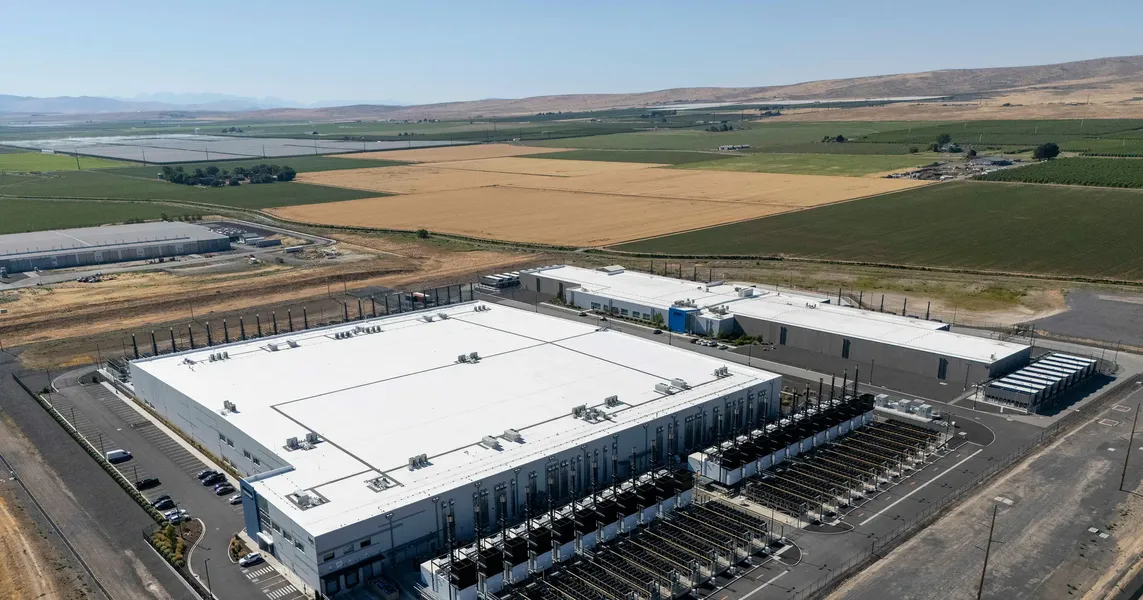
That lesson is now reshaping decisions far from The Hague. A frontier model runs on particular machines, in a particular building, drawing power from a particular grid, under the laws of the country where it operates. Once billions have been poured into concrete and power lines, the system remains fixed in place.
Money is pouring into sovereign AI, even as a shared definition remains elusive. The phrase was everywhere at the U.N.'s recent AI for Good Global Summit in Geneva, invoked by national research institutes, standards bodies, and startups alike. Ask any two of them to define it, and their answers are unlikely to match. Some definitions focus on keeping data inside national borders. Others emphasize building homegrown models capable of rivaling American and Chinese systems. Hakim Hacid, chief researcher at the UAE's Technology Innovation Institute, offered the most comprehensive answer from the stage.
Why AI builders should care
For AI builders, the shift from cloud-abstracted AI to location-bound compute affects model deployment decisions, supply chain considerations, and cross-border data governance. If you are building an AI product that processes sensitive data, the physical location of your inference or training stack determines which government can compel access to that data. This is not a theoretical concern. The Hague incident shows that sanctions, subpoenas, or regulatory actions can disrupt access to services running on infrastructure owned by a company in another jurisdiction.
For founders and product teams, this means that choosing a cloud provider or GPU cluster is no longer just a cost or latency decision. It is a legal and geopolitical one. If your users are in Europe, running inference on U.S.-based infrastructure exposes you to U.S. law. If you are building for a government client, you may need to guarantee that data never leaves the country.
Practical implications
Investors and startups are pouring money into sovereign AI initiatives, yet there is no universally accepted definition of sovereignty in AI compute. This ambiguity creates both risk and opportunity. Builders who can clearly articulate their data residency and infrastructure control posture may have a competitive advantage when selling to regulated industries or governments.
Localization and domestically engineered models could influence regulatory compliance, national security posture, and competition with dominant AI players. For example, the UAE Technology Innovation Institute is advocating for domestically engineered models that can compete with American and Chinese systems. This trend may lead to a fragmented AI infrastructure landscape where builders need to support multiple regional stacks.
Caveats
This analysis is based on a single feature article from Fast Company. Broader datasets and multiple sources would strengthen conclusions about the scale and pace of sovereign AI compute adoption. The Hague incident, while illustrative, involves email services rather than AI compute directly, and Microsoft denied cutting off the ICC. The exact implications for AI infrastructure sovereignty remain an evolving story.
Supporting keywords like "national grid power for AI" and "AI governance by jurisdiction" were not directly supported by the provided source context and were not included.
FAQs
Sources
- The great scramble to build AI compute you can actually own
- Perplexity Computer
- Chutes | Serverless AI Compute
- Cerebras is the go-to platform for fast and effortless AI training.
- Transformers, the tech behind LLMs | Deep Learning... - YouTube
- The Power of Thinking Inside the Box
- The Top AI Skills Everyone’s Trying to Learn Right Now (And the Courses They’re ...
- ‘Dangerous Animals’ Proves That Sharks Haven’t Lost Their Power To Terrify (Even...
- I Put 4 Windows Debloating Tools to the Test. The Results Were Embarrassing
- I Started An Ai Agency From $0 To Prove It’s Not Luck - YouTube
- The Scramble for AI Computing Power - American Affairs Journal
- You will never own the AI. You can still own what it cannot. | Ctech
- The great AI power grab: the race to fuel the compute boom - UK Investor Magazine
- The 5 Companies Now Controlling AI Compute — And How to Build an AI Factory Without Them - Hybr
- Grok’s usage is so low that Elon Musk can sell compute to Anthropic