Siri AI vs ChatGPT: Why Apple’s Default Assistant Matters
Published by AINave Editorial • Reviewed by Ramit
Apple plans to release Siri AI with iOS 27 this fall, turning the iPhone’s built-in assistant into a broader AI interface. The practical takeaway for AI builders is straightforward: Siri AI may compete with ChatGPT less through chatbot novelty than through default distribution, access to device workflows, and personal context.
Siri AI turns the operating system into the distribution layer
The reported assistant will handle web search beyond Google, email drafting, text responses, image creation, and searches across personal data. That places AI inside communications, productivity, and information retrieval rather than requiring users to open a separate chatbot app.
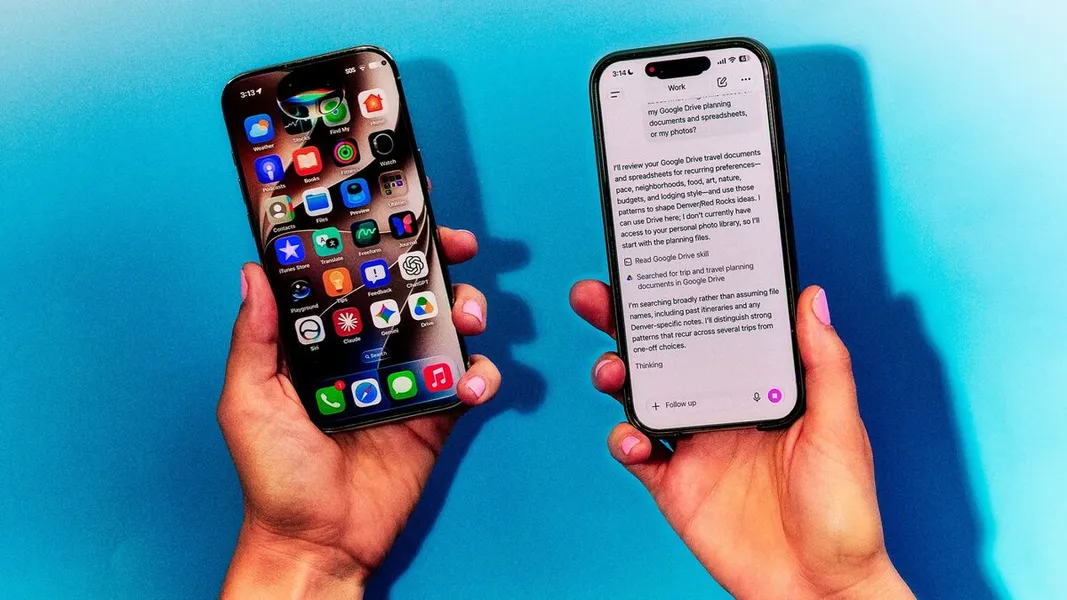
This is the key difference in the Siri AI vs ChatGPT comparison. ChatGPT is primarily a standalone consumer chatbot and software platform, while Apple can make Siri AI the default chatbot on iPhone devices. A default does not guarantee better answers, but it lowers the friction to first use and gives Apple more opportunities to shape everyday AI behavior.
The builder impact is about workflow access
For product teams, Apple’s approach reinforces an important deployment pattern: the winning AI interface may be the one closest to the user’s existing data and actions. An assistant that can work across messages, email, search, and personal information can support shorter, more contextual tasks than a generic chat window.
That creates both an opportunity and a constraint. Developers building mobile AI products may need to think about whether their product is a destination users deliberately open or a capability that can be invoked from an operating-system-level assistant. Apple Intelligence features and system integration could increase the value of structured app actions, reliable permissions, and clear handoffs between the assistant and third-party software.
The supplied evidence does not establish Siri AI’s underlying model, API access, latency, supported devices, or privacy architecture. Apple’s ability to use personal context is reported, but the exact data handling, retention, and developer controls remain unclear. Builders should avoid treating the feature list as proof of production quality.
Apple and OpenAI are now competing on more than model quality
The rivalry also has a legal dimension. Apple sued OpenAI and two former employees, alleging misappropriation of trade secrets. The allegation is contested litigation, not an established finding, but it signals how valuable talent, product designs, and hardware strategy have become in the AI race.
For builders, the decision rule is to separate the model from the delivery layer. ChatGPT may remain preferable for users seeking a dedicated conversational workspace, while Siri AI could be more consequential for frequent mobile actions because Apple controls the default entry point. Until Apple publishes fuller technical and privacy details, teams should plan for another major distribution surface, not assume that Siri AI already replaces general-purpose AI tools.
Sources
- Apple vs. OpenAI: How Siri AI Stacks Up Against the New ChatGPT
- Ep 699: Apple’s new ChatGPT competitor and updated AI Siri...
- I asked ChatGPT and Siri AI to build me a workout plan... | TechRadar
- AI News: New Gemini Voice + Codex Voice Are Mind Blowing - YouTube
- Как включить новую умную Siri Ai в iOS 27, iPadOS 27 и macOS 27
- Downloading the ChatGPT macOS app | OpenAI Help Center
- Hands On With Apple Intelligence in iOS 18.1: Here's What You Get Right Now
- Apple sues OpenAI, two former employees for trade secrets theft
- Apple files lawsuit accusing ChatGPT maker OpenAI of stealing trade secrets
- 8 things to know about Apple’s lawsuit against OpenAI
- Apple sues OpenAI over stealing trade secrets
- Is Siri AI better than ChatGPT? Here's what Apple and OpenAI ...
- How Siri AI Stacks Up Against ChatGPT and Google Gemini ...
- I asked Apple's new Siri AI and ChatGPT the same 10 ... - Stuff
- Apple's New Siri Sure Looks Like a Break-up Note With ChatGPT ...