Pentagon expands AI role in targeting while keeping human oversight
Published by AINave Editorial • Reviewed by Ramit
The Pentagon has quietly revised its battlefield targeting doctrine to allow artificial intelligence to initiate actions with human oversight, marking a significant shift in how the U.S. military approaches AI-enabled military targeting.
What happened
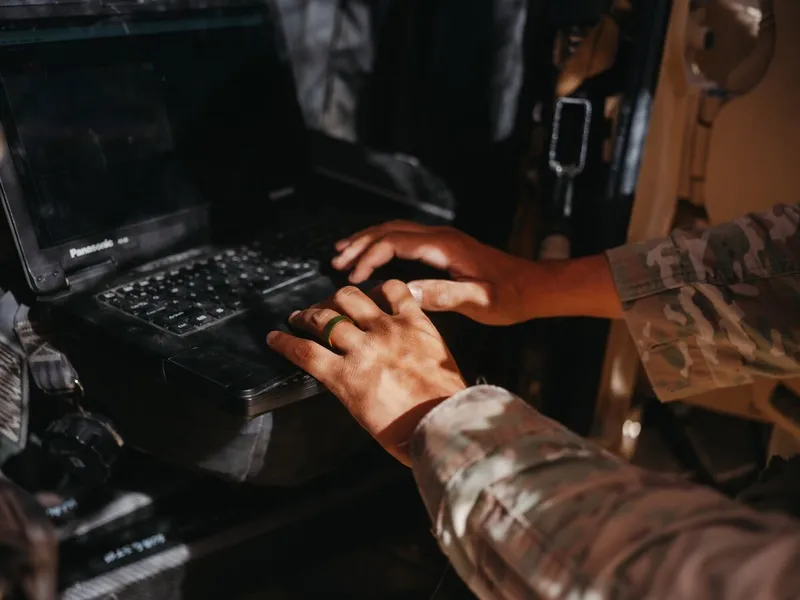
The revised targeting principles, approved in April without public disclosure, envision "systems where AI initiates actions with human monitoring." This is a change from the current practice of "human in the loop" systems, where a human initiates each action. The update is part of a broader push toward autonomous systems driven by the speed of future warfare and adversary AI advances. Demonstrations of the evolving approach are taking place at the National Training Center at Fort Irwin, California, using drone and sensor systems.
Why AI builders should care
For developers building defense-oriented AI, this doctrine change signals that military AI governance and safety controls are moving toward autonomy with ongoing human oversight. The practical impact is that battlefield AI systems will need robust monitoring overlays, intervention points, and auditing capabilities. Companies like Palantir, whose Maven AI system is becoming an official program of record, are central to this transition. The shift also highlights the growing demand for AI-enabled decision support tools that can operate within strict accountability frameworks.
Practical implications
Developers should consider how to implement human-monitoring layers when AI initiates actions. The demonstrations at Fort Irwin show how AI-powered sensors and drones integrate into targeting workflows, which may inform the design of future developer tools and safety features. Key areas to watch include data provenance for targeting decisions, real-time audit trails, and fallback mechanisms if human oversight is lost. The doctrine change also suggests that the Pentagon is prioritizing speed in decision cycles, which could drive requirements for low-latency AI inference at the edge.
Caveats
Specific details of the revised doctrine are not publicly disclosed. The analysis relies on limited public reporting from Bloomberg and secondary sources. The exact scope of what "AI initiates actions" means in practice remains undefined, and the timeline for operational deployment is unclear. The doctrine revision does not represent an immediate shift to fully autonomous weapons, but rather an evolution toward AI-initiated actions under human monitoring.
In parallel, the Pentagon is embracing commercial AI tools. Defense Secretary Pete Hegseth announced that Elon Musk's Grok AI chatbot will join Google's generative AI engine inside the Pentagon network, part of a broader push to feed as much military data as possible into AI systems. Additionally, Palantir's Maven AI system was formally adopted as an official program of record in March, cementing its role as a core military AI platform.
FAQs
Sources
- Pentagon Sees Broader Role for AI in Setting Military Targets
- Pentagon is embracing Musk’s Grok AI chatbot as it draws global outcry
- Gaza war: Israel using AI to identify human targets raising fears that...
- Pentagon Sees Russia Reinforcing Units on Border... - Atlantic Council
- Pentagon sees Iran war lasting up to six weeks, Trump aide says
- As the Pentagon pushes for battlefield AI, some military leaders urge caution
- Pentagon to adopt Palantir AI as core US military system, memo says
- Pentagon Sees Broader Role for AI in Setting Military Targets
- [PDF] Artificial Intelligence Strategy for the Department of War
- Pentagon Revises Targeting Doctrine, Opening Door for AI Role ...
- The Military's Use of AI, Explained | Brennan Center for Justice
- Pentagon Sees Broader Role for AI in Setting Military Targets
- Pentagon is said to open door to greater AI role in military targeting
- Pentagon advances AI in military amid calls for caution from leaders
- As the Pentagon pushes for battlefield AI, some military leaders urge caution