OpenAI's C-Suite Exodus Raises Questions Ahead of IPO
Published by AINave Editorial • Reviewed by Ramit
Three senior OpenAI executives have left in two weeks, including chief revenue officer Denise Dresser and operating chief Brad Lightcap, while the company prepares for a historic IPO. The exits raise real questions about governance and execution risk for builders and enterprise teams betting on OpenAI as a platform. Yet underneath the leadership turmoil, enterprise revenue is growing faster than consumer and now represents the larger share of the business. Here is what the shakeup means for your product decisions.
Three C-suite departures in two weeks
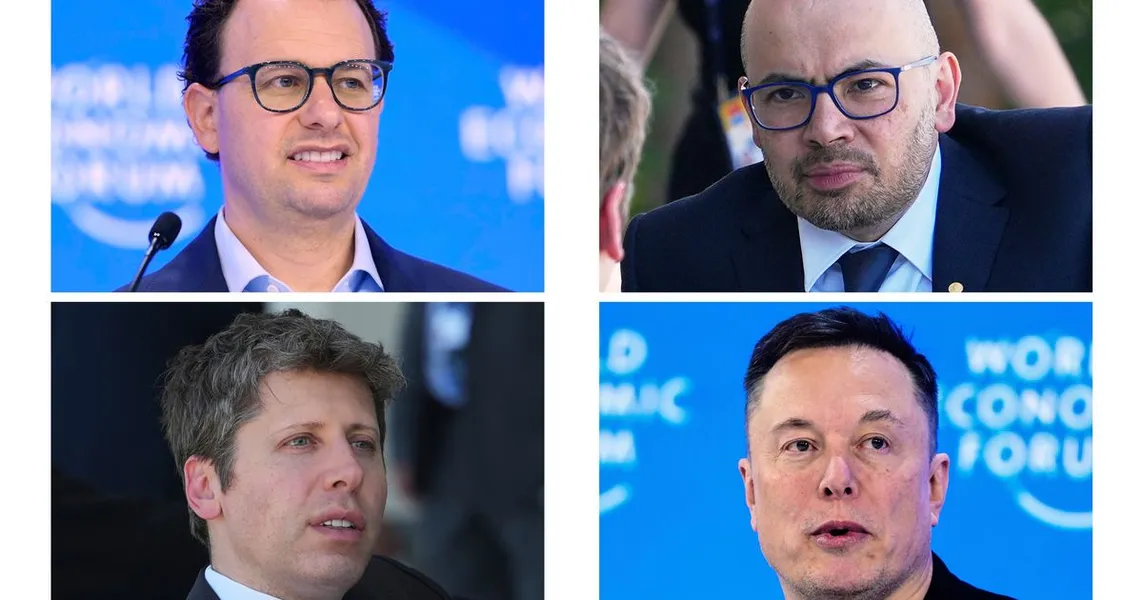
Denise Dresser announced her departure on Thursday after less than one year as CRO source. She joined from Slack in December and was tasked with scaling OpenAI's enterprise unit, which directly competes with Anthropic. Just two days earlier, Brad Lightcap said he was ending his eight-year tenure to "start something new." Fidji Simo, the former Instacart CEO who joined as product chief, stepped back in July for health reasons. OpenAI quickly named Dali Rajic, the former COO of Wiz (recently acquired by Google for $32 billion), as the new CRO.
These departures follow four other executive exits in April, including the VP of Science Kevin Weil and marketing chief Kate Rouch. Investors were surprised by Dresser's departure, according to two current investors who spoke to CNBC, and some industry observers called the talent exodus a "huge red flag" ahead of an IPO source.
Enterprise growth masks governance questions
OpenAI's enterprise business is growing fast. Under Dresser's leadership, the company's enterprise run rate increased more than 20% month-over-month in July, with 32% growth among business customers source. Enterprise customers reached about 2 million, doubling from a year ago, and that segment now generates more revenue than the consumer ChatGPT business. CFO Sarah Friar led a pre-planned investor meeting on Friday to highlight these metrics.
That growth is the main argument for the company's $852 billion valuation source. But the C-suite churn sits uncomfortably next to that number. Investor concerns also include competition from Google and Anthropic, the rise of lower-cost open-weight models, and even SpaceX stock volatility affecting broader market sentiment.
What this means for your vendor decisions
For AI builders running enterprise workloads on OpenAI, the leadership changes add a layer of vendor risk. When a CRO leaves after eight months, it signals that the enterprise sales motion may be unstable. Contracts, pricing commitments, and roadmap assurances made under Dresser may or may not hold under Rajic. Greg Brockman, the company president, acknowledged the risk by saying Rajic will "turn what we've learned into repeatable execution" source.
If you are negotiating an enterprise agreement or building a product that depends on OpenAI's API, monitor how the new CRO aligns incentives with large customers. The company's internal culture has been described as a "pressure cooker" by former employees, and Altman's own history of being briefly ousted in 2023 adds to the governance narrative.
The unknown timeline and open questions
OpenAI confidentially filed its IPO prospectus in June, but has not announced a public timeline source. The leadership exits may delay or complicate the roadshow. For now, the company is betting that enterprise growth numbers will outweigh governance concerns. Builders should watch whether Rajic can stabilize the enterprise team and whether any more exits follow.
One final data point: After Dresser's departure, Altman's only public comment was about a new GPT-5.6 "Ultrafast mode" running at up to 14x speed source. He did not post about Dresser leaving. That silence is itself a signal.
FAQs
Sources
- OpenAI talent exodus raises 'huge red flag' ahead of IPO
- OpenAI Talent Exodus Raises Red Flag for Future | StartupHub.ai
- OpenAI Talent Exodus Raises ‘Huge Red Flag’ Ahead of IPO - TechStory
- OpenAI talent exodus raises ‘huge red flag’ ahead of IPO
- OpenAI Executive Exodus Raises IPO Red Flag
- OpenAI's Chief Revenue Officer Is Leaving After 8 Months. She's Just the Latest Executive to Head for the Exit
- OpenAI Talent Exodus: 10 Burning Questions for Investors
- OpenAI faces executive turmoil as Altman reshuffles leadership ahead of $1T IPO
- OpenAI faces executive turmoil as Altman reshuffles leadership ahead of $1T IPO
- Another OpenAI Executive Has Left the Company Amid IPO Countdown | The Epoch Times
- OpenAI loses another C-suite executive ahead of IPO
- OpenAI talent exodus raises 'huge red flag' ahead of IPO
- OpenAI talent exodus raises 'huge red flag' ahead of IPO
- OpenAI upheaval mounts as Sam Altman readies IPO push
- The OpenAI Talent Exodus Gives Rivals an Opening | WIRED