OpenAI's $30B Georgia Data Center (Project Camellia) Puts Community Engagement Front and Center
Published by AINave Editorial • Reviewed by Ramit
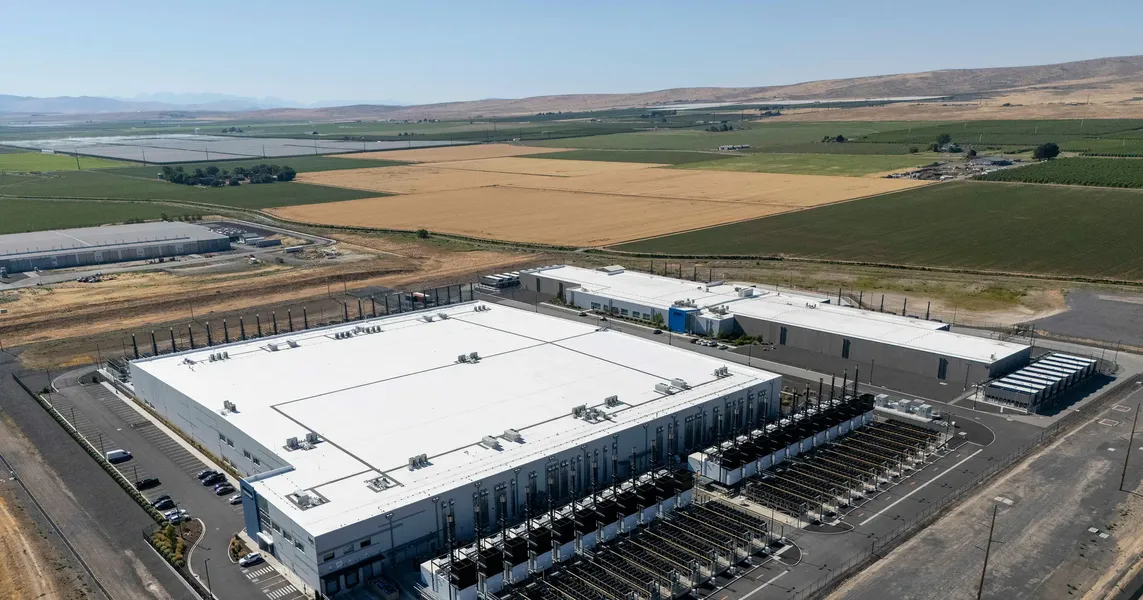
OpenAI is planning a massive new AI data center campus in Effingham County, Georgia, named Project Camellia, with a total investment of over $30 billion and a planned capacity of 3.2 gigawatts across 1,400 acres. The project will be built in phases between 2028 and 2032 on a pre-existing industrially-zoned warehouse site in the Savannah Gateway Industrial Hub.
What happened
OpenAI announced Project Camellia as a 3.2 GW data center campus in Effingham County, Georgia, near Savannah. The company outlined a four-point community engagement plan designed to address growing local opposition to large data center projects.
The plan includes covering the full cost of infrastructure and electric-service costs (though Georgia Public Service Commission rules already prevent cost pass-through to ratepayers), proactively reducing power consumption during peak demand periods, implementing a closed-loop cooling system to minimize water withdrawal, and committing $80 million in community benefits over the project's life. OpenAI also expects to become the largest taxpayer in the county, generating hundreds of millions in state and local tax revenue.
Additionally, OpenAI will provide up to $71 million in OpenAI Codex credits for eligible Georgia college, community college, and technical school students. The company held a public open house on July 23 and plans to formalize commitments through a Georgia Community Compact.
Why AI builders should care
Large-scale AI infrastructure projects are increasingly coupling capacity expansion with formal community and regulatory engagement. Project Camellia signals that future data center deployments may need to address grid reliability, water usage, and local accountability upfront.
For AI builders, this means that the cost and timeline of compute infrastructure will increasingly depend on local governance and community relations, not just hardware availability. The project's emphasis on peak-demand reduction and closed-loop cooling could set precedents for how other operators design and justify their facilities.
Practical implications
The closed-loop cooling system is designed to reduce water withdrawal compared to traditional once-through cooling. OpenAI says that outside of initial system flush and filling, actual water usage will be comparatively low.
The $80 million in community benefits is pledged over the project's life, but OpenAI has not specified the expected lifespan, so the annual amount could be relatively small. The $71 million in Codex credits for Georgia students is a direct incentive tied to OpenAI's developer platform.
OpenAI also commits to accountability through ongoing community feedback and a Georgia Community Compact that translates priorities into specific commitments and measures.
Caveats
Details of Project Camellia are based on OpenAI's announcement and media summaries. Specifics may evolve as plans develop and regulators review the project. The mechanism for proactive power reduction during peak demand has not been detailed. The $80 million community benefits figure lacks a defined project lifespan, making the annual impact unclear. Initial water intake and discharge for the closed-loop system still carry some risk.
FAQs
Sources
- OpenAI is spending $30 billion on a new mega 3.2 GW data center in Georgia — and it's trying really hard to quell local opposition
- Project Camellia: OpenAI Plans $30 Billion, 3.2-Gigawatt Data ...
- OpenAI Plans to Spend Over $30 Billion on Georgia Data Center
- OpenAI announces $20 billion Georgia data center project
- OpenAI plans $30B Georgia data center mega-project