NVIDIA Earnings: The Rubin Ramp and AI Financing That Builders Need to Watch
Published by AINave Editorial • Reviewed by Ramit
Nvidia is about to report its fastest revenue growth in seven quarters, with analysts projecting quarterly revenue near $92.18bn, close to double the same period last year. But for AI builders, the headline number is not the point. The real story is the transition to next-generation Rubin chips and the increasingly blurry line between Nvidia as a chip supplier and Nvidia as a lender to its own customers.Earnings forecast
The Rubin Ramp Is Underway
Vera Rubin, Nvidia's next processor architecture, is in full production and OpenAI is already deploying it at scale. Shipments of Rubin-based products begin this autumn, and how quickly customers migrate from Blackwell will determine whether the guidance holds. Morgan Stanley expects Rubin to contribute nearly $9bn in the current quarter, arguing that it unlocks a large improvement in AI factory economics.Rubin production and revenue estimate
For builders, this means new hardware is coming, with potential improvements in performance per watt and inference throughput. The migration path from Blackwell to Rubin is the key variable: if customers move fast, availability of current-gen hardware could tighten, and early Rubin allocation may go to hyperscalers first.
Why the Financing Model Matters to Your Build
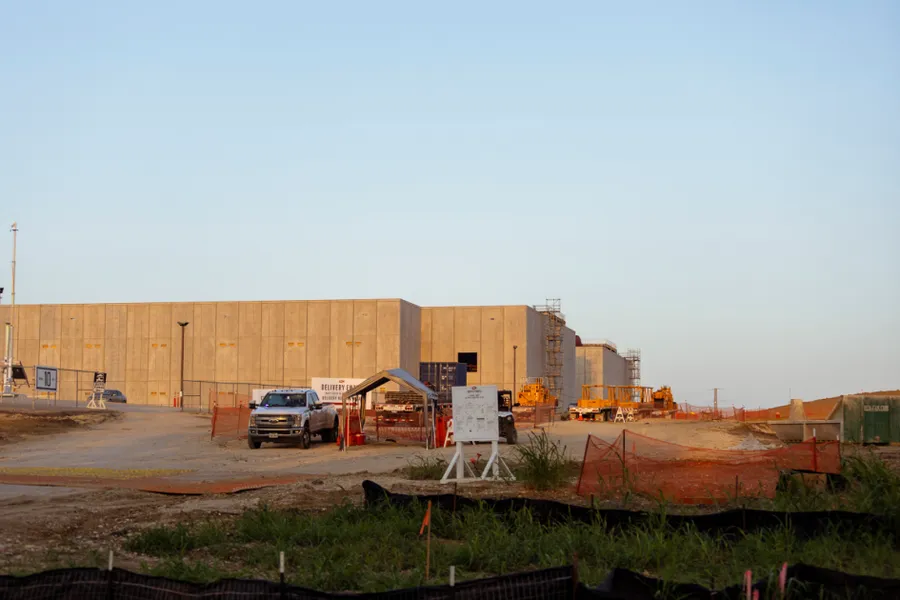
Nvidia has arranged $500 billion in customer financing this month alone and guaranteed up to $105 billion for OpenAI's Ohio data centre. That places Nvidia somewhere between supplier and lender to its own customers, which makes reported revenue harder to evaluate. Credit markets have already registered the concern: Nvidia's credit default swaps hit record levels after the company announced roughly $750 billion in AI commitments.Financing and credit impact
Customer concentration compounds the issue. A handful of hyperscalers and model labs account for a very large share of Nvidia's revenue, and several appear on both sides of the ledger as buyers and as recipients of Nvidia's investment. For a builder provisioning GPUs, this concentration means that if financing tightens or one major customer changes its deployment plans, GPU availability and pricing could shift quickly.
Server Prices Are Heading Higher
Cost pressure is visible in Nvidia's own pricing. The company told customers that AI server prices are rising more than 15% because of memory shortages, passing the DRAM crunch directly to the buyers it is simultaneously financing.Server price increase For any team planning infrastructure spend, this is a direct signal to factor in higher per-unit costs and potentially longer lead times.
Caveats and What to Watch
The bull case for Nvidia remains intact: demand for inference capacity keeps outrunning supply, no competitor has matched the software stack, and years of announced projects are in the pipeline. But the growth trajectory depends on a circular relationship where the buildout continues as long as capital keeps arriving, and capital arrives as long as the buildout looks profitable.Circular dependency
Competition is no longer theoretical. Amazon, Google, and Meta all have custom silicon programmes, and AMD and Intel are pushing on inference workloads where cost per token matters more than raw throughput. Inference is the fastest-growing workload once models are deployed, and it is the ground where Nvidia's architectural advantage is least decisive.Competition in inference
For now, the guidance will carry more weight than the reported quarter. A beat on revenue with a soft outlook would signal that the financing model is straining. A strong outlook invites the question of how much of it is committed capacity that Nvidia itself arranged the money for. For builders, the practical takeaway is to watch the Rubin transition timeline and server price trends, and to treat reported revenue as one data point, not the full picture.
FAQs
Sources
- Nvidia is about to report its fastest growth in seven quarters
- Nvidia's Growth Challenge: AI Boom Under Scrutiny as New Rubin Chips Are Unveiled, ETEnterpriseai
- Nvidia Stock Forecast: NVDA Earnings, AI Demand and Key Levels to Watch - Forex News by FX Leaders
- Which "Magnificent Seven" Stock Is Reporting the Fastest Revenue and Profit Growth? - The Globe and Mail
- Which "Magnificent Seven" Stock Is Reporting the Fastest Revenue and Profit Growth?
- This Is the Most Important Number To Watch in Nvidia Earnings (Hint: It's not in the Report)
- Nvidia Earnings Put Rubin Growth Story and AI Financing Strategy Under the...
- Nvidia faces make-or-break earnings test after 7-day slide
- Nvidia earnings and PCE inflation data take centre stage as oil prices slide:...
- Nvidia Vs Micron: Among The Best-Positioned AI Plays as Treasury Yields Spook...
- NVIDIA Announces Financial Results for First Quarter Fiscal 2027 | NVIDIA Newsroom
- Nvidia earnings takeaways: Data center revenue nearly doubles, report is strong but stock slides
- NVIDIA Announces Financial Results for Fourth Quarter and Fiscal 2026 | NVIDIA Newsroom
- Nvidia faces growth test as Rubin debut meets AI financing ...
- Nvidia Q2 2027 Earnings Preview: NVDA Revenue, Guidance, Key ...