AI Plugin Standard Marks Shift from Fragmentation to Infrastructure, but Trust and Governance Remain Open
Published by AINave Editorial • Reviewed by Ramit
On August 6, 2026, six major AI platform companies released a shared specification that changes how AI agent tools get packaged and distributed. Agent Plugins 1.0.0 is an open, vendor-neutral standard from OpenAI, AWS, Microsoft, GitHub, Anysphere (Cursor), and Vercel, with Google joining as a core maintainer within 24 hours. Anthropic created the underlying technologies but was not part of the coalition.
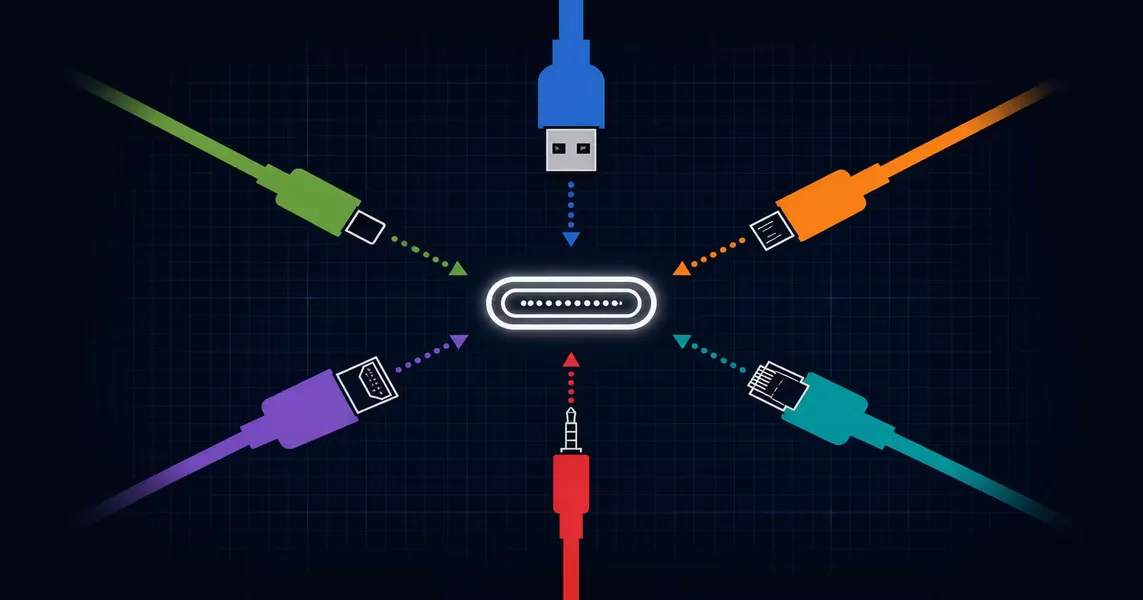
The standard solves a real pain point: before this, a developer who wanted their tool to work across ChatGPT, Cursor, Copilot, and VS Code had to repackage the same capabilities in different formats. Agent Plugins 1.0.0 defines a portable bundle consisting of a plugin manifest, an Agent Skills folder, and an MCP server configuration. The manifest ties the plugin together with a name and schema reference. The Agent Skills folder holds reusable instructions, scripts, and reference materials. The MCP server configuration connects the agent to external tools, databases, and APIs. Build once, run across clients.
What the Standard Includes and What It Leaves Out
The spec is deliberately compact. It covers packaging and portability. It does not cover security, trust verification, publisher identity, code signing, sandboxing, permission models, or runtime behavior. Distribution and installation remain platform-specific. The spec is explicitly marked as a Working Draft.
These omissions are not accidental. They reflect the hardest problem in production AI today: no one has solved trust at scale. VentureBeat's Pulse Research across 157 enterprises found that 50% of organizations have shipped an AI agent that passed every internal evaluation and then failed in production. Only 5% fully trust automated evaluation today. Yet 66% are engineering toward fully automated, zero-human-in-the-loop deployments within 12 months. The numbers do not add up.
The Trust Gap: Why Portability Isn't Enough
Agent Plugins 1.0.0 provides the shape for portable capabilities. It does not provide the shape for how those capabilities get trusted, verified, or constrained. JumpCloud's analysis framed it precisely: "AI Agents Just Got a Standard. Now They Need an Identity Discipline." The standard unifies packaging. The security model is the next battle.
Market reaction shows real demand. Within hours of the announcement, OpenClaw integrated the Agent Plugins bundle format. The pull request was straightforward because the spec is straightforward: a folder, a manifest, skills, and MCP configuration. Nothing more.
What This Means for AI Builders
The Agent Plugins moment signals a transition from fragmentation to infrastructure. During the fragmentation era, every platform built its own silo and competed on benchmark scores. In the infrastructure era, platforms will compete on trust, reliability, and orchestration quality. The value moves from "which platform has the best model" to "which platform has the best orchestration layer."
For builders, the practical takeaway is clear: learn the specification while it is still a Working Draft and open to influence. Build a plugin for the tool you use most. The format is simple enough to produce something useful in an afternoon. Pay attention to the security and trust conversation as it develops. The identity layer for AI agents will be one of the defining technical infrastructure problems of the next three years.
A security and trust specification will likely arrive within 18 months. The coalition that builds it will matter more than the coalition that built Agent Plugins 1.0.0. Identity, sandboxing, and permission models are hard problems. Whoever defines that governance layer defines the trust architecture for the agent economy.