Ringg raises $10M from Peak XV to push voice AI beyond phone calls
Published by AINave Editorial • Reviewed by Ramit
Ringg, a voice AI startup in India, raised $10 million from Peak XV Partners as an extension of its Series A, bringing the total to $15.5 million. The company already processes about 20 million call attempts per month and serves major Indian startups including Cred, Flipkart, Practo, Groww, and PolicyBazaar. For builders, this isn’t just another funding round: it signals how voice AI is moving beyond simple outbound calling into complex, end-to-end enterprise workflows.
Ringg raises $10M to tackle complex enterprise workflows
Ringg started as a text-to-speech lab called DesiVocal but shifted up the stack when model training became too expensive. It now builds voice agents that handle healthcare appointment bookings, abandoned-cart recovery, and fintech KYC onboarding. For example, its voice agent runs across 1,200 clinics for Practo, helping patients book visits. These are not simple scripts: they require understanding context, handling multi-turn conversations, and integrating with backend systems.
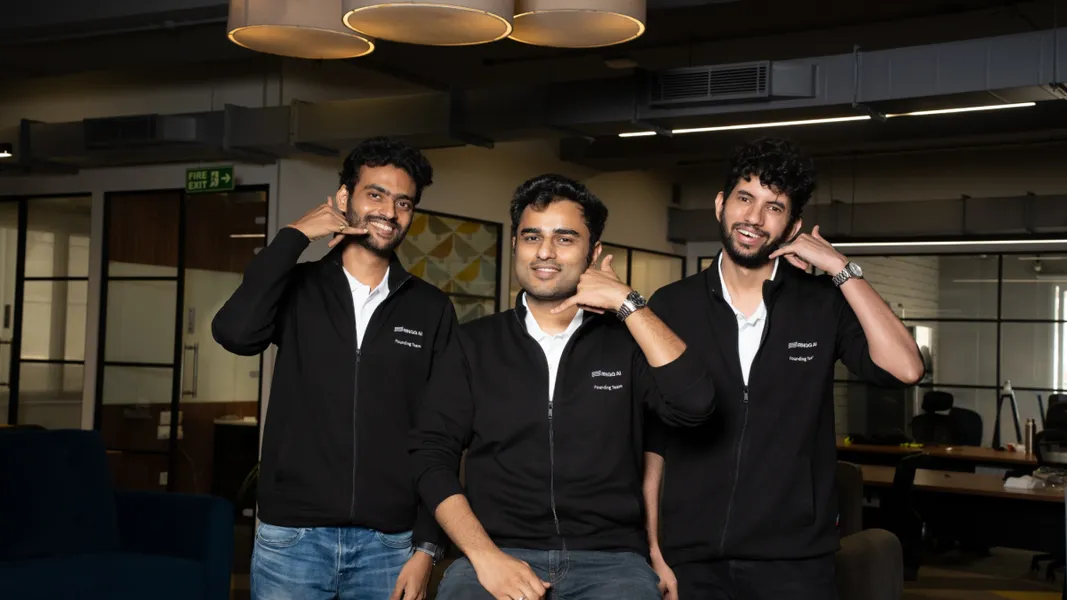
Ringg co-founder Siddharth Tripathi told TechCrunch that the company started with high-volume, low-complexity use cases but quickly realized they were commodity services. The real defensibility comes from owning the outcome, not just the call. That means taking on harder workflows like merchant onboarding and L1/L2 support.
Why the orchestration layer approach matters
Ringg does not own the full voice stack yet. It acts as an orchestration layer, routing requests to in-house and third-party models depending on the use case. This practical approach lets it serve enterprise customers without committing to a single model provider. For AI builders, this is a case study in multi-model deployment: the orchestration layer handles routing, fallbacks, and cost optimization while the underlying models can be swapped as new ones emerge.
Peak XV principal Rishen Kapoor noted that because Ringg started as a research lab, its technical depth shows in these complex, end-to-end workflows. The startup still plans to own the full stack eventually but acknowledges that remains too costly today.
Expanding beyond phone calls to chat, WhatsApp, and Global Capability Centers
Voice calls still make up over 70% of Ringg’s business, but the company is expanding into chat and WhatsApp channels. For clients like Shell, it already automates browser-based support requests. This channel expansion reflects a broader trend: enterprises want a single agent platform that works across voice, text, and web.
Ringg is not selling directly to US companies. Instead, it targets Global Capability Centers (GCCs) in India - the offshore hubs that multinationals use for back-office and support work. Partnering with GCCs lets Ringg sell automation alongside human support, a strategy that could scale faster than a direct enterprise sales motion.
What remains uncertain
All factual claims in this article come from a single TechCrunch report. No independent verification of Ringg’s call volume, client deployments, or benchmark results was available in the provided context. The company’s stated ambition to own the full voice stack is a future goal, not a current capability. As with any vendor-funded raise, readers should treat performance claims and roadmap projections as aspirational until confirmed by third-party testing or public documentation.