Perplexity's Portable Computer: local AI agents with cloud handoff only by permission
Published by AINave Editorial • Reviewed by Ramit
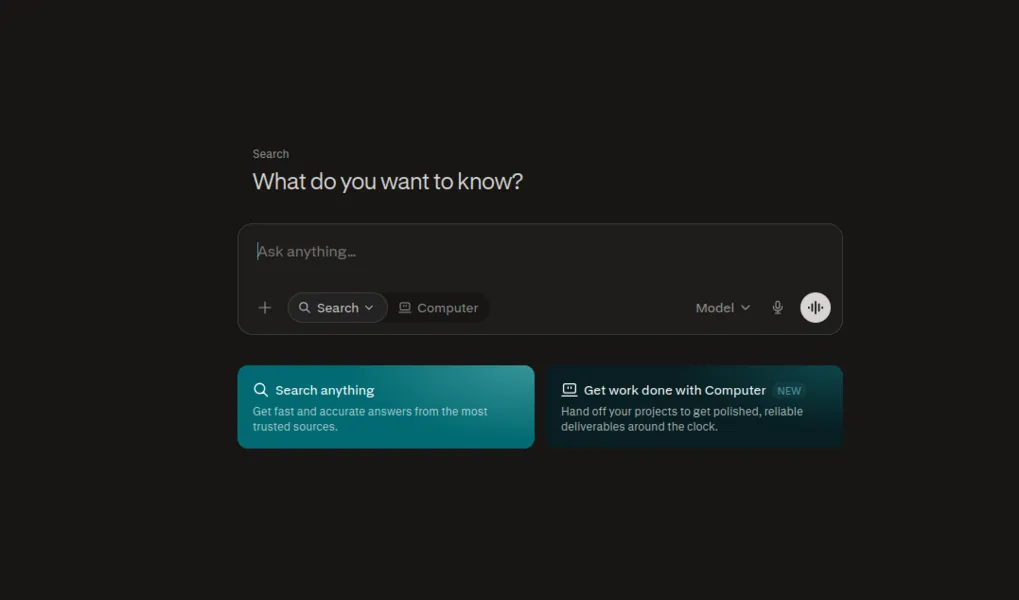
Perplexity launched Portable Computer, a local-first AI agent platform that runs inference entirely on high-end Linux hardware and only offloads to the cloud after the user explicitly approves. For builders designing private agent workflows, it demonstrates a practical pattern: keep data on-device by default, escalate only when the local model hits its limit.
Portable Computer packages the whole local agent stack
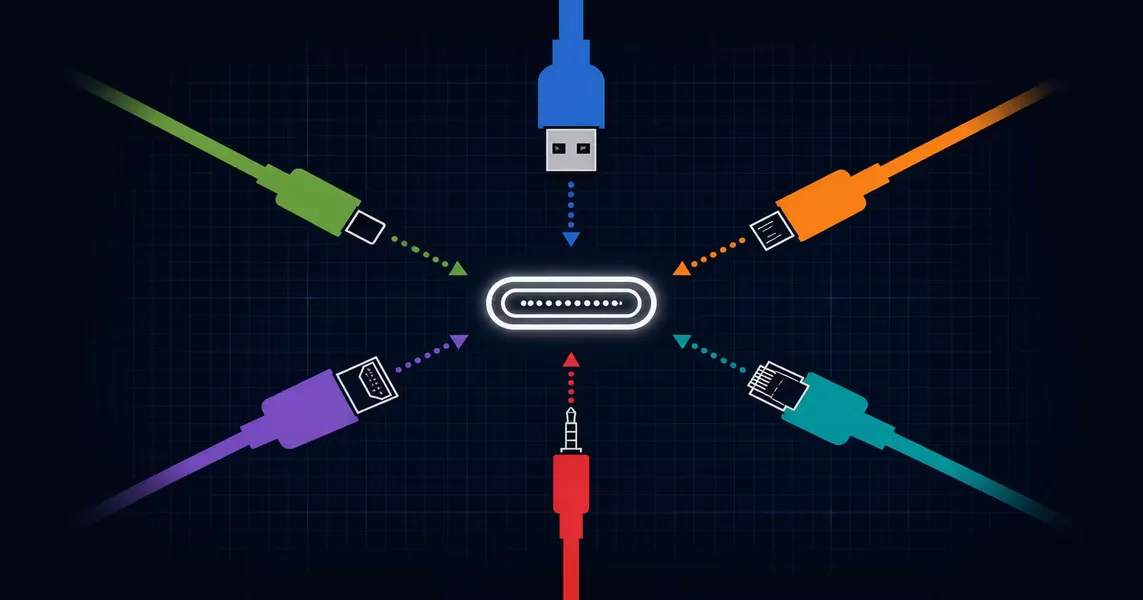
The system bundles a local model, inference engine, agent tools, app connectors, and an isolated sandbox into a single install. At launch, users can choose between a 27-billion-parameter Qwen model or Perplexity's post-trained PPLX 27B. Nvidia's Nemotron 3.5 Lightning is expected later. The agent can read files, parse PDFs, run shell commands, take dictation, search the web, and connect services like Google Drive, Gmail, Slack, and GitHub. Code execution and tool use happen inside the local sandbox.
Hybrid routing asks permission before calling the cloud
The most interesting design choice is the permission-gated cloud fallback. Every task starts on the local machine. When the local 27B model encounters a step it cannot handle reliably, Portable Computer shows a prompt asking the user whether that step may be sent to a cloud model. Only that individual step leaves the device; the rest of the task and all user files remain on-premises. Perplexity says locally completed work does not consume billing credits and that the system makes the routing decision automatically without requiring the user to select a privacy mode.
Why this matters for AI builders
The important shift is that Perplexity has turned a complex integration problem (local model + agent harness + tool connectors + sandbox + hybrid routing) into a single subscriber product. For a team that already owns a compatible Nvidia GPU, Portable Computer reduces the work of building a private agent that can still tap frontier reasoning when needed. This pattern is especially relevant for enterprise use cases involving sensitive documents, legal workflows, or financial data where organizations want the utility of an AI agent without sending everything to a cloud provider by default.
Hardware requirements limit early adoption
The catch is the hardware gate. Portable Computer requires an Nvidia GPU with at least 24GB VRAM running Linux. It supports the Nvidia DGX Spark and compatible machines running DGX OS or Ubuntu on ARM or x64. Windows support is scheduled for September. Perplexity has not announced macOS support. Access requires a Perplexity Pro, Max, or Enterprise subscription, though Perplexity has not disclosed separate pricing for the Portable Computer feature itself.
What remains unclear
The coverage does not detail how the sandbox controls permission boundaries between the agent and the host system, how the user is prompted during a long-running agent task, or whether the hybrid routing can be customized per organization. The local models (27B) offer solid but not frontier-level reasoning, so users will likely encounter cloud handoffs for complex multi-step tasks. For now, Portable Computer is most useful for AI enthusiasts, developers, and organizations that already own the required Nvidia hardware and want hands-on experience with a local-first agent that still reserves the option to escalate.
FAQs
Sources
- Perplexity’s new local-first AI runs on your PC — and asks before using the cloud
- Perplexity Launches AI Tool That Runs Locally And Seeks Permission For Cloud Help
- Portable Computer: Perplexity's Smart, Proven Nvidia AI
- Portable Computer is Perplexity's new local AI agent - why it's a game changer | ZDNET
- Introducing Portable Computer for local-first AI
- Perplexity’s Personal Computer is now available to everyone on Mac
- I gave Perplexity's agentic AI 5 complex tasks to run on my Mac - and I'll do it again
- An Inside Look Into Hecker Fink’s Testing of Perplexity AI
- Perplexity Launches Portable Computer Local AI Agent for Private Workflows
- I switched to an AI browser that runs its own local LLM, and I'm not going back to Perplexity or Chrome
- Perplexity Launches Local AI Model That Will Run on Your GPU Instead of the Cloud
- Perplexity’s new local-first AI runs on your PC — and asks before using the cloud
- Portable computer is Perplexity's new local AI agent - why it's a game changer
- Perplexity partners with Nvidia to launch Portable Computer, a fully local AI agent with zero token costs
- Perplexity AI unveils hybrid local-cloud inference system at Computex 2026