Meta's Brain2QWERTYv2: Non-Invasive Brain-to-Text Decoding Hits Hardware Barriers
Published by AINave Editorial • Reviewed by Ramit
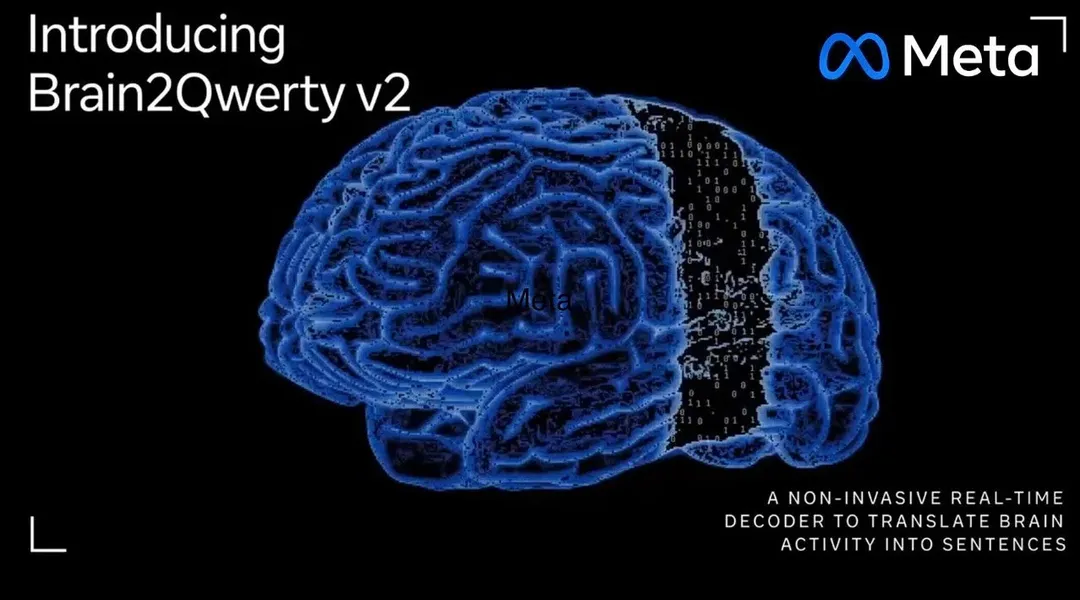
Meta's Brain2QWERTYv2 represents a step forward in brain-to-text technology, using non-invasive magnetoencephalography (MEG) to translate neural activity into written sentences. In lab experiments with nine healthy participants, the system achieved an average word accuracy of 61%, with a top participant reaching 78%. But the approach relies on bulky, costly MEG scanners, making real-world deployment a hardware problem as much as an AI one.
What happened
Meta's Brain2QWERTYv2 is a non-invasive system that decodes brain activity into written sentences using MEG hardware. Unlike traditional brain-computer interfaces that require surgical implants, this system interprets brain signals externally by measuring magnetic fields generated by neural activity. The AI processes this data and maps it to corresponding text at the sentence level.
In controlled laboratory experiments with nine healthy participants, the system achieved an average word accuracy of 61%, with the most successful participant reaching 78%. Participants typed sentences after hearing them, providing structured training data for the AI.
Why AI builders should care
For teams building assistive communication tools or exploring non-invasive brain-computer interfaces, Brain2QWERTYv2 demonstrates a viable pathway that avoids implants. The approach uses external MEG hardware rather than requiring surgery, which could make it safer and more accessible if the hardware barriers are solved.
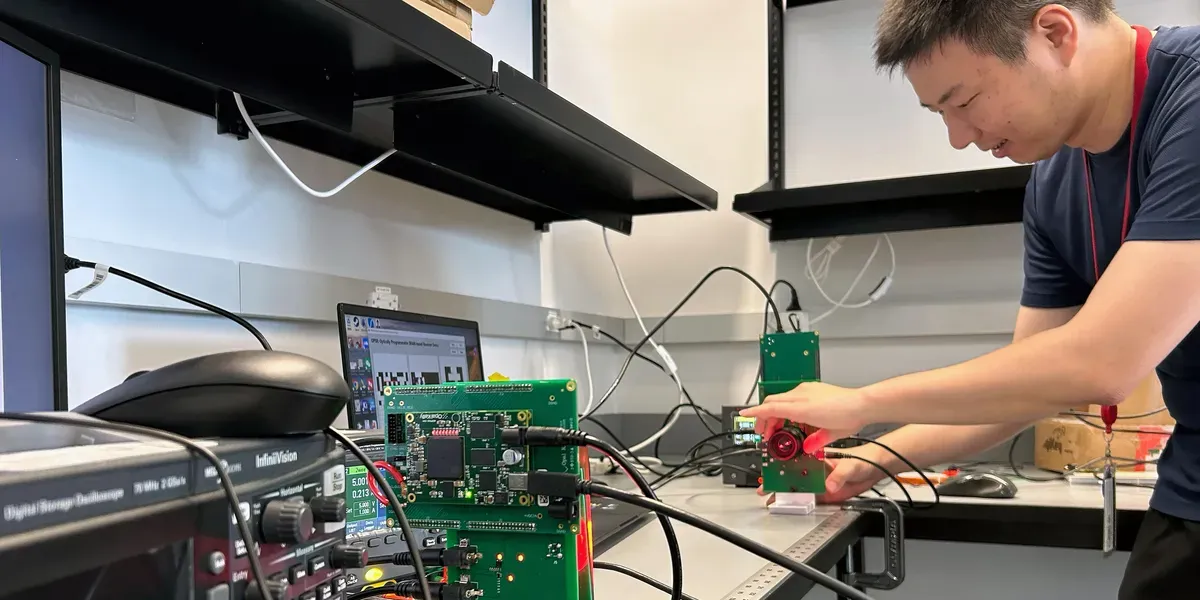
But the hardware bottleneck is significant. Current MEG scanners are both bulky and costly, which limits the system to research settings. Creating portable and affordable brain-scanning hardware is essential to transitioning Brain2QWERTYv2 from a research prototype to a practical tool.
Ethical and privacy considerations around neural data collection are also central to responsible development. Neural data could reveal sensitive information, and safeguards around consent, data security, and misuse are critical.
Practical implications
If validated at scale, this line of research could support assistive communication for people with severe impairments without brain implants. The technology has the potential to enhance existing assistive devices, allowing users to express themselves more effectively and independently.
Future priority areas include making signal interpretation robust to noisier data and developing wearable, affordable MEG technology. Adapting the system for individuals with communication impairments presents an even greater challenge, as such users may struggle to provide structured training data.
Caveats
Results are currently lab-scale and rely on external MEG hardware, not portable devices. Accuracy, latency, and generalizability to diverse user populations remain uncertain until larger, real-world studies are conducted. The controlled environment with healthy participants typing sentences after hearing them may not reflect real-world conditions or the needs of people with communication impairments.
Ethical and privacy concerns around neural data collection are discussed, but specific safeguards and regulatory frameworks are not yet established.
FAQs
Sources
- Meta’s New AI Can Turn Brain Activity Into Written Sentences
- Meta unveils Brain2Qwerty v2 to decode brain activity into text...
- Meta's new AI can turn your thoughts into text without a brain implant
- Mind-to-Text: How AI Is Learning to Decode Brain Signals Into...
- Meta's Brain2Qwerty reads typed sentences from the brain
- Meta Revolutionizes Brain-Text Decoding with Brain2Qwerty v2
- How AI Can Decode Your Thoughts—and Why It Matters
- Meta Says Brain2Qwerty V2 Turns Brain Activity Into... - Dataconomy
- Mind-Reading Breakthrough: New AI Translates Brain Activity Into Text
- Meta’s Brain2Qwerty v2 turns thoughts into text, and it doesn’t need brain implants
- Meta says new AI system can convert brain activity into text without surgery
- Meta unveils new AI system that can turn your brain activity into text
- Meta builds AI that uses brain signals to generate text in real time without surgery
- Meta says new AI system can convert brain activity into text ...
- Brain-to-Text Decoding: A Non-invasive Approach via Typing