Microsoft AI cybersecurity tools: MAI-Cyber-1-Flash and Project Perception aim to cut costs while beating benchmarks
Published by AINave Editorial • Reviewed by Ramit
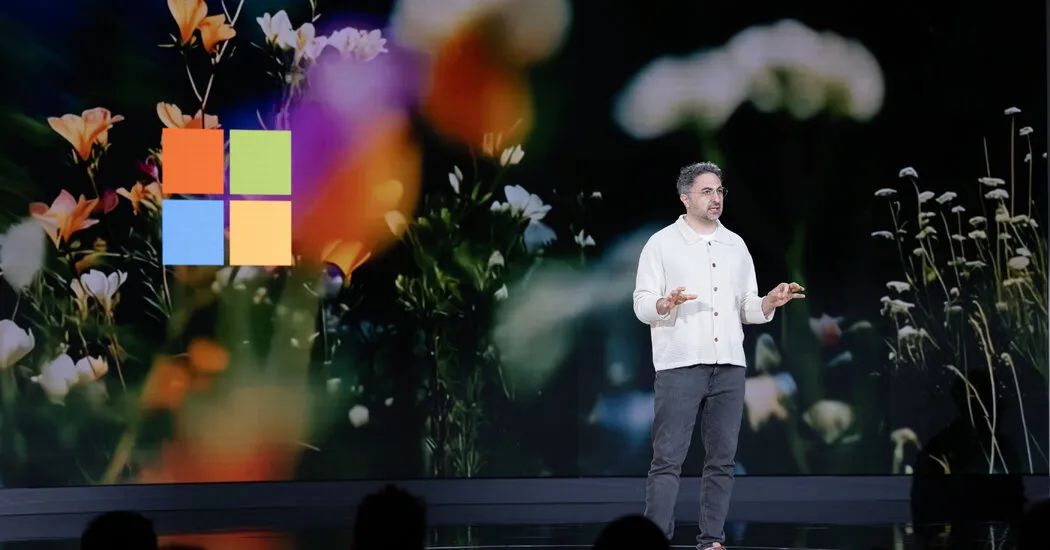
Microsoft is betting that the future of AI security belongs not to the biggest model, but to the cheapest one that’s good enough, routed intelligently. On July 27, the company unveiled MAI-Cyber-1-Flash, a compact cybersecurity model, and Project Perception, an agentic defense platform. Together they aim to help enterprises find and fix vulnerabilities faster while cutting costs roughly in half.
What happened
Microsoft’s new Microsoft AI cybersecurity tools include two main components. First, MAI-Cyber-1-Flash is a specialized model built by the Microsoft AI division, designed to handle about 90% of security tasks efficiently. Second, Project Perception is an agentic platform that coordinates “red team” agents (hunting vulnerabilities), “blue team” agents (investigating and triaging), and “green team” agents (remediating and hardening).
Both components plug into MDASH, Microsoft’s multi-agent harness for vulnerability discovery. MDASH routes routine problems to MAI-Cyber-1-Flash and escalates the toughest 10% to OpenAI’s GPT-5.4. Microsoft says the combined system scored 95.95% on the CyberGym benchmark - measuring how well AI systems reason over large codebases to find real vulnerabilities - beating Anthropic’s Mythos, Google’s Gemini, and OpenAI’s own configurations by more than 10 percentage points.
The public preview of Project Perception is scheduled for August 3, with a staged rollout starting with tens of users and scaling to thousands.
Why AI builders should care
The move signals a shift from single-model supremacy to orchestrated multi-model stacks. Microsoft’s argument - that cost-per-signal matters more than absolute model size - resonates with enterprise buyers facing ballooning AI spend. For builders integrating security into products or workflows, the pattern of pairing a cheap domain-specific model with a frontier fallback is directly applicable. The telemetry moat, with over 100 trillion security signals processed daily, gives Microsoft a data advantage that pure model labs cannot easily replicate.
Practical implications
Enterprises running large codebases can pilot MDASH to automate vulnerability analysis, reserving human reviewers for only the most ambiguous cases. The expected reduction in scanning costs and patch cycles makes AI security tools more accessible to mid-market companies. For developers building security orchestration, the harness pattern (router + small model + big model) is a reference architecture worth studying. Microsoft also emphasizes sandboxed execution, tenant isolation, and access gating, which matters for compliance-heavy deployments.
Caveats
The CyberGym benchmark result is vendor-provided and compares a full tuned system against competitors’ base models - not a controlled model-versus-model test. The reliance on OpenAI’s GPT-5.4 for escalations creates a dependency that may draw regulatory scrutiny. Defenders remain cautious about turning critical security work over to autonomous agents. Microsoft’s staged rollout (tens, then hundreds, then thousands) means real-world performance and cost data will take months to emerge.
FAQs
Sources
- Microsoft Unveils A.I. Cybersecurity Tools
- Microsoft launches AI cybersecurity model, agentic defense platform to cut enterprise security costs
- Microsoft unveils new cyber model, agentic security tools to fight hackers
- Google News - Microsoft's AI security tool - Overview
- Microsoft Unveils A.I. Cybersecurity Tools | CommsTrader
- Microsoft Unveils AI-Driven Security Copilot... | Windows Forum
- Microsoft Unveils AI-Powered Cybersecurity Tools · PulseAugur
- Microsoft's perception platform deploys 100+ AI agents against cyber threats
- MSFT stock gains 3% — Microsoft unveils AI cybersecurity model to combat real-time threats
- Microsoft’s ‘Project Perception’ Could Challenge Anthropic’s Mythos in AI Security
- Microsoft's Record Patch Tuesday Shows AI Is Changing Cybersecurity
- Microsoft Unveils A.I. Cybersecurity Tools
- Microsoft unveils MDASH, a multi-model agentic AI system that beats Anthropic's Mythos
- Microsoft Unveils AI Cybersecurity Tools - GV Wire
- Microsoft unveils AI security tools it says outperform competing platforms - Ars Technica
- Microsoft's solution to AI security: more AI and more acronyms