Beijing tightens AI diplomacy as Chinese tech firms snub US lawmakers
Published by AINave Editorial • Reviewed by Ramit
Beijing's AI diplomacy is becoming more selective. Chinese technology companies recently refused to meet a US congressional delegation on a fact-finding trip, signaling a shift in how China manages external access to its AI ecosystem. For AI builders who rely on cross-border model sourcing and intelligence, this narrowing of channels has practical consequences.
What happened
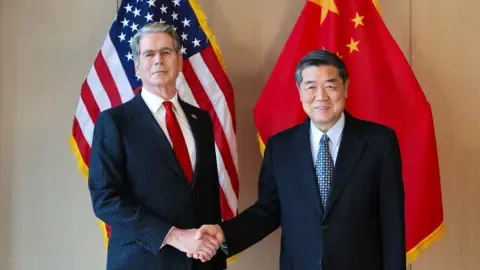
A US congressional commission delegation visited China to gather information for an annual report on China's military, economic, and technological developments. The delegates met with government officials, think tank experts, and diplomats, but were unable to secure meetings with leading technology companies. Commission vice-chairman Mike Kuiken said the refusal itself is "a data point" on Beijing's outreach strategy.
Why AI builders should care
The snub reflects Beijing's increasingly selective approach to AI diplomacy. While AI safety dialogue between the US and China continues, the channels for direct access to China's AI ecosystem are narrowing. For AI builders, this means less visibility into Chinese model development, benchmarks, and technical roadmaps. If you source models from Chinese providers or track their capabilities, expect less transparency.
Practical implications
The shrinking of policy channels could complicate cross-border collaboration. Analysts note a paradox: formal AI safety talks persist, but informal access to companies and researchers is declining. This may affect how builders evaluate Chinese models for integration, especially as Beijing considers restricting overseas access to its most advanced AI models. If you rely on open-source Chinese models or APIs, monitor regulatory changes closely.
Caveats
This account is based on a single delegation's experience. Broader generalizations about China's AI diplomacy should be treated with caution. The SCMP report does not name which companies declined or provide their reasoning. Additionally, US lawmakers are also probing the growing use of Chinese AI models, so the snub may be part of a larger pattern of mutual restriction.
Sources
- Chinese tech firms’ ‘snub’ to US Congress advisers highlights Beijing’s growing AI caution
- Congress Looks to Counter Growing Use of Chinese AI Models by US Firms | PYMNTS.com
- US Lawmakers Eye Curbs on Chinese AI as Tech Rivalry Deepens | Outlook India
- Lawmakers probe growing use of Chinese AI models in U.S. companies
- China’s Xi calls for more global efforts to guide AI, chides US for its curbs on tech sharing
- Chinese tech firms’ snub to US Congress advisers highlights Beijing’s growing AI caution
- China's Xi calls for more global efforts to guide AI, chides US for its curbs on tech sharing
- China Weighs Limits on the AI Models American Companies Love
- Why China Is Shutting Out Western Tech Inquiries — Weddings
- Firms snub congressional briefing on China - CNET
- IT firms snub China caucus | Australian Financial Review
- Beijing’s anger at ‘extremely malicious’ US move... - Egypt Independent
- Beijing escalating AI espionage to catch up with the U.S. on tech, cybersecurity firm says