Hong Kong as the AI chip trade hub: how a free-port middleman shapes China's AI hardware momentum
Published by AINave Editorial • Reviewed by Ramit
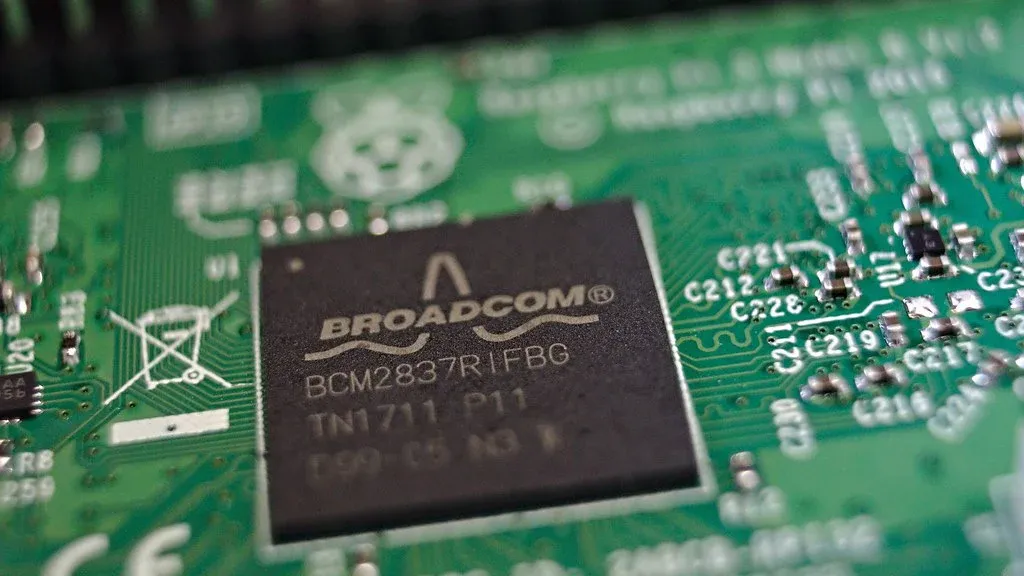
Hong Kong has become the central artery for China's AI chip imports, handling more than half of China's $239bn in semiconductor purchases during the first five months of 2026. For AI builders and founders tracking hardware supply chains, this shift signals both opportunity and risk: faster access to chips through a friction-free logistics hub, but growing exposure to US-China trade restrictions that could disrupt availability or pricing.
What happened
A Bloomberg review of official data found that Hong Kong accounted for more than half of China's $239bn chip imports between January and May 2026, a record share. A decade ago, that share stood at just one third. During that period, Hong Kong re-exported $124bn worth of chips to the mainland, roughly 52% of China's total purchases.
The city's trade with China grew nearly 50% in May from a year earlier, the fastest rate since 1992 outside the pandemic years. AI-related electronics now account for 57% of Hong Kong's exports, up from 44% in 2024, according to the Hong Kong Trade Development Council (HKTDC). Barclays puts the share as high as 70%. Hong Kong alone exported nearly $159bn of AI-related goods last year, the fifth-largest total in Asia.
Why AI builders should care
The Hong Kong conduit accelerates access to China's massive AI hardware demand without requiring local fabs. For AI builders, this influences supply-chain reliability and pricing dynamics. Economists at HSBC estimate AI trade within Asia has doubled from pre-pandemic levels to almost $2tn in 2025.
Policy and geopolitical risk around transshipment could affect availability of high-end chips sourced through Hong Kong. US and Taiwanese authorities are already probing alleged smuggling of Nvidia chips through the region, and Hong Kong has ramped up purchases of American-made semiconductors since the Trump administration tightened curbs on China's access to advanced US chips.
Practical implications
Hong Kong's role as a middleman simplifies payments and currency conversion for mainland buyers. As Stanford research scholar Charles Mok noted, "As a middleman, Hong Kong has figured out a way to handle the payments". The city's common-law courts remain more trusted by international investors for IP protection and contract enforcement.
Chief Executive John Lee is leading diversification efforts, with missions to the Middle East, Central Asia, and Southeast Asia. A June trip to Kazakhstan and Uzbekistan yielded 96 agreements worth over $1.65bn. For AI builders, this means Hong Kong may become a more geopolitically diversified hub over time, though the near-term exposure remains concentrated on US-China dynamics.
Caveats
Hong Kong lacks native chip fabrication capabilities and remains exposed to US-China policy shifts. The Bloomberg data underpinning the analysis comes with caveats: the data does not specify which chip models are moving, and the reported chips are likely those that fall outside US restrictions. Transshipment scrutiny could tighten further, making long-term hardware supply chain planning through Hong Kong a risk to monitor closely.
FAQs
Sources
- Hong Kong now handles more than half of China’s chip imports
- Hong Kong’s Dominance in China’s Chip Imports Surges in 2026
- Booming AI Chip Trade Seals Hong Kong’s Role as Gateway to China
- Hong Kong emerges as key AI tech trade gateway for China
- Booming AI chip trade seals Hong Kong’s role as gateway to China
- Hong Kong rises as crucial node in Asia’s US$2 tril AI trade
- China’s Nexchip seeks up to $890m in Hong Kong share sale
- Why Hong Kong is now the launch pad for mainland China’s AI champions
- Hong Kong now handles more than half of China’s chip imports
- Hồng Kông xử lý hơn một nửa lượng nhập khẩu chip của Trung Quốc
- Hong Kong's blurring border with China a sign of things to... - Legit.ng
- Hong Kong puts its own spin on DeepSeek with China-chip AI push abroad