Diverging AI buildouts: Samsung profits vs Meta cash burn reshapes investor bets on AI-led growth
Published by AINave Editorial • Reviewed by Ramit
The AI buildout is producing sharply different financial outcomes for the companies supplying infrastructure versus those spending on it. Samsung's semiconductor division posted a 250-fold increase in quarterly operating profit as AI-driven chip demand surged, while Meta announced lower-than-expected revenue forecasts and an $8 billion hit to free cash flow from planned capital expenditure of over $130 billion this year, sending shares down about 11%. Alphabet also reported negative free cash flow last month due to large AI-related spending.
What happened
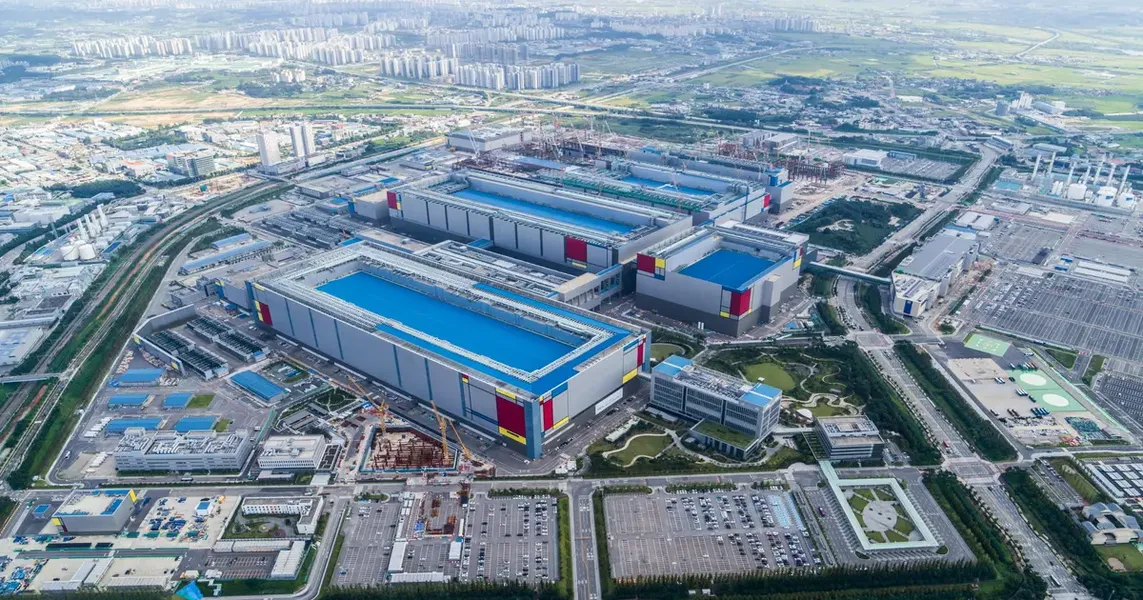
Samsung’s chipmaking division posted a 250-fold rise in quarterly operating profit as demand for semiconductors soared. Meta, however, announced lower-than-anticipated revenue forecasts and an $8 billion hit to free cash flow as it predicted over $130 billion in capital expenditure this year, sending shares tumbling 11%. Rival Alphabet also reported negative free cash flow last month for the first time on the back of huge AI spending. Investors “have to decide whether Meta’s growing list of AI initiatives represents company diversification or distraction,” one analyst told the Financial Times.
Why AI builders should care
The contrast between Samsung’s profit surge and Meta/Alphabet’s cash-flow pressure highlights the cost and capacity differences in AI buildouts among major tech groups. For AI builders, this signals that the supply side (chip manufacturing) is currently the clear winner in the AI boom, while the demand side (hyperscalers deploying AI at scale) faces significant capital intensity that can pressure cash flow and stock prices. This divergence matters for anyone building AI products: it affects chip pricing, cloud capacity availability, and the financial sustainability of large-scale AI initiatives.
Practical implications
Investors will scrutinize whether large AI initiatives translate into diversification or distraction for a given company. Large-scale AI investments can impact free cash flow and share prices, signaling the capital-intensity of AI initiatives for builders and operators. For AI builders, this means that efficient AI deployments - using optimized models, hardware, and infrastructure - may be more sustainable than capital-heavy approaches. The divergence also suggests that companies supplying AI infrastructure (chips, data centers) may have more predictable financial outcomes than those building AI applications at massive scale.
Caveats
All facts come from one primary article; results may not generalize across the entire tech industry. Pricing, exact capex breakdown, and future performance depend on company-specific strategies and market conditions not fully disclosed in the cited piece. The article does not provide a detailed breakdown of Meta’s or Alphabet’s AI spending beyond the headline figures, so builders should treat these as directional signals rather than precise benchmarks.