OpenAI opens free, frontier-access program for 100,000 academic researchers to accelerate discovery
Published by AINave Editorial • Reviewed by Ramit
OpenAI has launched ChatGPT for Academic Researchers, a program that gives 100,000 academic researchers free access to its most advanced AI models as part of a $250 million initiative. The program includes GPT-5.6 Sol Pro, Codex, and ChatGPT Work, along with higher usage limits and an expanded deep research feature. For AI builders and product teams, this signals a strategic push to embed frontier models into scientific workflows while creating a pipeline for future API adoption.
What happened
OpenAI announced the ChatGPT for Academic Researchers program on July 29, 2026. The rollout starts with 10,000 researchers at a limited set of universities, with plans to onboard 90,000 more over time. Participants receive a dedicated ChatGPT workspace with higher usage limits and larger context windows. The program also includes an expanded deep research feature that can aggregate information from hundreds of websites or focus on specific sources like scientific journals SiliconANGLE.
Why AI builders should care
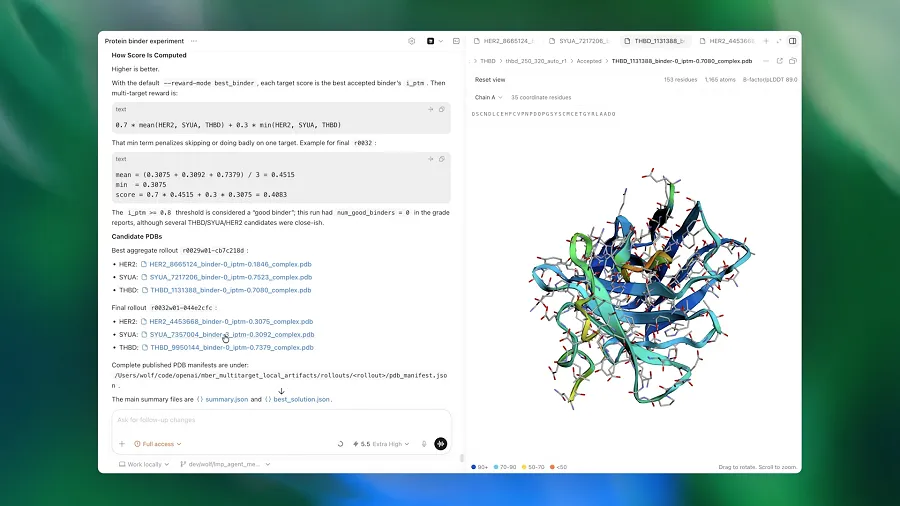
For teams building AI products, this program is a real-world test of how frontier models handle complex, long-running research tasks. The included tools are directly relevant to builders:
- GPT-5.6 Sol Pro: Optimized for difficult queries and long-running tasks, this is the same model powering OpenAI's most capable API endpoints SiliconANGLE.
- Codex: Enables code generation and interpretation, useful for automating data analysis pipelines.
- ChatGPT Work: Automates sequences of complex tasks, such as summarizing support requests, generating graphs, and embedding them in slides SiliconANGLE.
Researchers can also invite up to four colleagues from the same institution at no charge, creating natural collaboration loops. OpenAI provides training and integration support to help scientists connect ChatGPT with their existing tools SiliconANGLE. This could accelerate adoption of AI in academic software and eventually convert researchers into paid API users Axios.
Practical implications
The program offers practical advantages for research automation:
- Larger context windows allow processing entire research papers or datasets in a single session.
- Deep research feature can be configured to focus on journals, making literature reviews faster SiliconANGLE.
- ChatGPT Work can chain multiple steps, such as extracting data from a PDF, running analysis, and generating a report.
For builders, this means academic users will likely demand similar capabilities in third-party tools. Expect integrations with reference managers, lab notebooks, and data analysis platforms to become more common.
Caveats
Several details require attention:
- Phased rollout: Only 10,000 researchers get access initially; the full 100,000 target may take until 2027 SiliconANGLE.
- Access duration: Axios reports free access through 2027, while the OpenAI help center states a 12-month complimentary period Axios Help Center. Terms may vary by institution.
- Model weights not exposed: Researchers get API-level access, not model weights or fine-tuning capabilities TechTimes.
- Eligibility: Limited to faculty and postdocs at participating universities; exact list of institutions is not yet public Help Center.
FAQs
Sources
- OpenAI opens new ChatGPT for Academic Researchers program to 100,000 scientists - SiliconANGLE
- Accelerating scientific discovery with ChatGPT for Academic ...
- OpenAI opens its top AI models to 100,000 academic researchers
- OpenAI Launches Free AI Access for Scientists: Apply Now ...
- OpenAI Launches ChatGPT for Academic Researchers — Free ...
- OpenAI launches free AI access for scientists: Apply now, model weights still off-limits
- OpenAI will provide free AI models to select researchers
- OpenAI is giving 100,000 scientists free AI. Here’s how it can afford to.
- ChatGPT for Academic Researchers | OpenAI Help Center
- Hiive - Buy and Sell OpenAI Stock - Free Price Discovery
- OpenAI just updated how ChatGPT’s most-used model works again, details here