Kimi K3 opens local AI deployment for sovereign use; what it means for AI builders
Published by AINave Editorial • Reviewed by Ramit
On July 27, Moonshot AI released Kimi K3 as a freely usable open-weight model that governments, companies, and individuals can run locally without paying Moonshot. For AI builders working on sovereign AI projects or cost-sensitive deployments, Kimi K3 offers a top-tier model that ranks third on Artificial Analysis's index behind only Claude Fable 5 and GPT-5.6 Sol Max, while being free and retrainable for local languages and laws. This changes the cost calculus for organizations that already own hardware but pay ongoing licensing fees to US cloud providers.
What happened
Moonshot AI, backed by Alibaba, released the software behind its Kimi K3 model on July 27, making it publicly usable as an open-weight chatbot. The model has 2.8 trillion parameters with 104 billion active parameters and a 1-million-token context window, optimized for coding, agentic workflows, and long-context tasks. It can read images and text, allowing it to process scanned records, forms, and photographs. Users can retrain the model to fit local languages and laws, with support for Hindi, Arabic, Swahili, Chinese, and English.
Why AI builders should care
Kimi K3 ranks third on Artificial Analysis's index of best AI systems, behind Anthropic's Claude Fable 5 and OpenAI's GPT-5.6 Sol Max, both of which charge users. Every other free model, including DeepSeek and Meta's Llama, sits below Kimi K3 in that ranking. For builders evaluating open-weight models for sovereign or enterprise deployments, Kimi K3 provides a competitive alternative that can be customized without per-token costs. The model's performance on coding benchmarks, including top scores on Frontend Code Arena above Claude Fable 5, makes it relevant for developer tooling and agentic applications.
Practical implications
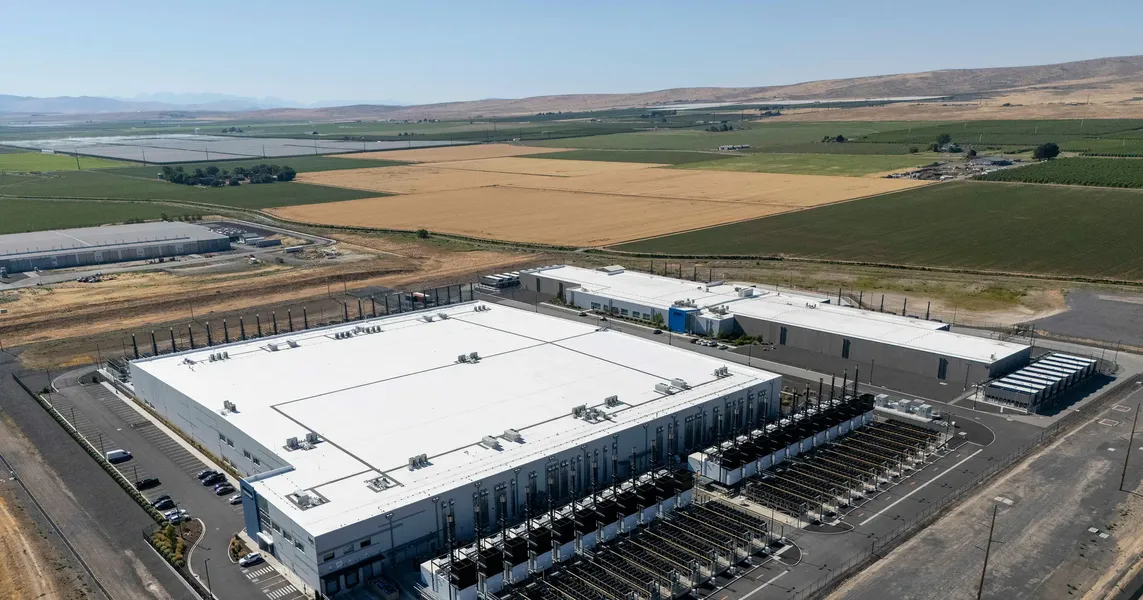
The biggest impact is on sovereign AI projects. Governments have invested billions in hardware: Microsoft, Google, and Amazon committed over $30 billion in the Gulf and over $45 billion in India for data centers and cloud services. Yet many still pay US companies for AI software. Kimi K3 allows those governments to run a high-quality model on their own machines, reducing or eliminating ongoing licensing costs. For AI builders serving government clients, this means the model stack can shift from proprietary APIs to locally hosted open-weight models, affecting pricing, latency, and data residency. The model's vision capabilities also enable document processing workflows for public sector use cases like scanning records and forms.
Caveats
Being free does not guarantee adoption. The Sovereign AI Index, tracking 139 state-backed AI projects across 56 countries, found that where governments disclose their underlying software, four in 10 chose Meta's Llama, and none chose DeepSeek or Moonshot's earlier chatbots. Adoption of Kimi K3 will depend on Moonshot's support, documentation quality, language coverage, and government trust regarding Chinese-origin AI. Additionally, running Kimi K3 requires advanced chips subject to US export controls, so hardware dependencies remain. The model's open weights address software access but not upstream dependencies on chips and data centers.
Sources
- With Moonshot’s free Kimi K3, China changes the sovereign AI playbook
- China's Moonshot AI offers free Kimi K3 model, challenging US...
- China’s Moonshot AI Unveils Kimi Model, Threatening...
- Kimi K3 · Free AI Chatbot
- The Open-Weight Frontier Arrived in a Single Day | ComputeLeap
- What to know about Moonshot AI and its new open-weight model Kimi K3
- US models beat China’s Kimi K3 with a 76% score over 32% in cyber benchmarks, tests show
- What is China’s Kimi K3 and why is the US so rattled by it?
- Moonshot’s Kimi K3 pushes Chinese AI into Fable-level territory
- China’s Kimi K3 Hits US Stock Markets. Is the American AI Boom Over?
- Kimi K3 – Новая LLM, которая доказала, что опенсорс... - YouTube
- Kimi K3 - How to Run Locally | Unsloth Documentation
- US accuses China's Moonshot of stealing from Anthropic's Fable for latest AI model
- Moonshot’s upcoming Kimi 3 is expected to close the gap with Anthropic’s Opus 4.8
- Moonshot AI’s Kimi K3 Could Reshape Who Controls Enterprise AI