Caterpillar scales AI deployment beyond mining using Cat AI Assistant and industrial workflows
Published by AINave Editorial • Reviewed by Ramit
Caterpillar is taking the hard-won lessons from two decades of autonomous mining and applying them to AI deployment across construction, manufacturing, and enterprise operations. The centerpiece is the Cat AI Assistant, a voice-guided tool for field technicians that draws on data from 1.6 million connected assets and over 16 petabytes of structured data. For AI builders, the story is less about the model and more about the integration playbook: how to embed AI into physical workflows, retrain a 118,000-person workforce, and manage the transition from single-machine operation to remote multi-machine supervision.
From mining trucks to construction sites
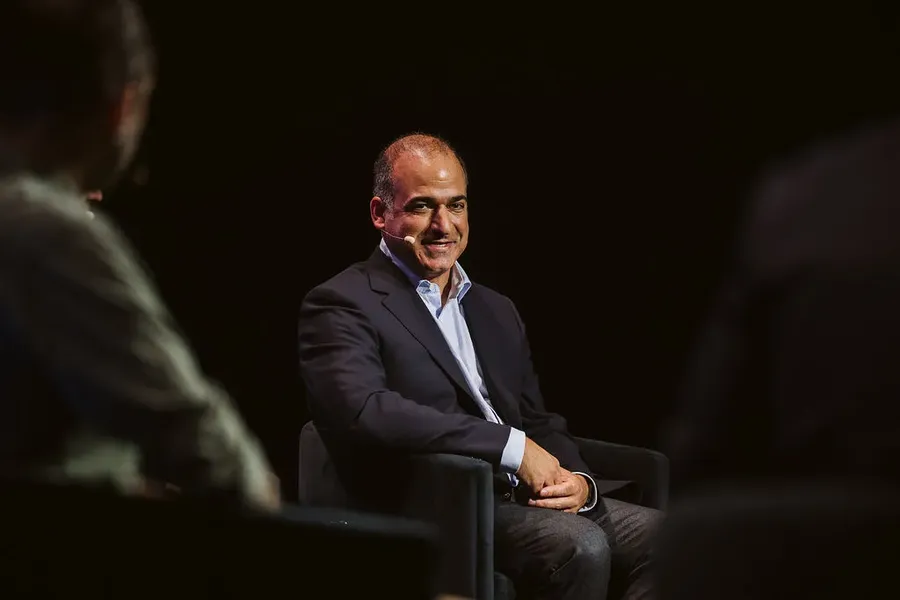
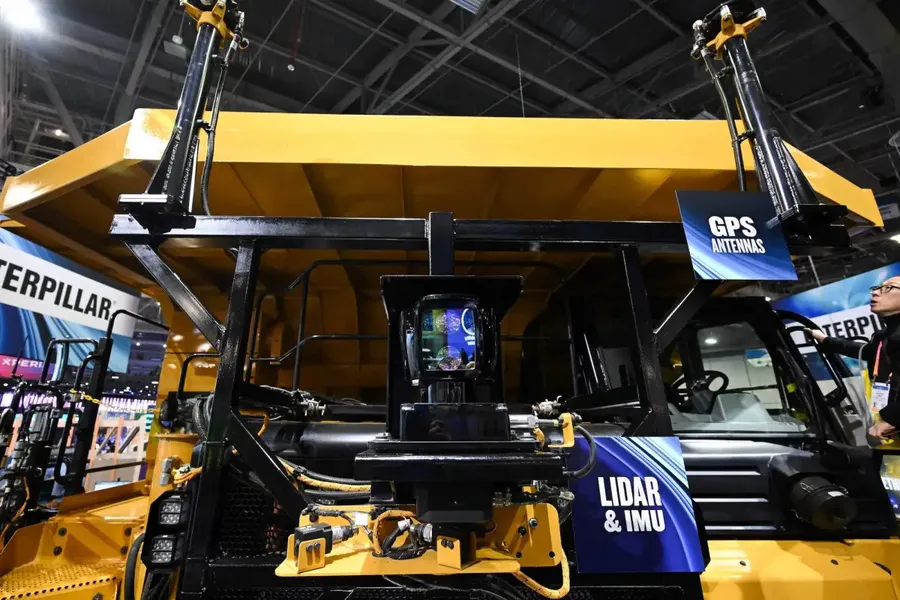
Caterpillar's autonomous push started in mining, where labor shortages and hazardous conditions made automation practical. Today it sells automated haul trucks, drilling rigs, underground loaders, dozers, and remote-controlled construction equipment, along with a software command center and fleet management tools. CTO Jaime Mineart told TechCrunch that the company is now taking that learning into "much more dynamic environments, jobsites, quarries, and construction sites." The company is also using AI for site scanning and generating digital twins in manufacturing to analyze operations, and it uses AI agents to modernize legacy code and accelerate software development. Caterpillar plans to spend $100 million over five years training its 118,000 employees in AI, autonomy, and robotics. The broader AI infrastructure boom is already lifting its top line: Q2 revenue hit a record $20.5 billion, with the power-generation division up 72% to $3.10 billion on data-center demand.
Why the integration challenge matters more than the AI model
Mineart is direct about what makes industrial AI hard: "The hard part about autonomy and about physical AI is incorporating that technology into the customer jobsite and into the workflows." Building the capability is only part of the challenge. Companies also have to rethink how people work alongside the technology and how existing processes need to change. As machines become more autonomous, operators may shift from controlling a single machine to overseeing multiple machines from a remote command center. For builders shipping AI into industrial environments, this means the deployment strategy matters as much as the model performance. Caterpillar leans on experienced operators to help train AI systems, leveraging institutional knowledge built over decades.
Voice-guided repairs and digital twins: what changes on the ground
The Cat AI Assistant is already being used by customers, operators, and technicians. A field technician standing next to a machine can use voice commands to pull up repair procedures, troubleshoot potential problems, and identify parts that may be needed before starting a repair. The assistant runs on Caterpillar's proprietary data from its connected fleet. In manufacturing, AI-powered site scanning generates digital twins to analyze operations. Internally, AI agents are used to modernize legacy code, generate and test new software, and identify defects earlier. The $100 million training investment is designed to prepare the workforce for these new tools and the shift toward remote monitoring and multi-machine supervision.
What remains unclear about Caterpillar's AI rollout
The available details come from a single TechCrunch interview and lack technical specifics. There is no information on the underlying AI models, edge deployment architecture, latency requirements, or how the Cat AI Assistant handles connectivity gaps on remote jobsites. The figures on connected assets and data volume are company-reported and have not been independently verified. Data governance and interoperability across different sites and equipment generations could pose integration challenges. The training plan is ambitious, but the timeline and curriculum details are not public. Builders evaluating Caterpillar's approach should watch for more concrete technical documentation and independent case studies before drawing firm conclusions.
FAQs
Sources
- Caterpillar is bringing to AI deployment what it learned from automating mining
- Caterpillar brings its mining-automation playbook to AI deployment as ...
- Caterpillar is bringing to AI deployment what it learned from ...
- Caterpillar bets its old mining automation know-how on the AI data ...
- Caterpillar Brings Mining AI to Construction Sites
- Caterpillar is bringing to AI deployment what it learned from automating mining
- Caterpillar (CAT) Commits $100 Million To AI And Robotics Training
- OpenAI | Research & Deployment
- Edge AI Enhances Operator Skills for Safer Construction | LinkedIn
- Bolt AI builder: Websites, apps & prototypes
- AI Character Generator (free, no sign-up, unlimited)
- Caterpillar: Bringing Mining Innovation to Deep Space - National...
- Caterpillar Inc. - YouTube
- Caterpillar | Caterpillar Inc