BrainCo unveils brain-to-robot platform at WAIC 2026: EEG meets embodied AI
Published by AINave Editorial • Reviewed by Ramit
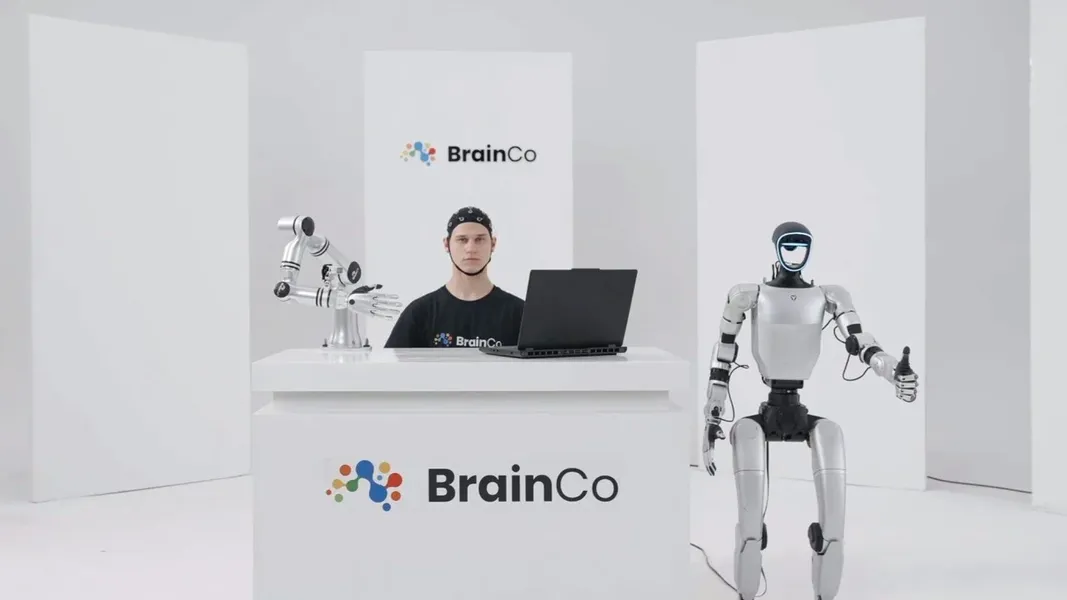
Chinese BCI company BrainCo has demonstrated what it calls the world's first integrated brain-to-robot AI R&D platform at the World Artificial Intelligence Conference (WAIC) in Shanghai. The system uses an EEG headset and AI-based neural decoding to translate a user's thoughts directly into robotic actions, supporting a range of third-party hardware including humanoid robots, robotic arms, and robotic dogs.
What happened
BrainCo, a Hangzhou-based tech unicorn, unveiled its Brain-Controlled Robot AI Platform at WAIC 2026 on July 17. The platform works by capturing brain signals through an electroencephalogram (EEG) headset worn by the user. AI-based algorithms then decode these neural signals to identify the user's intentions, translating them directly into robotic actions.
The company claims the platform is compatible with a wide range of third-party hardware, including humanoid robots, robotic arms, and robotic dogs. In a demonstration, a robotic arm was directed to grasp a cup and pick up an apple based solely on brain signals.
Why AI builders should care
This demonstration sits within a broader race to advance embodied AI systems, where AI guides physical machines to perceive, reason, and interact with the real world. For AI builders, the platform represents a new input modality for robotic control that bypasses traditional interfaces like keyboards, joysticks, or voice commands.
The approach could shorten the path from neural intent to real-time robotic control, which matters for applications in assistive robotics, industrial automation, and human-robot collaboration. BrainCo's bet on a non-invasive, wearable EEG approach also contrasts with implantable brain-computer interfaces like Neuralink, potentially lowering the barrier for developers to experiment with BCI-driven robotics.
Practical implications
The platform's claimed interoperability with multiple robot types is a key practical detail. Instead of building a custom BCI pipeline for each robot, developers could potentially use BrainCo's platform as a standardized neural input layer. The company says the system works in three stages: signal capture via EEG, AI-based neural decoding, and command execution on the target robot.
For teams building embodied AI products, this opens up questions about latency, signal fidelity, and the types of commands that can be reliably decoded. The demonstration showed discrete actions like grasping and lifting, but continuous control or complex multi-step tasks may present different challenges.
Caveats
Several important details are not yet available from the provided sources. There is no independent validation or peer-reviewed data on the platform's accuracy, latency, or reliability. The technical specifications of the EEG headset, the neural decoding models, and the API for third-party robot integration have not been disclosed. The demonstration was a controlled showcase, and real-world performance in noisy environments or with different users may vary.
BrainCo has a history of consumer EEG products, including the Focus 1 headband for attention tracking in schools, but the leap from measuring attention to controlling robots is significant. Builders should treat the platform as an early-stage demonstration until more technical details and independent benchmarks emerge.
FAQs
Sources
- China’s BrainCo unveils mind-to-robot platform at World AI Conference
- BrainCo - Wikipedia
- Control robots with your thoughts: Chinese startup unveils...
- BrainCo unveils a brain-to-robot platform at WAIC
- Techmeme: China's BrainCo unveils what it says is the world's first...
- BrainCo Debuts World's First Integrated Brain-to-Robot AI R&D Platform at WAIC 2026
- BrainCo unveils 'brain-controlled' robot platform at China's World AI Conference
- While Musk's Neuralink drills into skulls, China's BrainCo bets the future of brain tech is wearable
- BrainCo Debuts World's First Integrated Brain-to-Robot AI R&D ...
- BrainCo launches brain-to-robot AI platform at WAIC Shanghai
- China’s BrainCo unveils mind-to-robot platform at World AI Conference
- BrainCo unveils mind-to-robot platform | South China Morning ...